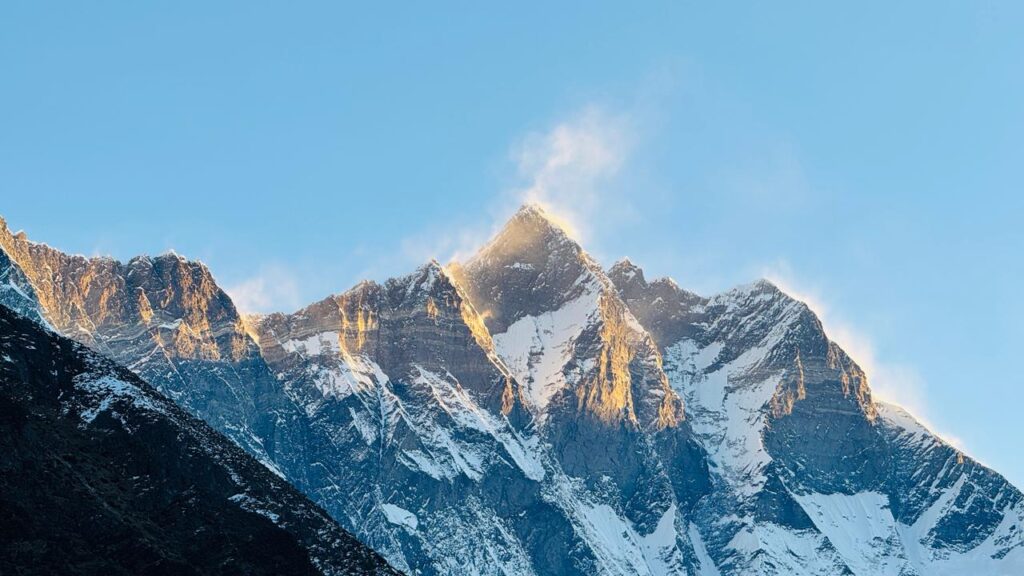
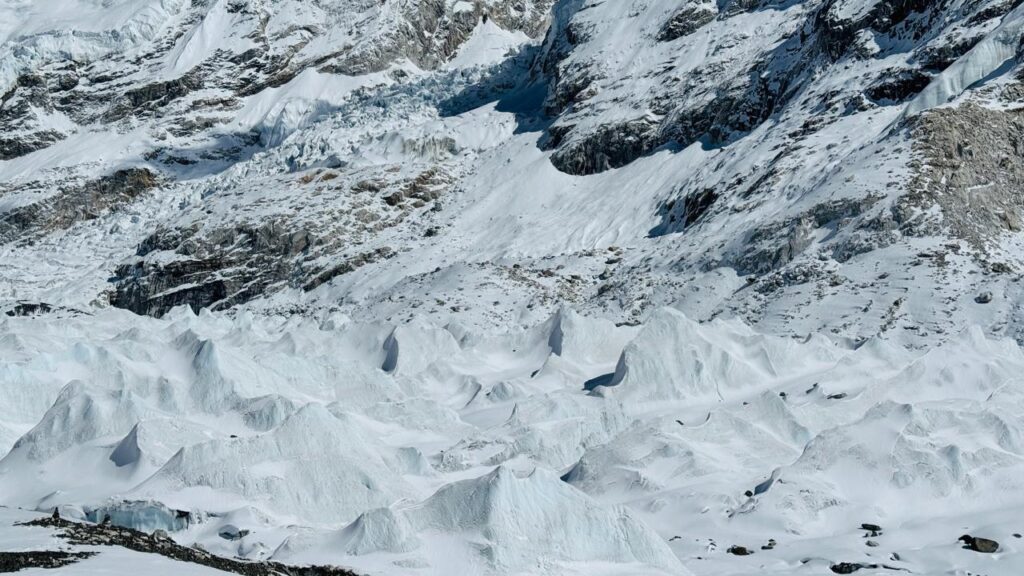
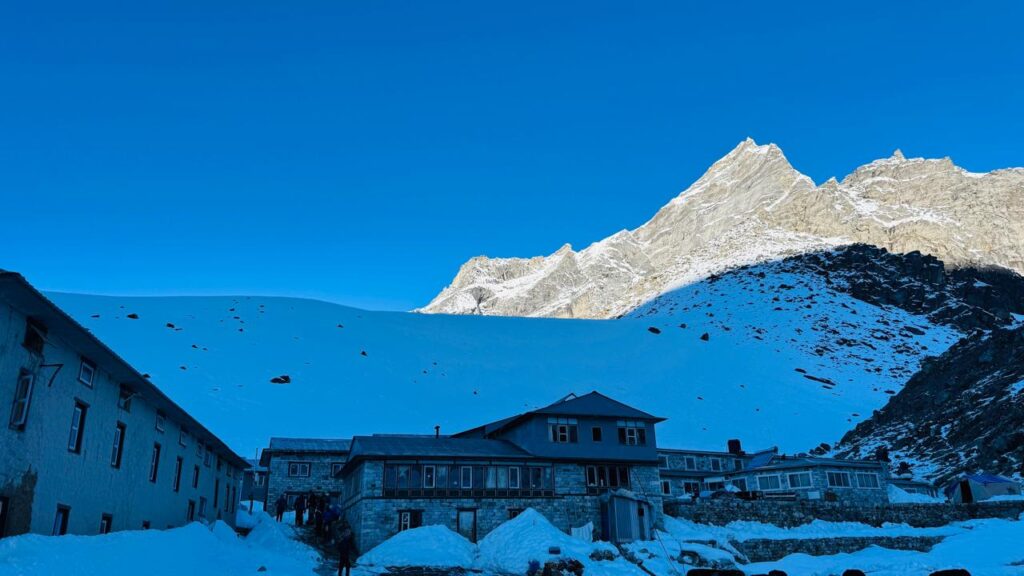
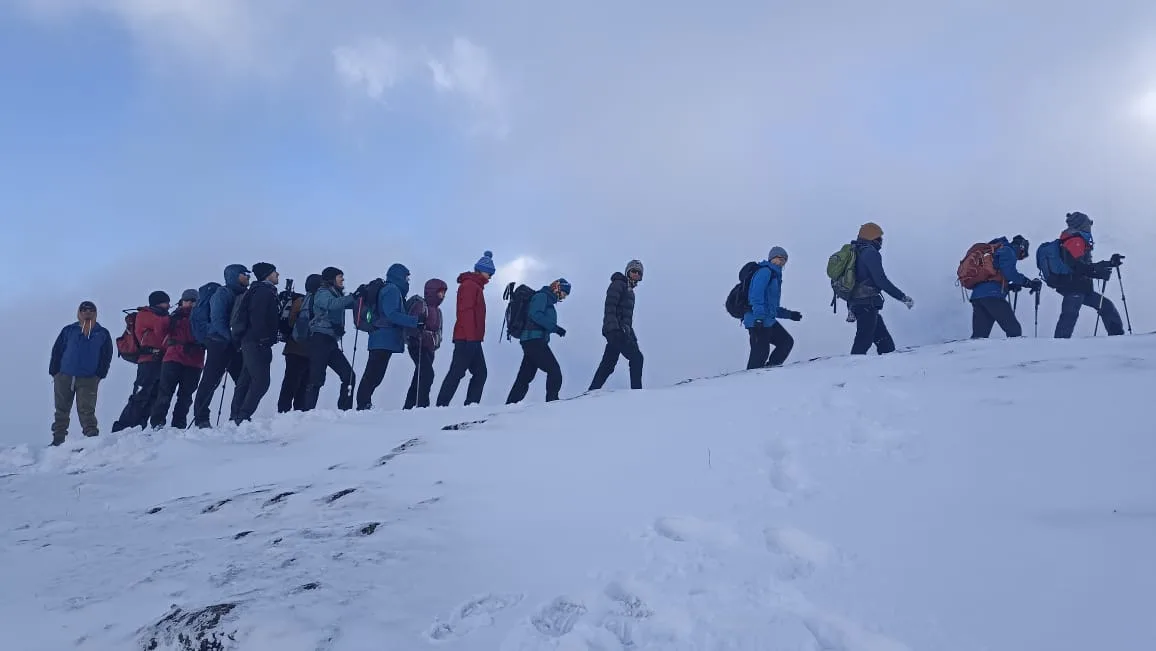
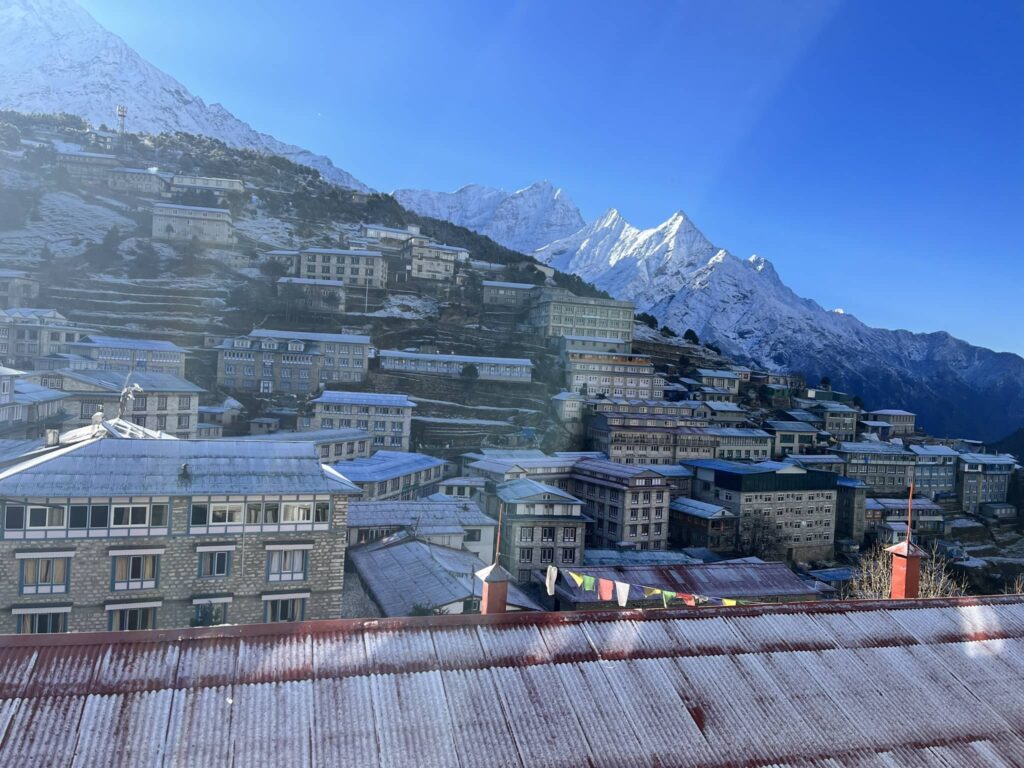
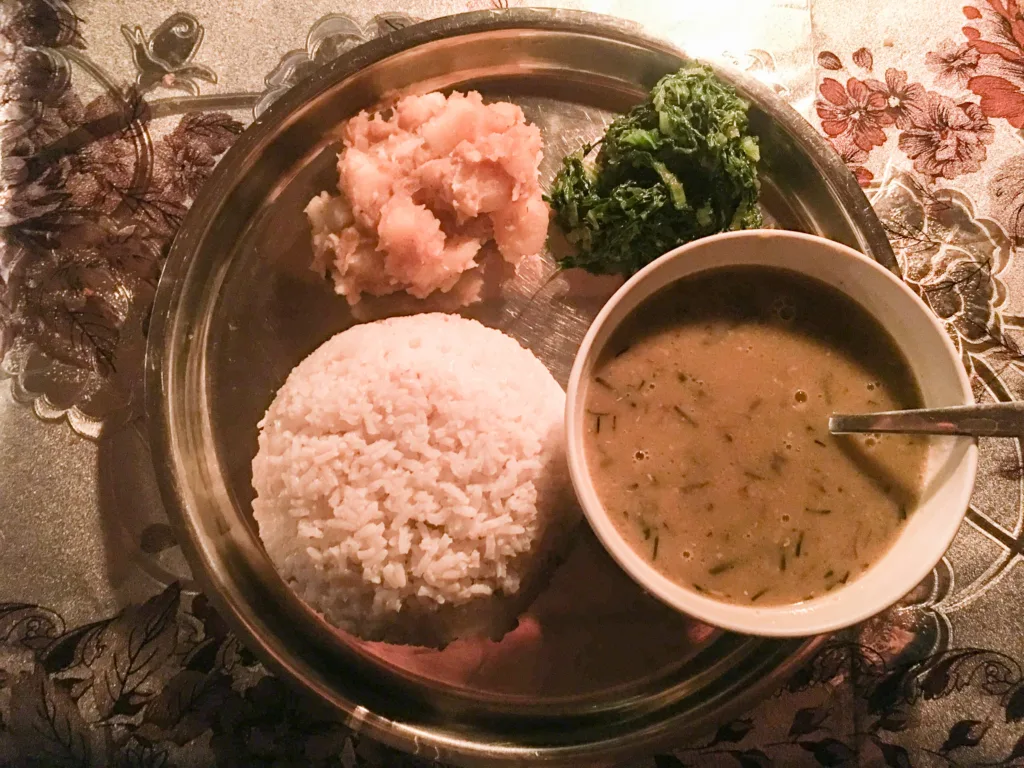
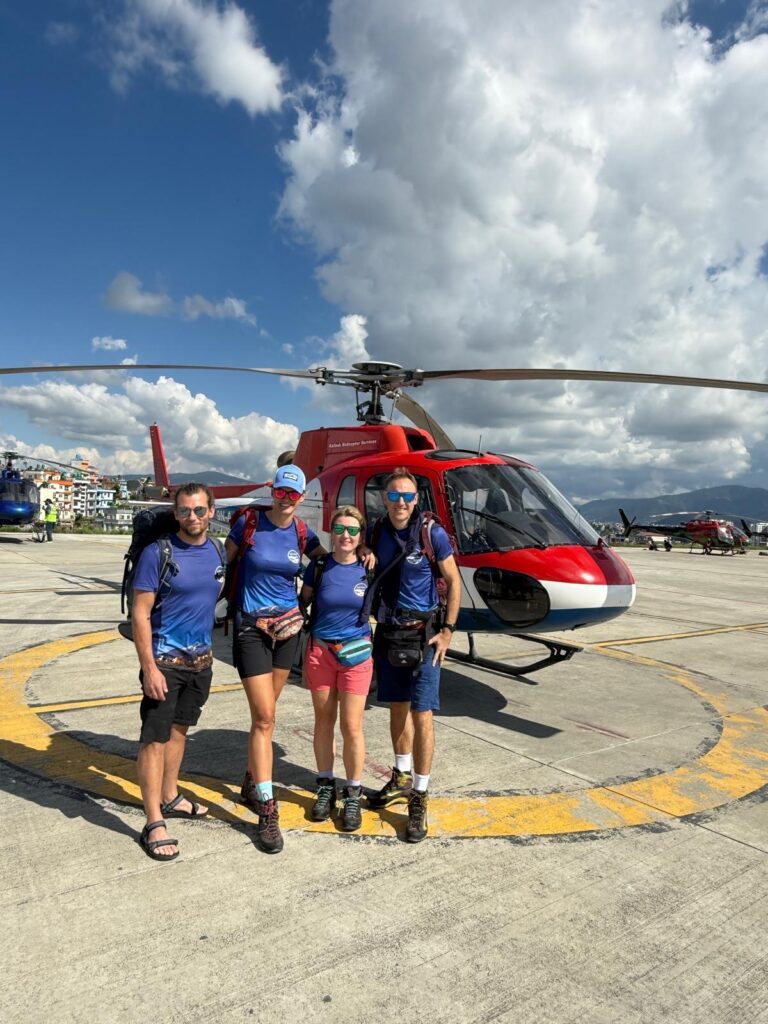
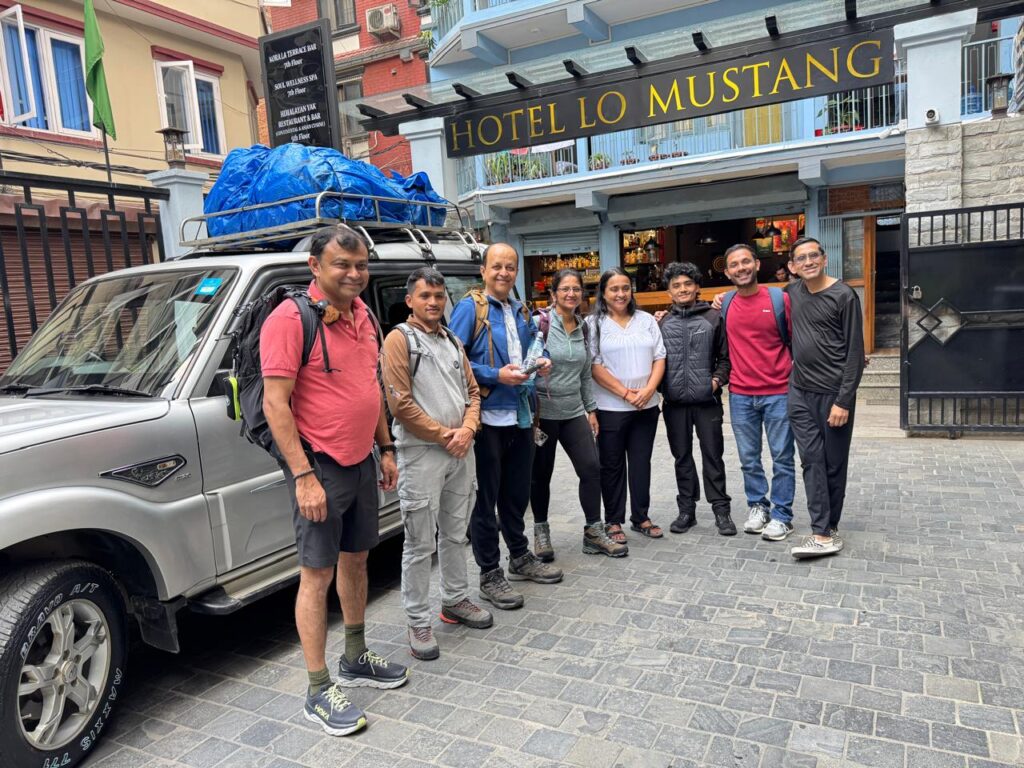
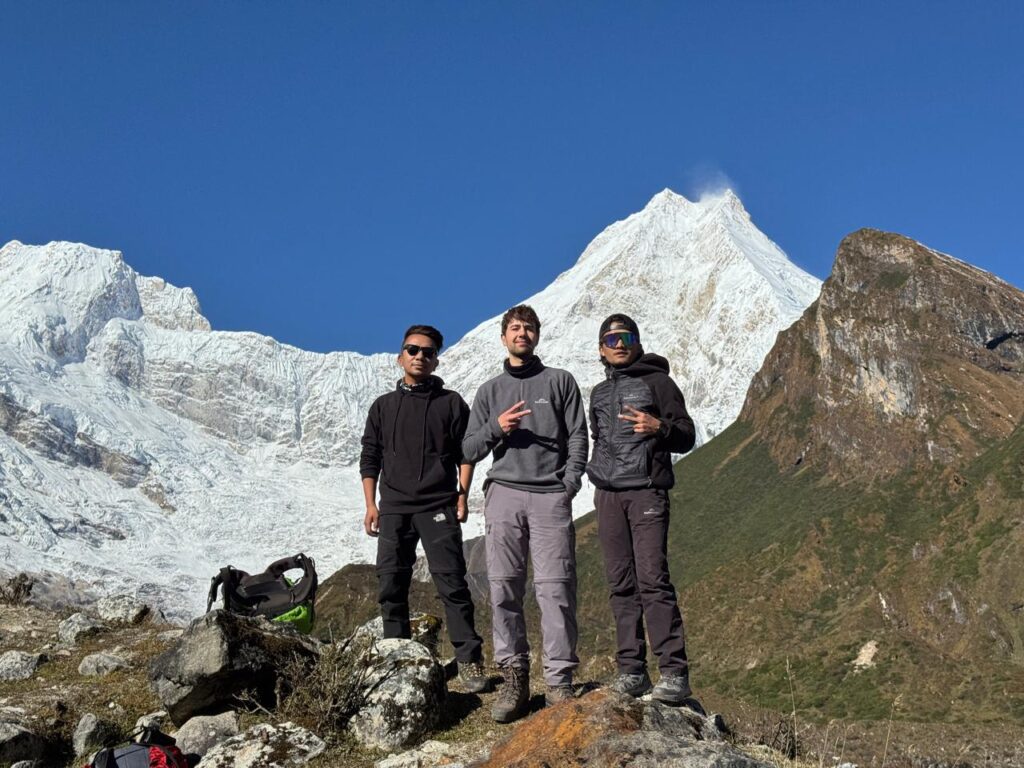
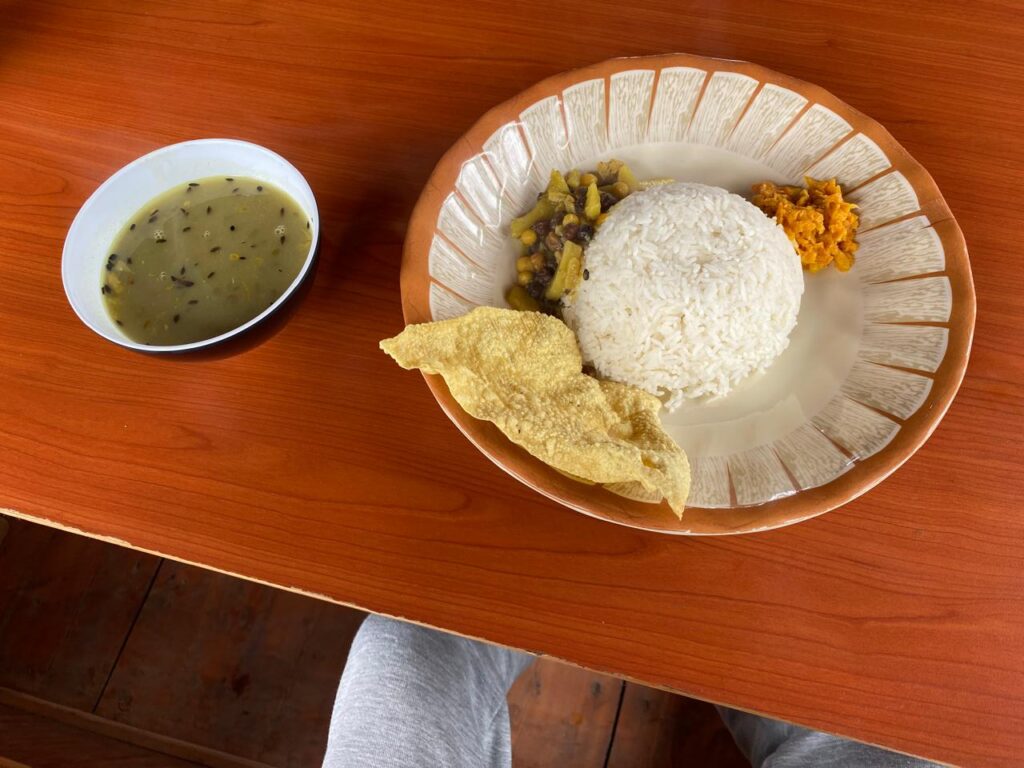
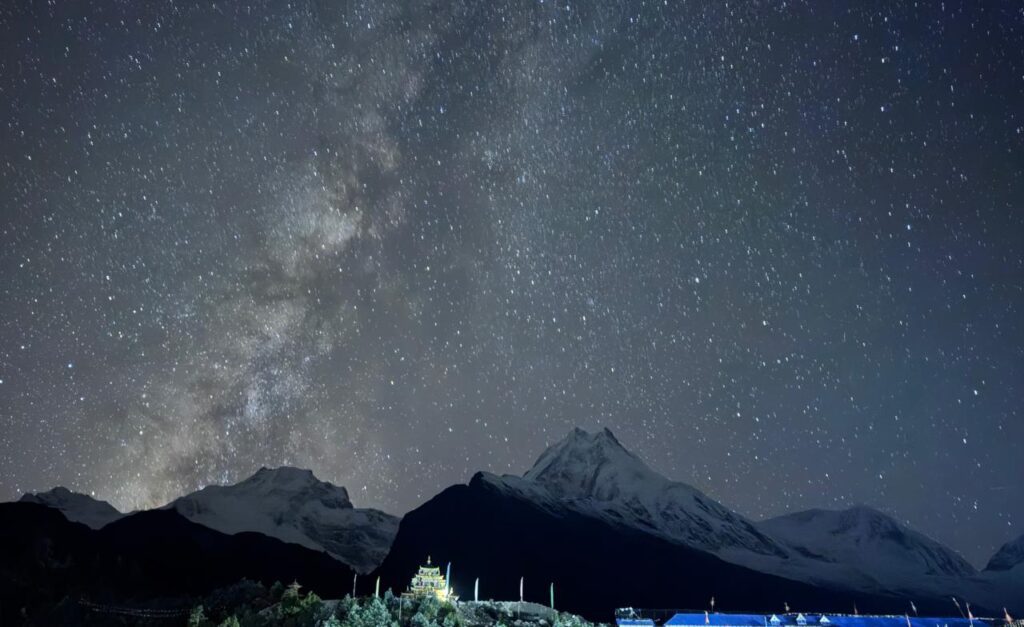
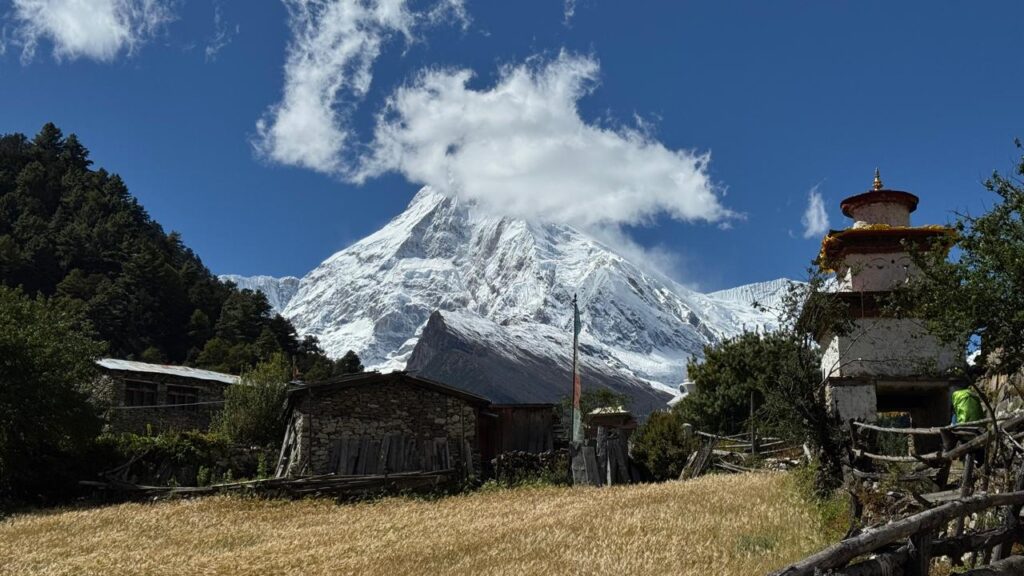
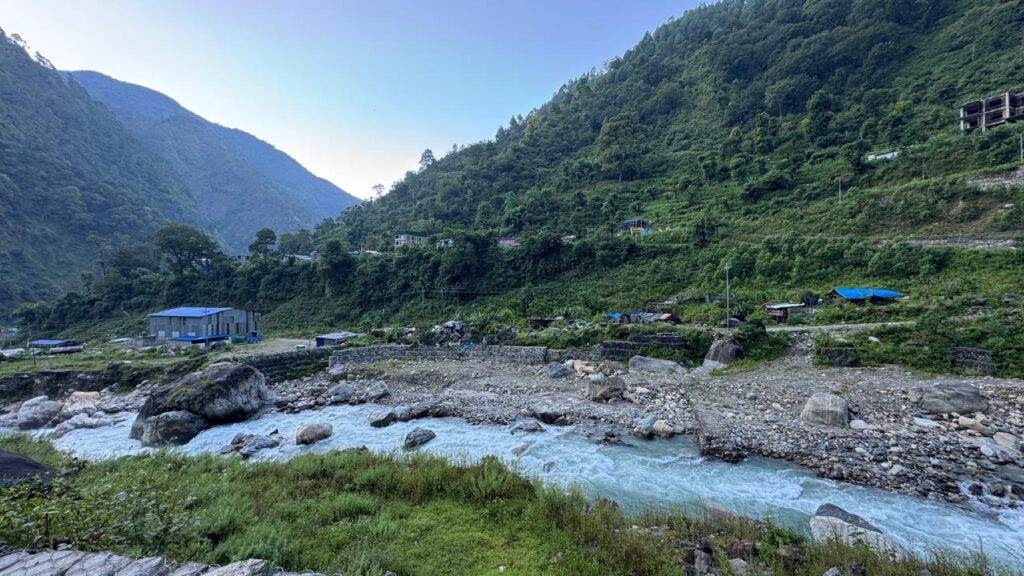
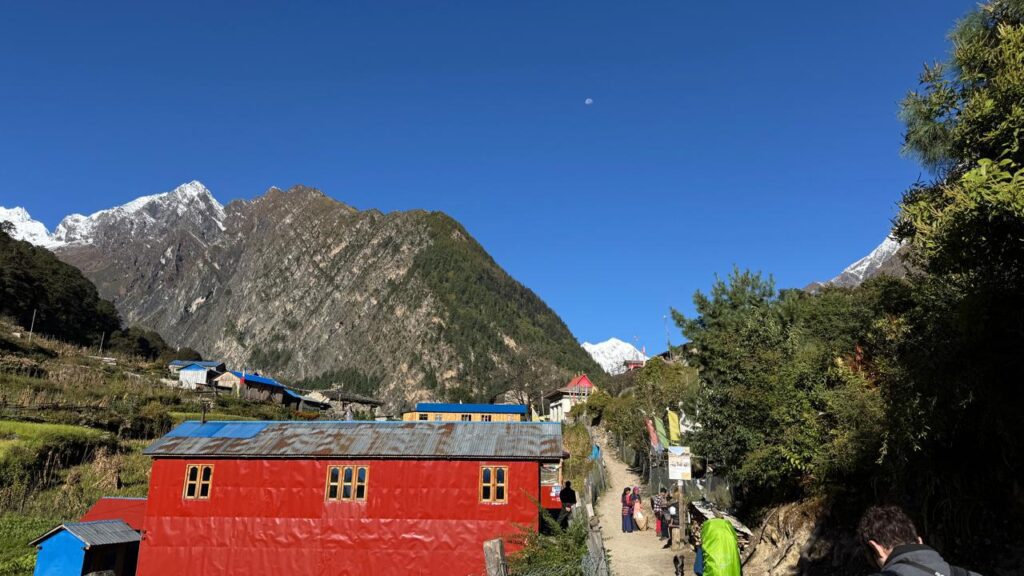
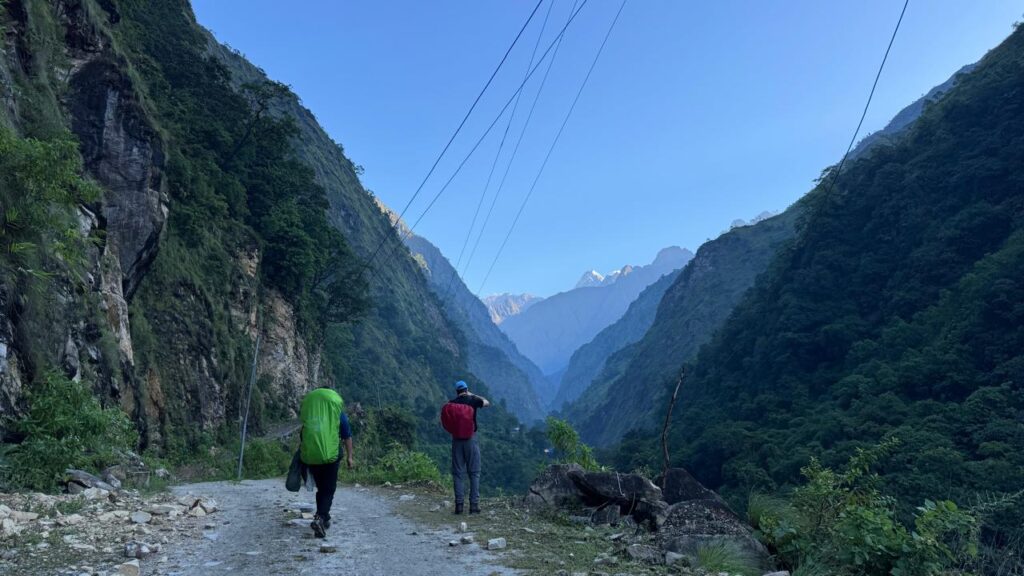
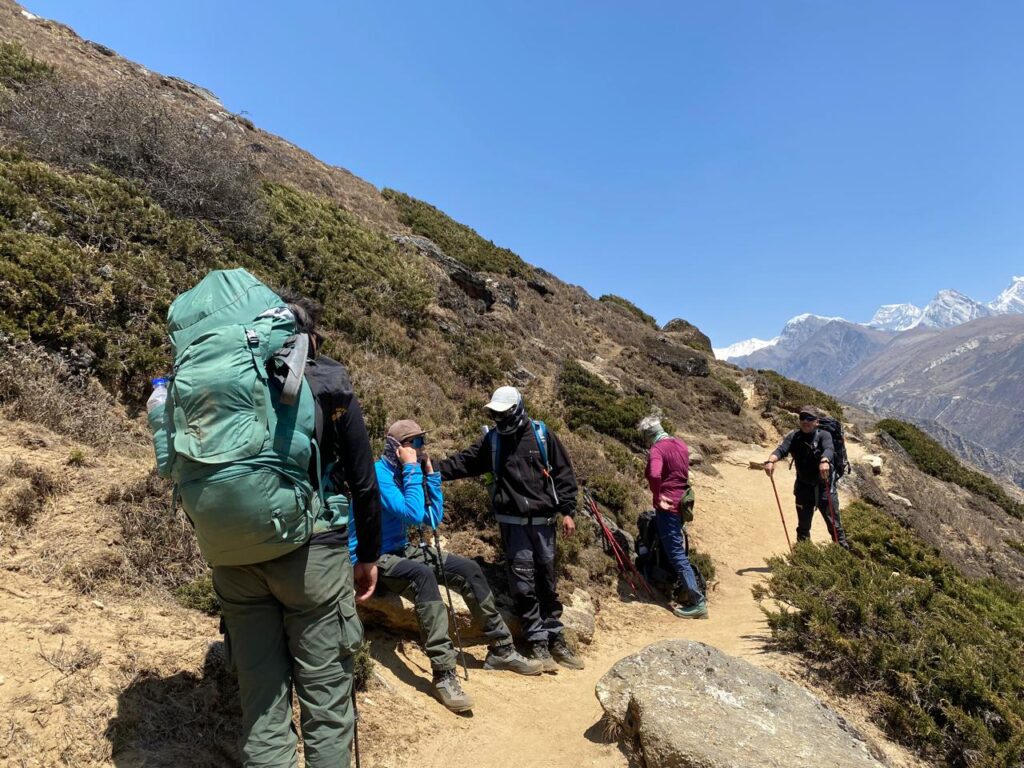
The Manaslu Circuit Trek is one of Nepal’s most rewarding Himalayan journeys in the land of paradise. In this remote area, you can explore the culturally rich, and far less crowded villages than Everest or Annapurna Region. Alongside, you can present yourself with crystal-clear mountain views, vibrant autumn landscapes, and stable weather. You are provided with Manaslu circuit trek fixed departure on 23rd October 2026 where you can get the overall details here.
As in the Autumn season, October is the ideal time to experience Manaslu Region with the authentic Tibetan influenced Buddhism and lifestyle. For trekkers planning ahead, we are excited to announce a fixed departure on 23rd October 2026, designed for those seeking an authentic and well-organized Himalayan adventure.
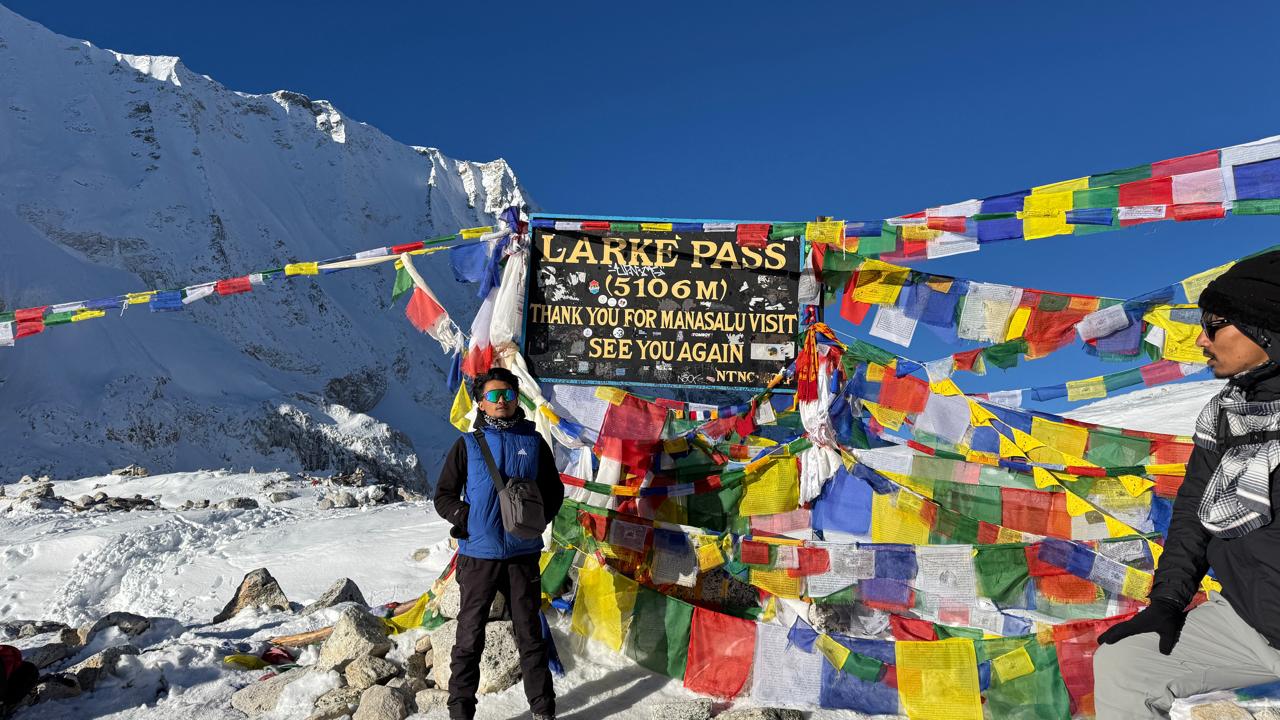
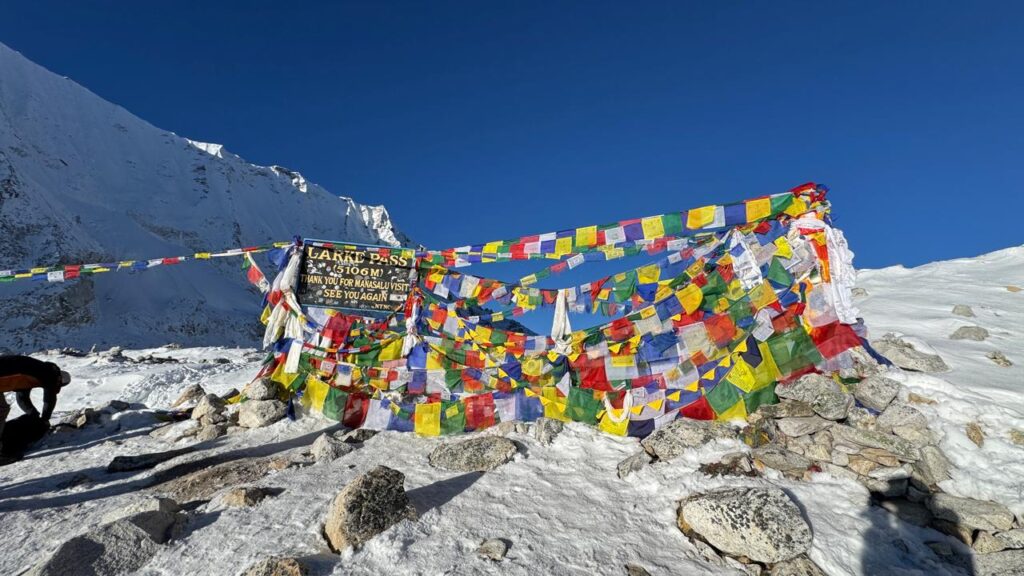
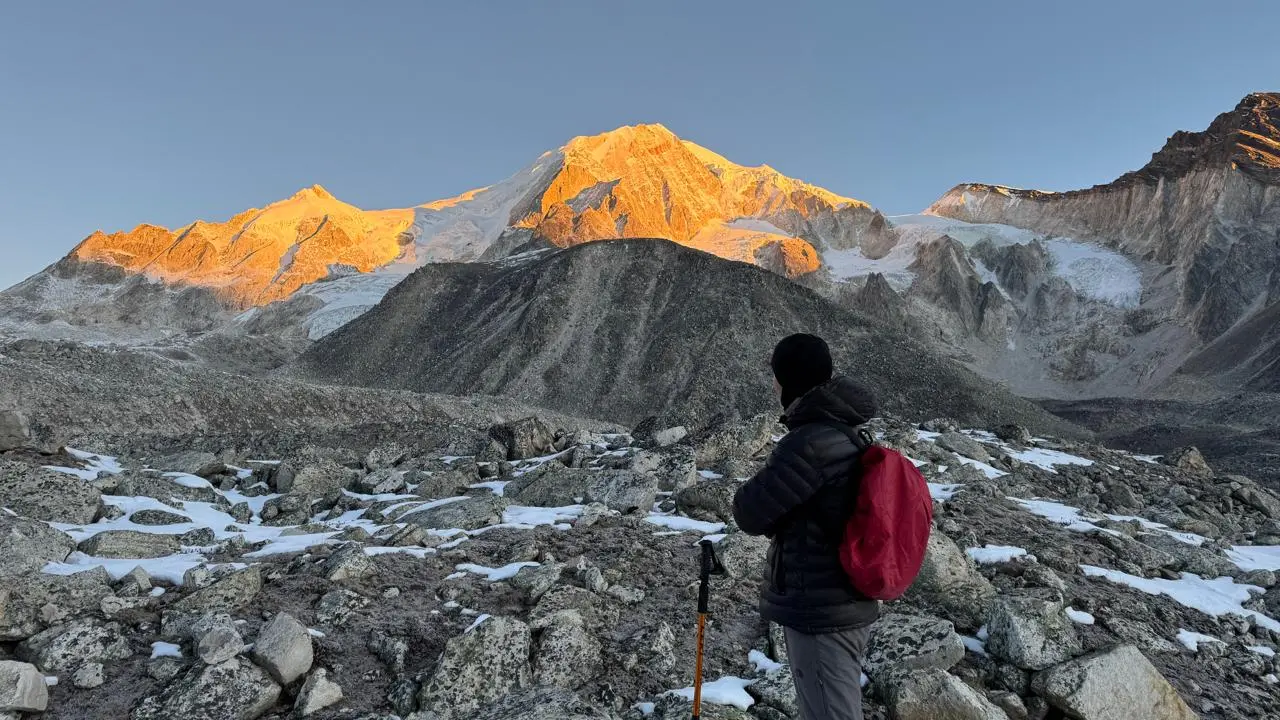
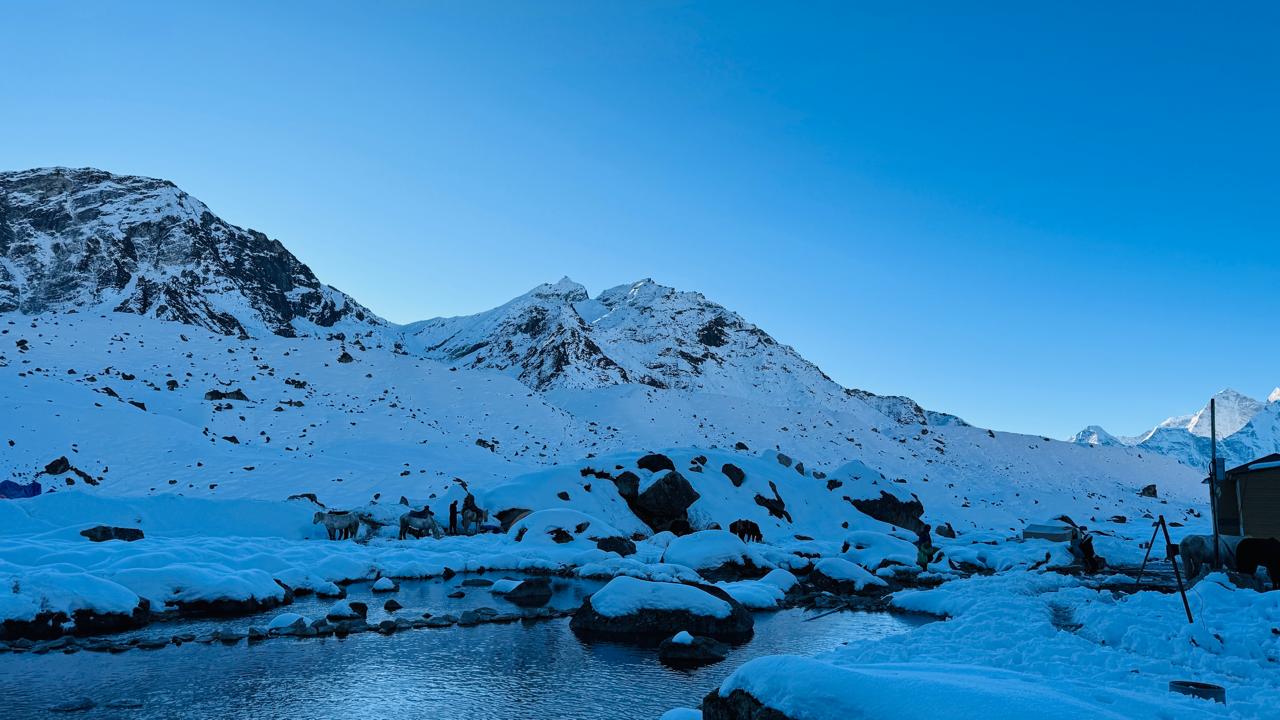
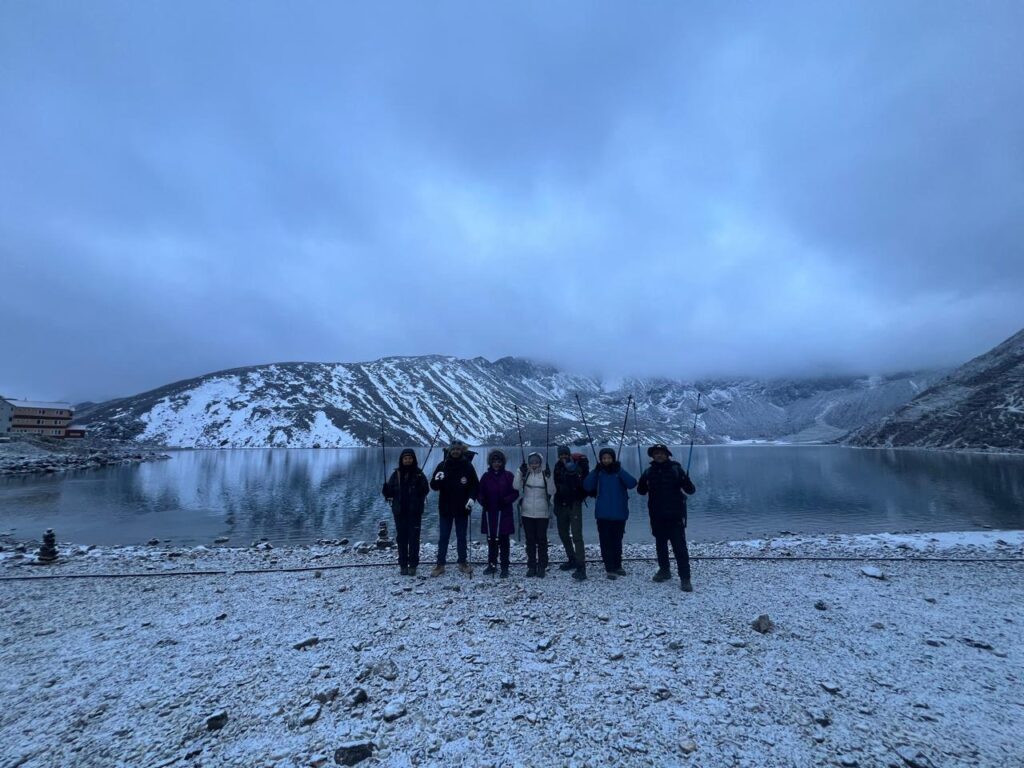
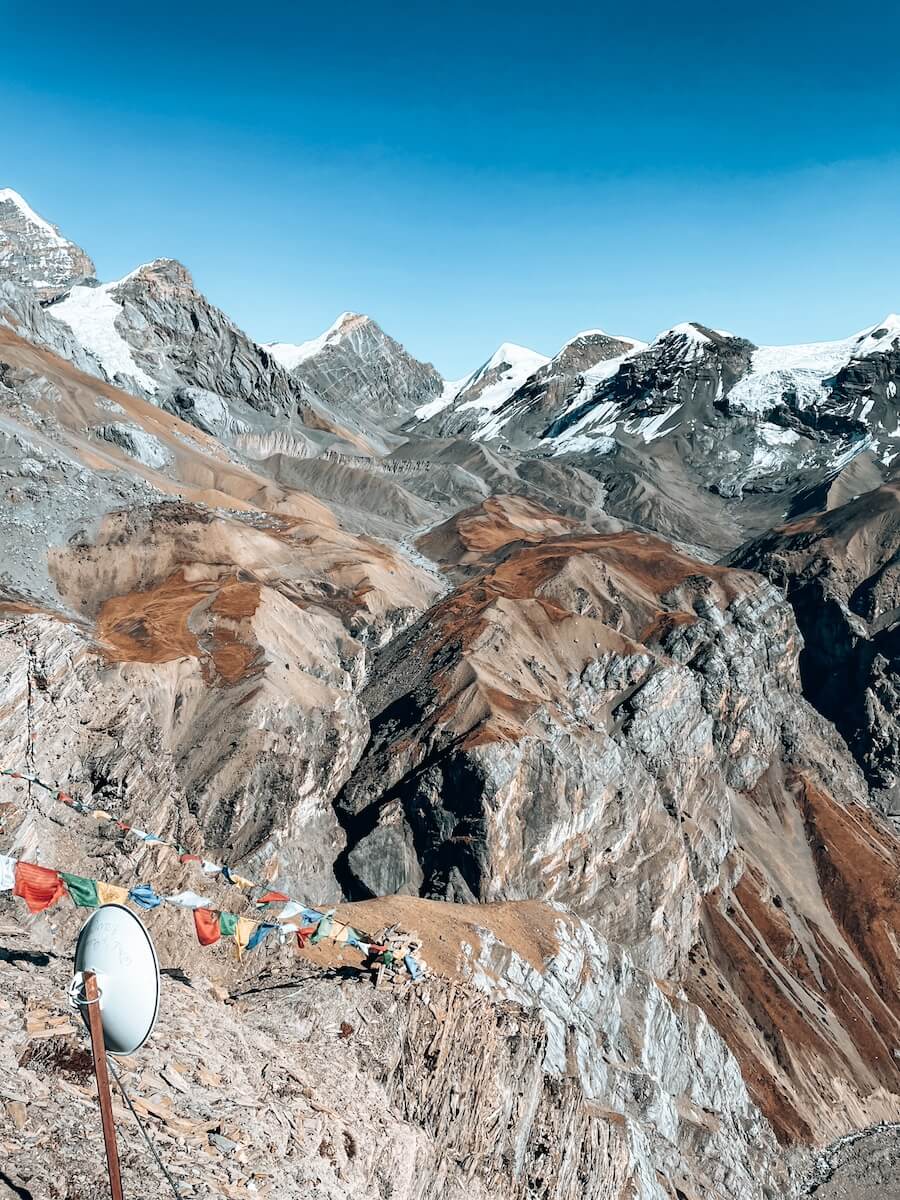
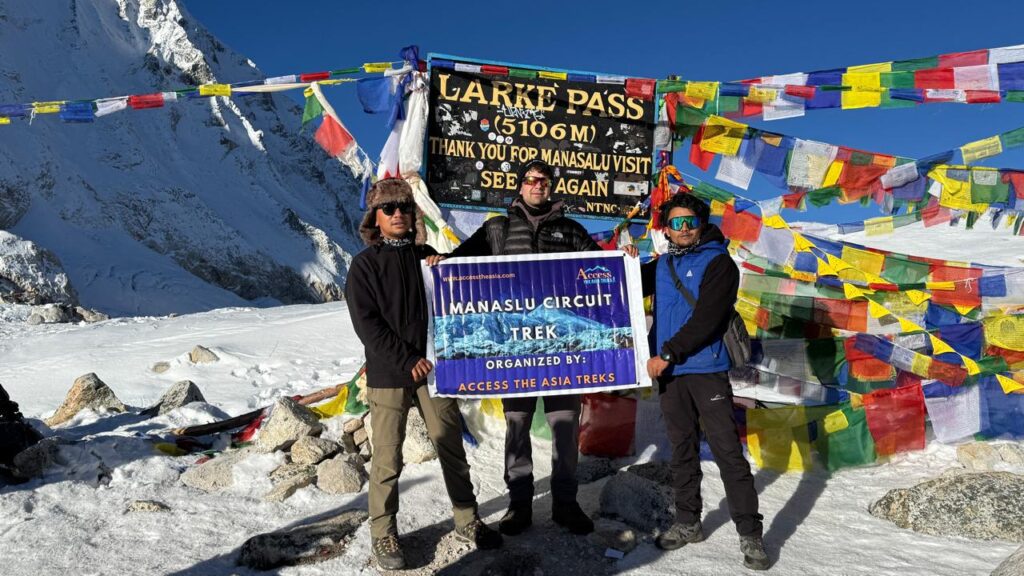
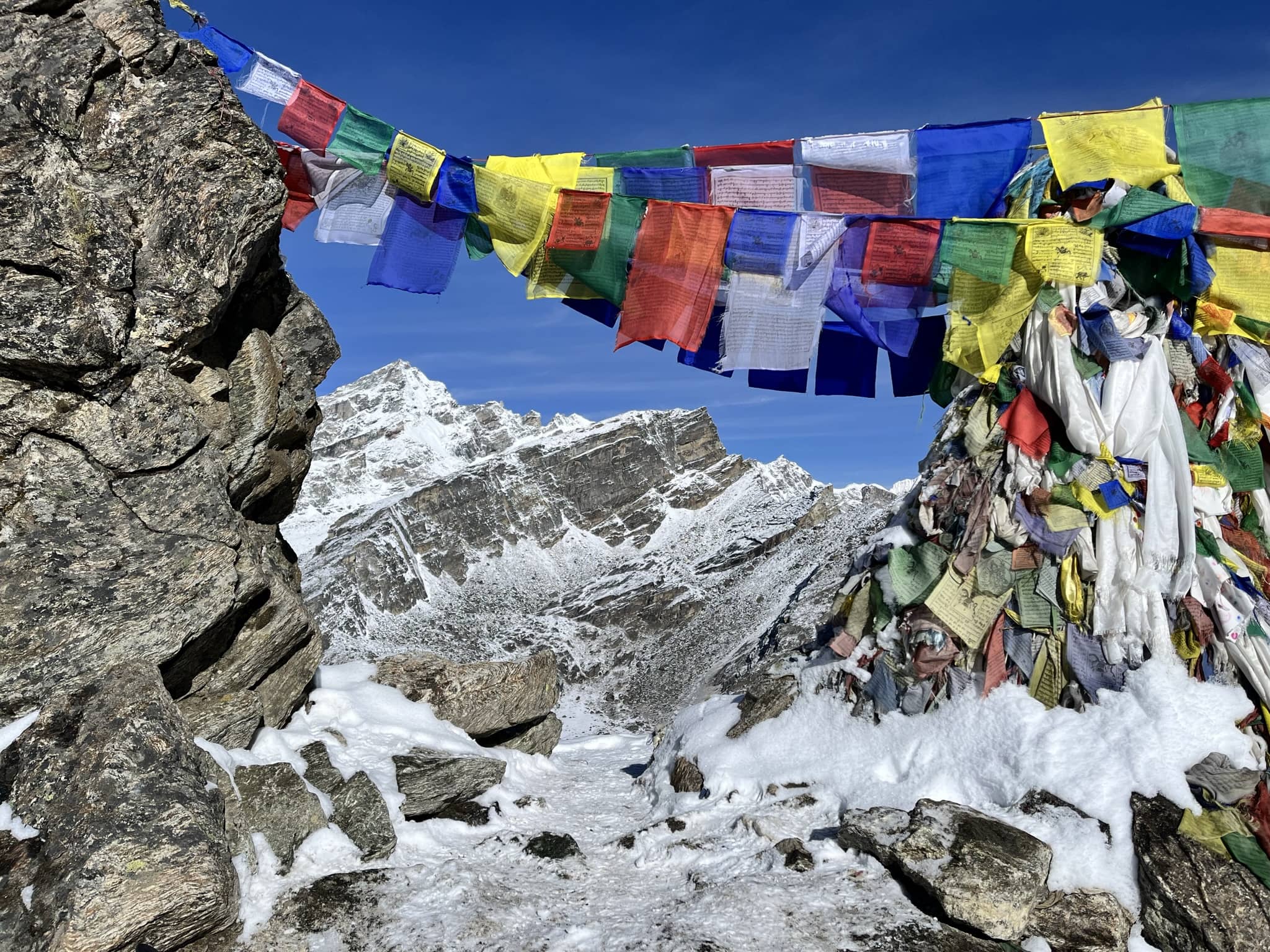
Larke Pass
Why trek Manaslu in October?
Clear Weather & Mountain Views
For your kind information, October comes just after the monsoon, bringing dry days and crystal-clear skies. This scenario makes your trip more comfortable and exciting enough for exploring the majestic Himalayan Views. This literally signifies the uninterrupted views of Mt. Manaslu, Himlung Himal, and surrounding peaks almost every day which will be the perfect trip for you.
Ideal Trekking Temperatures
During this particular month, daytime temperatures are comfortable for long walks, while nights remain cool but manageable in teahouses where you are provided with comfy and cozy rooms. This overall management makes perfect conditions for high-altitude trekking.
Safe & Stable Trail Conditions
In this particular trial, you compulsory need the trekking guide and the management and your overall preparation are done by them. During this time, trails are fresh and firm after the monsoon, rivers are calmer, and the risk of landslides is lower. This makes crossing Larkya La Pass (5,160m) safer and more predictable. Alongside, you are offered help from the staffs and provided with day-to-day supervision.
Rich Cultural Experience
Basically, October often coincides with Dashain and Tihar, Nepal’s biggest festivals celebrated all over the country. Trekking during this time lets you experience local traditions, village celebrations, and a warmer welcome from mountain communities. This makes your trip with cultural immersion and helps you explore the rich cultural heritage and traditional custom with Himalayan lifestyle.
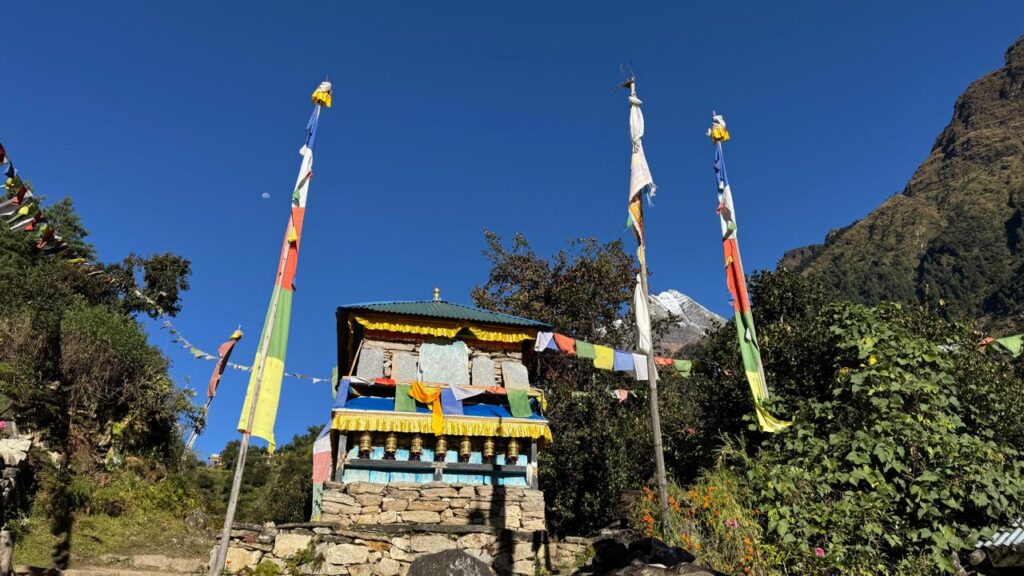
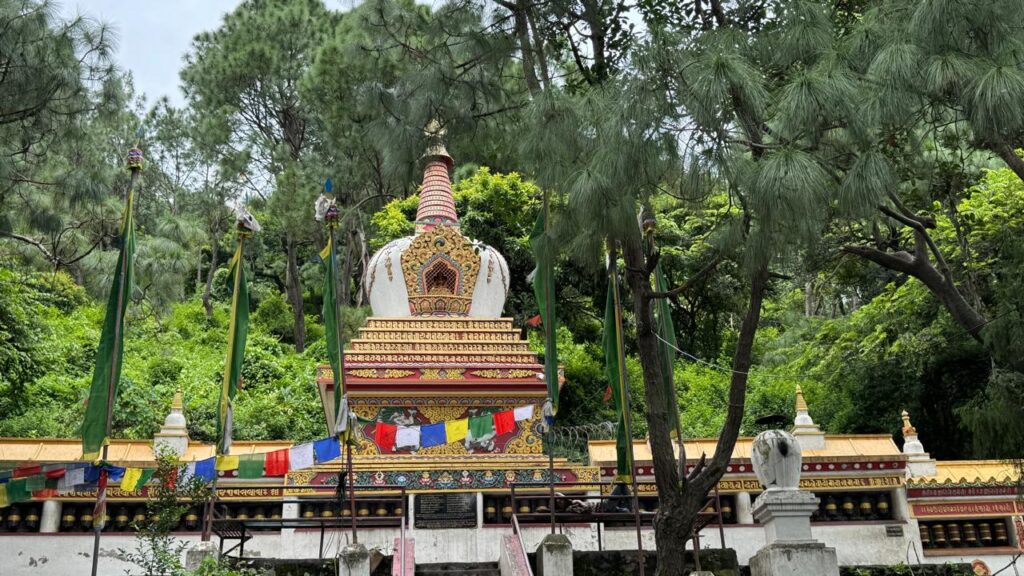
Buddhist monastry
Fewer Crowds, More Wilderness
Even in peak season, Manaslu remains less crowded than Everest or Annapurna, offering a quieter, more authentic Himalayan experience. Along with this, you are provided with the best off the beaten path trek in the land of paradise.
Best Month for Fixed Departures
Because of stable weather and reliable logistics, October is ideal for fixed departure treks, ensuring smoother planning and a higher success rate.
Who should join this departure?
Basically, in this Manaslu Circuit Trek, you must know that the restricted permit is only allowed for more than 1 trekker. Therefore, solo trekkers can join this trek in the fixed departure to grab the opportunity.
This fixed-departure trek on 23rd October 2026 is perfect for adventurers seeking the remote area exploration and to enjoy the challenges of the Manaslu Circuit. Trek through quiet mountain trails, traditional villages, and breathtaking Himalayan landscapes while experiencing the rich culture of this less-traveled region.
Literally, you must know that the trek is ideal for fit and healthy individuals comfortable with multi-day trekking at high altitudes. Saying this, you must have the prior hiking and certain exercise for the preparation of this trek. With experienced guides, required permits, and teahouse accommodations included, it’s perfect for small groups or solo travelers who want a safe, well-organized, and unforgettable Himalayan adventure.
Manaslu Circuit Trek in October: What Makes It a Once-in-a-Lifetime Himalayan Journey?
The Manaslu Circuit Trek is one of Nepal’s most spectacular and less-traveled Himalayan adventures. Trekking through towering peaks, pristine forests, and remote mountain villages, it offers an experience that few treks can match. October is the ideal month, with clear skies, stable weather, and vibrant autumn landscapes, making this journey on 23rd October 2026 a truly once-in-a-lifetime adventure.
Manaslu Circuit Trek October 2026: Itinerary, Permits, Cost & Preparation
Itinerary:
Day 1 Oct 23rd: Drive from Kathmandu (1400m) to Machha Khola
(900m)
Day 2 Oct 24th: Trek from Machha Khola (900m) to Jagat (1410m)
Day 5 Oct 25th: Trek from Jagat (1410m) to Deng (1804m)
Day 6 Oct 26th: Trek from Deng (1804m) to Namrung (2630m)
Day 7 Oct 27th: Trek from Namrung (2630m) to Shyala (2460m)
Day 8 Oct 28th: Trek from Shyala (2460m) to Samagaon (3530m)
Day 9 Oct 29th: Rest Day in Samagaon (3530m)
Day 10 Oct 30th: Trek from Samagaon (3530m) to Samdo (3860m)
Day 11 Oct 31st: Acclimatization Day at Samdo (3860m)
Day 12 Nov 1st: Trek from Samdo (3860m) to Dharmasala (4460m)
Day 13 Nov 2nd: Trek from Dharmasala (4460m) to Bhimthang
(3700m) via Larkya La Pass (5160m)
Day 14 Nov 3rd: Trek from Bhimthang (3700m) to Dharapani
(1960m)
Day 15 Nov 4th: Drive from Dharpani (1960m) to Kathmandu
(1400m) via Besisahar
Permits
For the permits, the details are:
Manaslu Restricted Area Permit (RAP)
Cost: Approx. USD 70–80 per person for 8–14 days
Required because Manaslu is a restricted trekking region.
Manaslu Conservation Area Permit (MCAP)
Cost: Around USD 20–30 per person
Supports conservation and local community projects in the area.
TIMS Card (Trekkers’ Information Management System)
Cost: USD 10–20 per person (for individual trekkers)
Often included for organized groups in Nepal
Total Estimated Cost per Person: USD 100–130
Cost and Preparation
The total cost comes out to be USD 1250 per person which includes the private transportation for the pick and drop off to and from the airport, sharing transportation during the trek, highly experienced government licensed trekking guide, standard accommodation in Kathmandu and during the trek, full board meal during the trek, restricted permits and all other required documents.
Preparation
To make the trek enjoyable and safe:
Fitness: Be ready for 7–14 days of moderate to strenuous trekking at high altitudes (up to 5,160m at Larkya La Pass).
Health & Safety: Stay hydrated, pace yourself, and be aware of altitude sickness symptoms. For the altitude sickness, you are provided with the day-to-day supervision from our staff regarding how much you eat, the amount of liquid intake, the pace of the walk, your sleeping duration and hike high and sleep low mechanism. During emergency situation, you are evacuated from the area and provided with the emergency medical facilities for your betterment.
Experience: Previous trekking experience helps, but beginners can join with proper preparation and guidance.
With the right preparation and early booking, this trek promises a safe, unforgettable Himalayan adventure.
How to book?
Booking your spot is simple and secure. To reserve your place:
Contact us directly via our website or email or whatsapp with your name, contact details, and number of trekkers.
Pay the deposit to confirm your booking. Full payment deadlines and payment methods will be shared upon confirmation.
Receive your confirmation along with a detailed pre-trek detail, packing list, and permit information.
Spots for this departure are limited, so it’s best to book early to secure your place and enjoy a smooth, hassle-free Himalayan adventure.
Nepal is one of the best trekking destination around the world. Nepal is home to the Himalayas, rich culture, and legendary routes like Everest Base Camp and Annapurna. While trekking in Nepal is generally safe, concern about helicopter rescue scams have emerged in recent years, this is especially in high-altitude trekking regions.
Consider this your pre-trek briefing. By the end of this guide, you’ll exactly know how to spot the fraud, protect yourself, and ensure your Himalayan memories are only of breathtaking views – not a breathtaking betrayal.
What is a Helicopter Scam in Nepal?
A helicopter scam refers to the misuse or unnecessary use of helicopter evacuation during the trek, often for the financial gain rather than genuine medical emergency.
In recent cases, trekkers with mild altitude symptoms or non-critical condition were pressured into helicopter evacuations even when safer, cheaper alternatives such as rest, medication or descending on foot were possible during that time.
It is really important to clarify that helicopter rescue are lifesaving and essential when it is truly needed.
The issue arises when evacuations are conducted without proper medical justification.
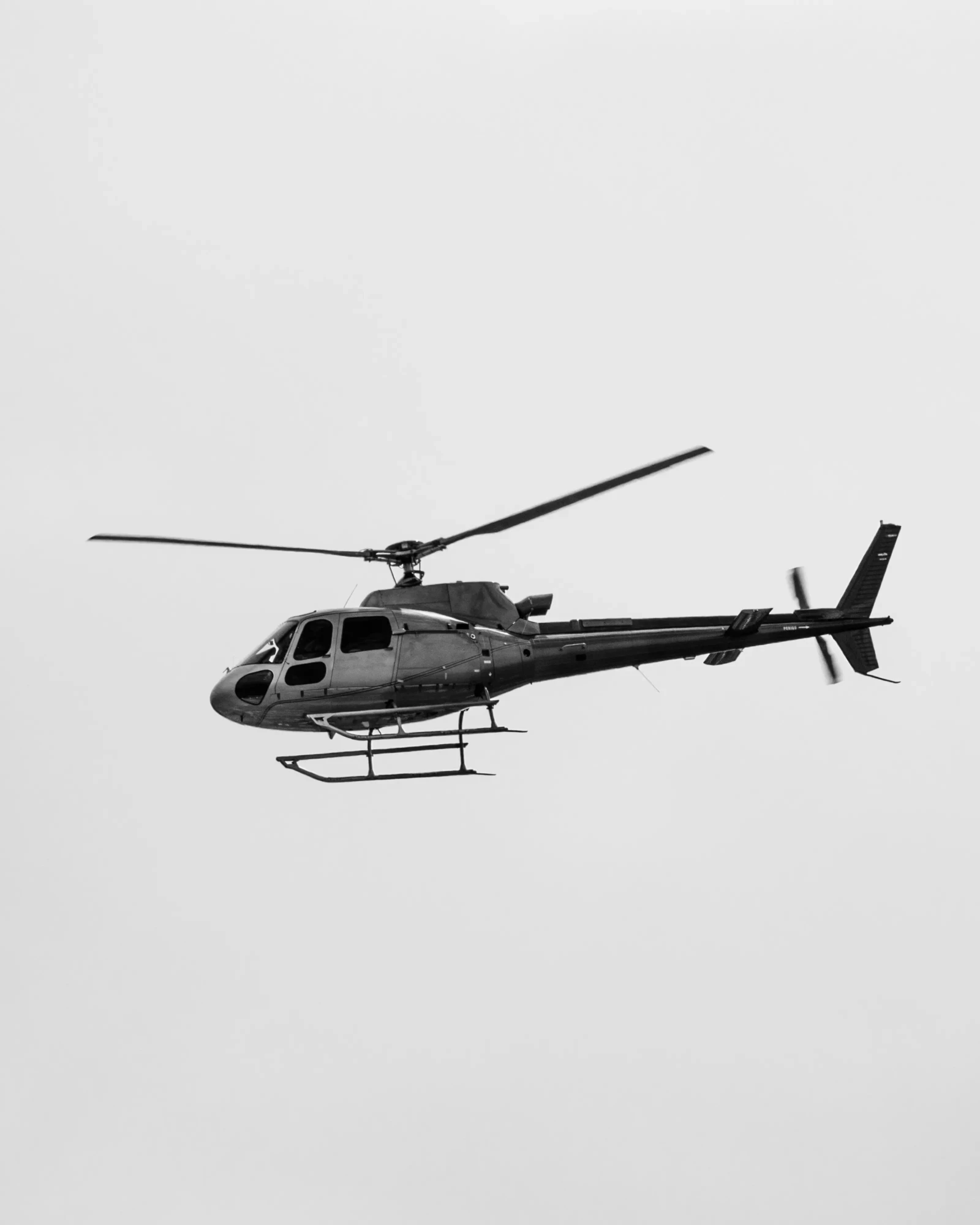
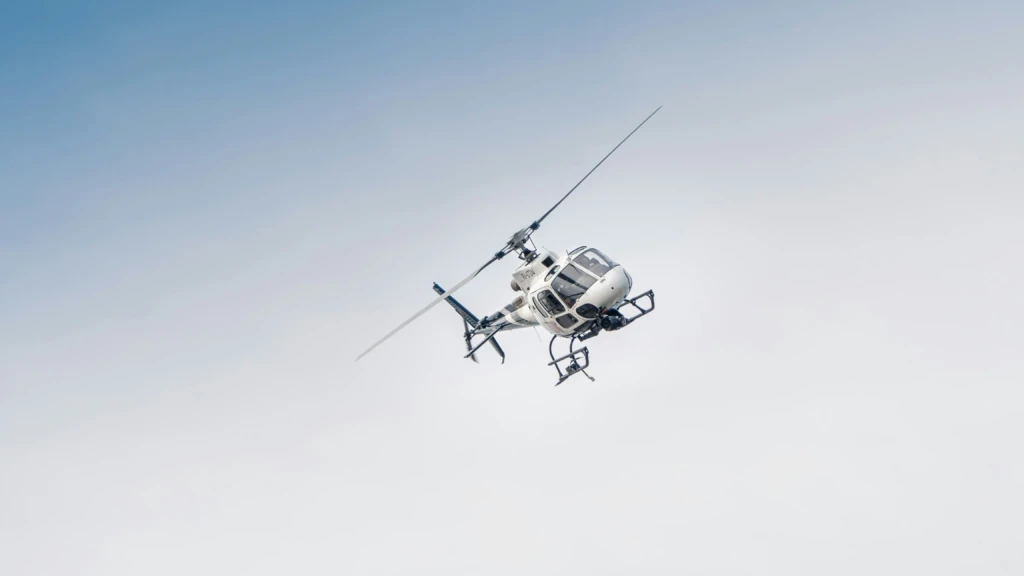
Heli flying in air
How Helicopter Scams Usually Happen
Helicopter scams usually happen when a trekker experience mild Acute Mountain Sickness (AMS) symptoms then, a guide or intermediary insists on immediate helicopter evacuation. Then, you will start to panic and don’t realize to check your health properly. The insurance companies are contacted quickly and then helicopter evacuation is approved, even when walking down was possible.
In some cases, trekker realizes the evacuation was unnecessary, but then the cost has already been billed to the insurance.
Trekking Regions Where Such Issue Are Reported
Most of the helicopter cases of misusing of insurance have been reported, not proven, in this following region:
Everest (Khumbu) Region
Annapurna Region
These 2 region Everest (Khumbu) and Annapurna has high volume rate of tourist and easy access to the helicopter and strong insurance coverage among trekker. This does not mean these regions are unsafe, only that trekkers must be informed and cautions.
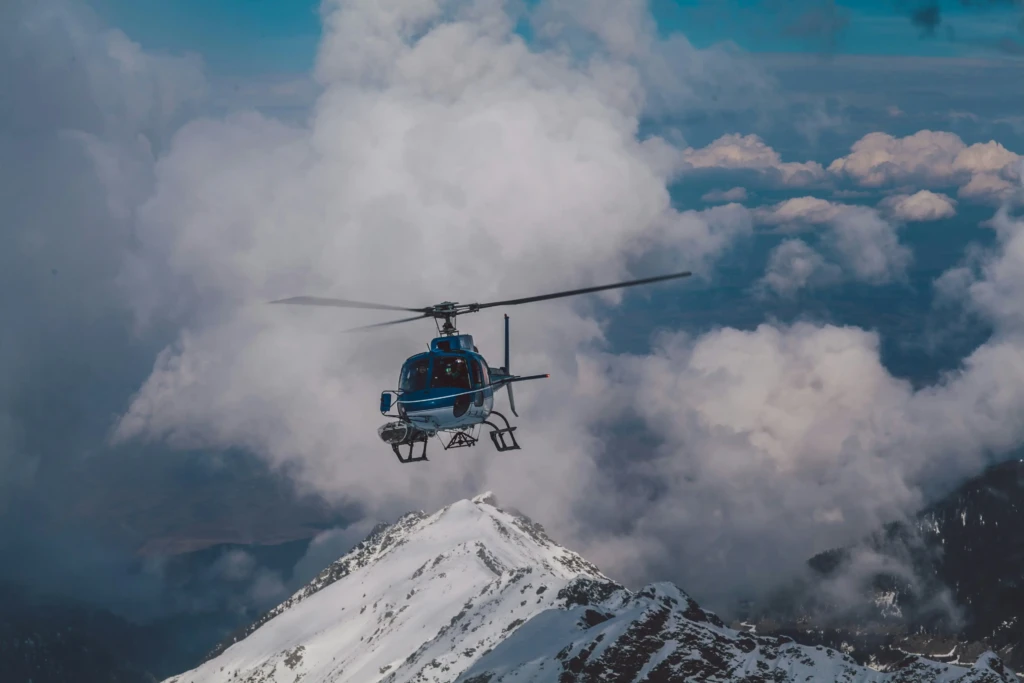
Mountain flight- taking off
Who Is Most at Risk?
You may be at risk if you are trekking in Nepal for the first time. If you trekking solo or without licensed guide, then you are at very high risk. If you are unfamiliar with altitude sickness, this may happen, so get proper knowledge about altitude sickness about how it happens and what are the symptoms of it. If you are carrying high value travel insurance, you are already at risk. Just carry the value which is necessary for the trek, for that you can get a reliable information from reliable agency like Access the Asia Treks, who are working since 2016 providing excellent service to every traveler. This is why always rely on verified and government registered company. Always avoid unverified or very cheap trekking service.
Lack of information is the biggest risk, not trekking itself.
Understanding Acute Mountain Sickness (AMS)
This is really important to know how altitude sickness happen and what symptoms it brings.
Mid AMS (Common and Manageable)
Headache
Nausea
Loss of appetite
Fatigue
This are usually treated with rest, hydration, mediation or descent
The Manaslu Circuit Trek is one of the most spectacular and less crowded trekking routes in the Himalayas. While circling the eighth highest mountain in the world Mt. Manaslu (8,163m), this trek offers the perfect blend of raw mountain wilderness, Tibetan-influenced culture, dramatic landscape, and authentic village life.
Organized by Access the Asia Treks, our Manaslu Circuit Trek Package is carefully designed to ensure proper acclimatization, safety, and a truly immersive Himalayan experience, making it one of the best alternatives to Annapurna region or Everest region.
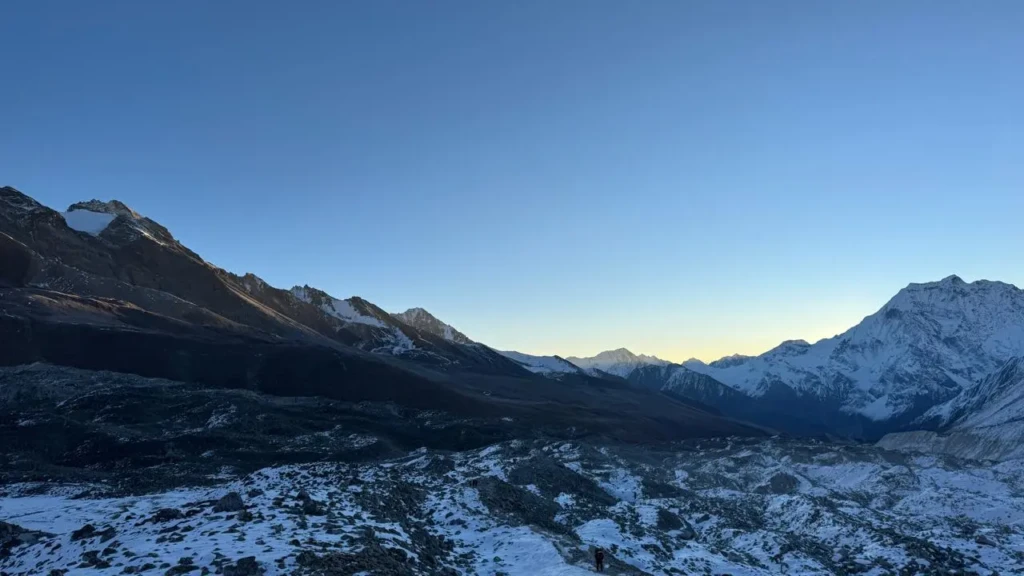
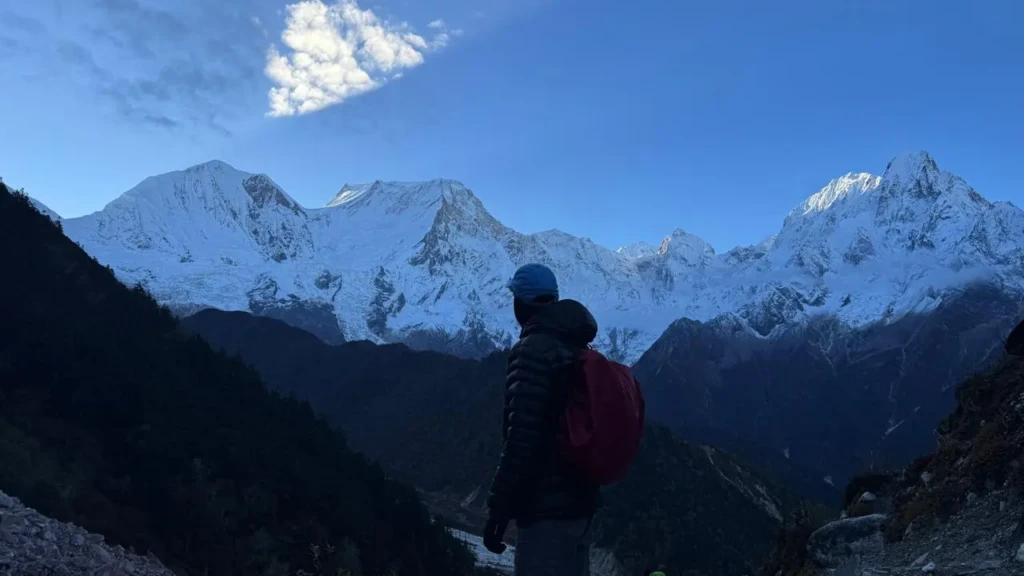
Mesmerizing view of mountain and sunrise from Larke La
Manaslu Circuit Trek Package: Access the Asia Treks (Recommended)
As a Nepal-based trekking company, Access the Asia Treks specialize in restricted area treks like Manaslu, where local expertise and logistics are critical.
Why Choose our Manaslu Circuit Trek?
With over 10+ years of experience on providing excellent service to trekker, we provide you:
Government licensed experienced local guide
Special permits handled professionally
Proper acclimatization and safe itinerary
Small group and private trek option
Transparent pricing with no hidden cost
Ethical trekking and local employment support
24/7 assistant throughout the trek
Trek Manaslu with trusted local experts for safety, comfort and authentic Himalayan adventure.
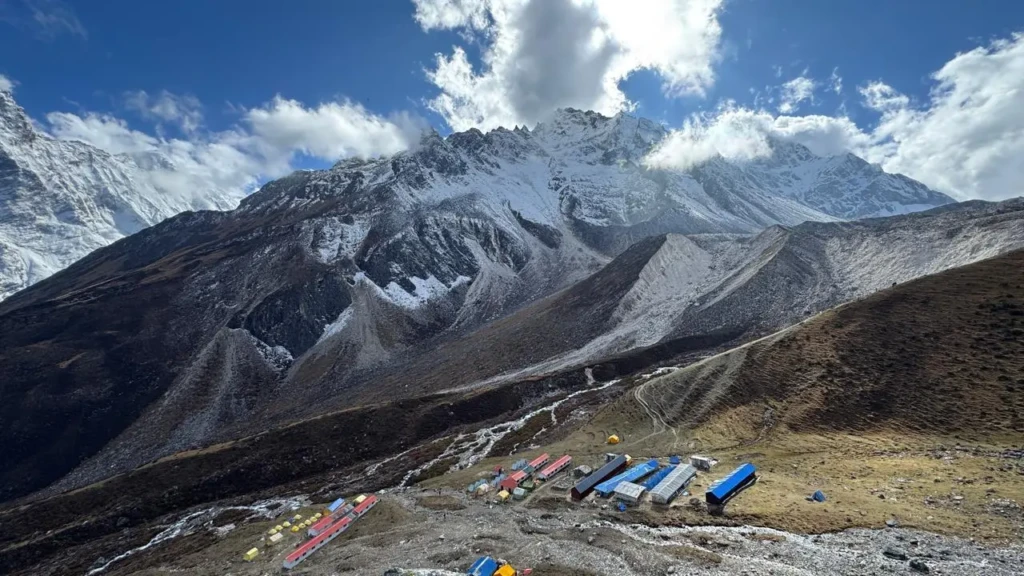
View from the top of Dharmasala
Manaslu Circuit Trek Overview
The Manaslu is located at Manaslu Conservation Area region of Nepal. The Manaslu Circuit Trek duration is 16 days. The maximum altitude of this trek is 5,106m/ 16,930ft (Larke La Pass). The difficulty of this trek is not very hard and not very easy; hence we can say it’s a moderate trek. This trek is teahouse trekking. The starting point of this trek is Maccha Khola and ending point is Dharapani.
The Manaslu Circuit Trek takes you through deep river gorges, terrace farmlands, alpine forests and remote Himalayan villages, crossing the thrilling Larke La Pass, one of the longest and most dramatic mountains passes in Nepal.
Here, we provide you 16 Days Manaslu Circuit Trek itinerary which includes proper acclimatization, and perfect days to complete this trek.
Day 1: Arrival at Kathmandu (1,400m/4,593ft)
Day 2: Sightseeing at Kathmandu Valley (1,400m/4,593ft)
Day 3: Drive from Kathmandu to Machha Khola (900m/2,953ft)
Day 4: Trek from Machha Khola to Jagat (1,410m/4,626ft)
Day 5: Trek from Jagat to Deng (1,804m/5,919ft)
Day 6: Trek from Deng to Namrung (2,630m/8,629ft)
Day 7: Trek from Namrung to Shyala (2,460m/8,071ft)
Day 8: Trek from Shyala to Samagaun (3,530m/11,581ft)
Day 9: Rest day at Samagaun (3,530m/11,581ft)
Day 10: Trek from Samagaun to Samdo (3,860m/12,664ft)
Day 11: Rest day at Samdo (3,860m/12,664ft)
Day 12: Trek from Samdo to Dharmasala (4,460m/14,633ft)
Day 13: Trek from Dharmasala to Bhimthang (3,700m/12,139ft) via Larke La Pass (5,106m/16,752ft)
Day 14: Trek from Bhimthang to Dharapani (1,960m/6,430ft)
Day 15: Drive from Dharapani to Kathmandu (1,400m/4,593ft)
Day 16: Departure
Note: Itinerary can be customized as per your plan. You can also include Tsum Valley Trek with Manaslu to increase number of days.
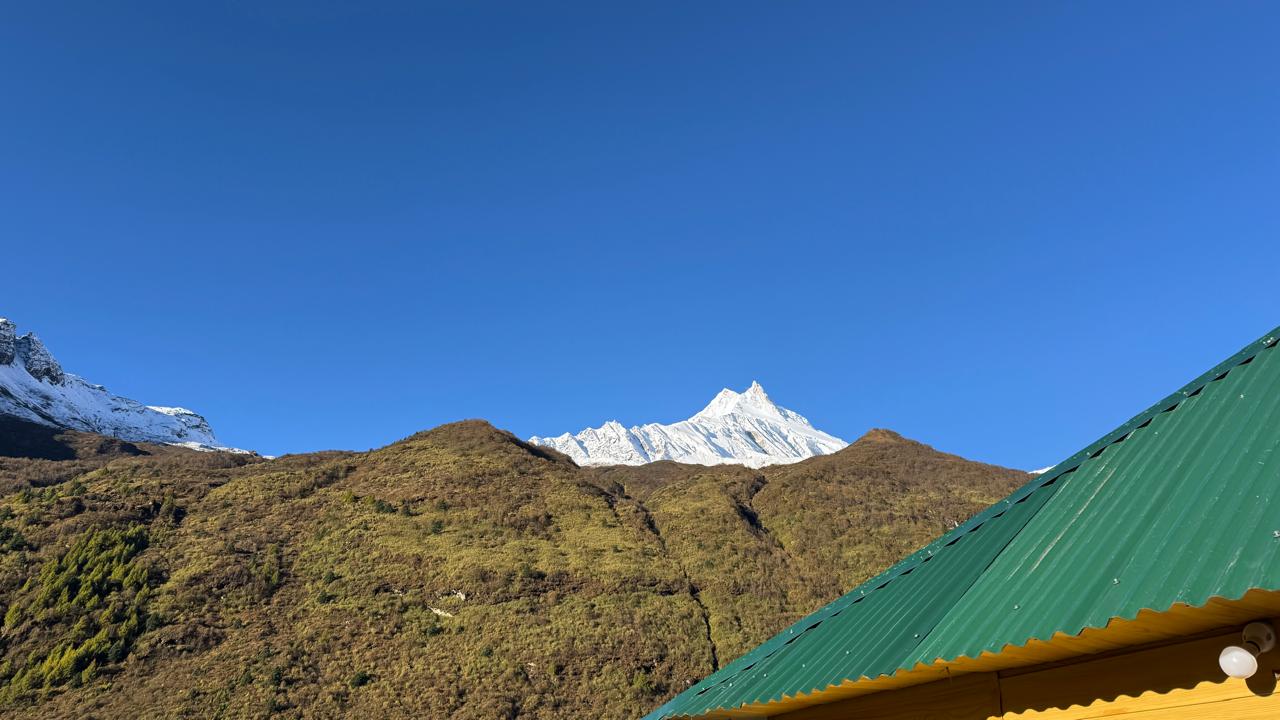
Watching the mountain from lower altitude
Manaslu Circuit Trek Cost
The cost for the Manaslu Circuit Trek depends on group size, service, and trek duration. The estimated cost for Manaslu Circuit will starts from 1,200 USD – 2,200 USD. This cost varies upon the service you have taken from the agency. Access the Asia Treks offers you 1,250 USD for Manaslu Circuit Trek, which is standard package.
This cost Includes:
Airport pick up and drop
Luxury accommodation in Kathmandu
All restricted trekking permits (ACAP, MCAP, MRAP)
Private transportation (Kathmandu to Machha Khola / Dharapani to Kathmandu)
Government licensed trekking guide and porter
Accommodation during the trek
Food during the trek (Lunch, breakfast, and dinner)
Access the Asia Treks handles all the permits and offers you a transparent pricing.
Best Time for Manaslu Circuit Trek
The best time to trek to Manaslu Circuit Trek is Spring which starts from March to May and there is another season which is Autumn which starts from September to November.
Spring (March to May): This season is perfect for photographers, nature lover, and trekker who prefers a vibrant landscape combined with stable trekking condition.
Autumn (September to November): This is the busiest season among all year, so we suggest you to book this trek in advance. During this time, you can enjoy the greatest festival of Nepal Dashain and Tihar which also falls in this season, offering trekkers to experience the local culture along the trail.
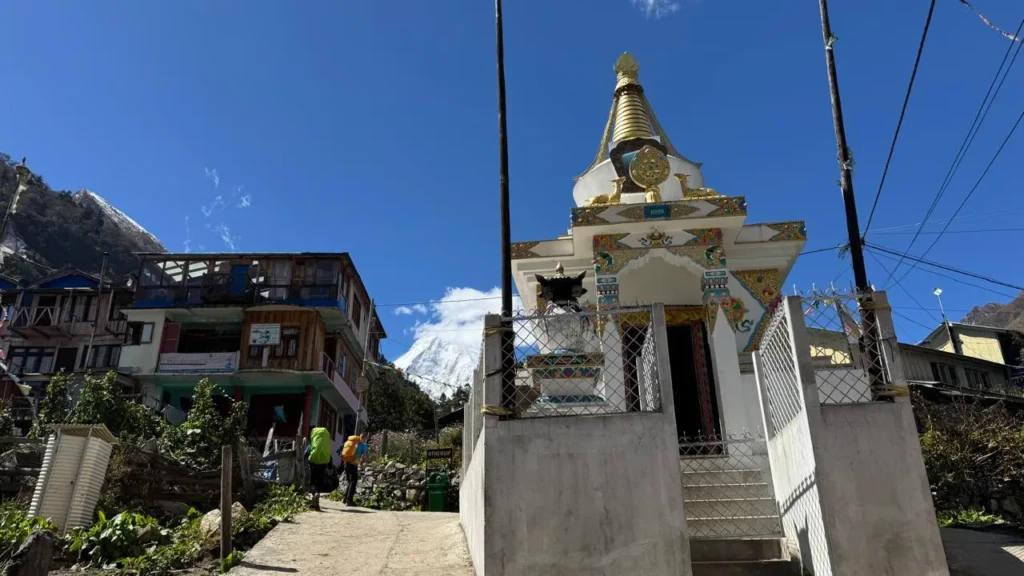
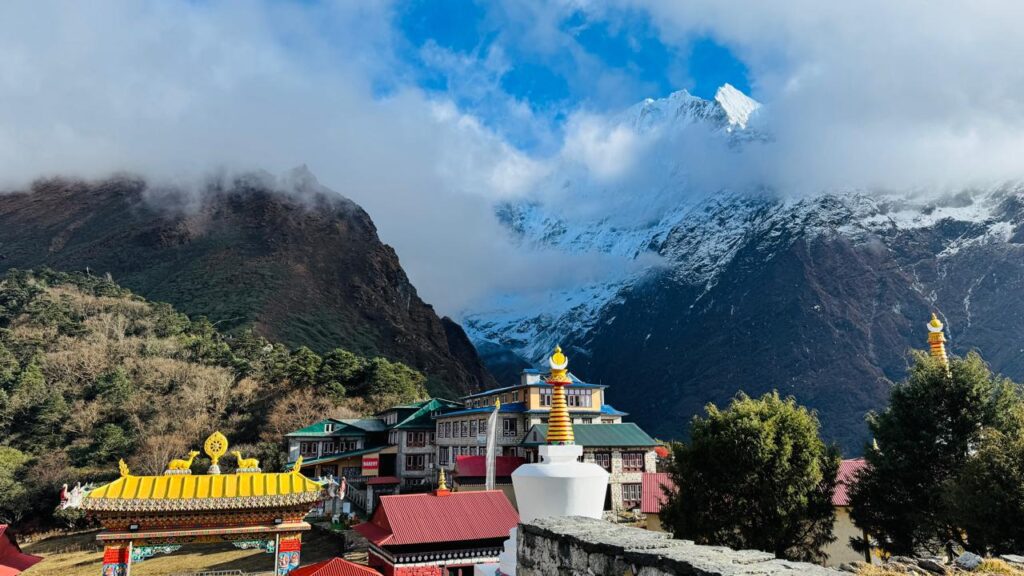
Monastery on the way to Shayala
Manaslu Circuit Trek Difficulty
This trek is moderate to challenging due to long trekking days, high altitude, remote terrain, Larke La Pass challenge.
Manaslu Circuit Trek is perfect for experienced trekker and fit beginner with preparation. This trek is also perfect for those who are seeking to experience authentic local culture and those are searching for less crowded route.
Packing Tips for Manaslu Circuit Trek
Down jacket and thermal layers
Waterproof jacket and pants
Strong and comfortable trekking boot
Sleeping bag (-15°C recommended)
Trekking poles
Headlamps and personal med kit
Warm shocks
Warm gloves
Sunglass and sunscreen
Documents Need to be Carried During the Trek
Passport
Travel Insurance
If you pack this thing, you are ready for Manaslu Circuit Trek.
Highlights of Manaslu Circuit Trek
Close view of Mt. Manaslu (8,163m)
Remote and less crowded trail
Tibetan culture and monasteries
Dramatic landscape and glaciers
Larke La pass challenge
Authentic local experience
FAQ’s about Manaslu Circuit Trek
Is Manaslu Circuit Trek a restricted area?
Yes, special permits and licensed local guide are mandatory for this trek.
How difficult is Larke La Pass?
This trek is moderately challenging but achievable with proper acclimatization and proper training.
Can beginners do Manaslu Circuit Trek?
Yes, beginner can absolutely conquer Larke La pass but you must have proper training before the trek and you must have good itinerary with good acclimatization days.
Is Manaslu less crowded than Everest and Annapurna?
Nepal is considered to be one of the most Sacred Host of the World’s Significant Buddhist Pilgrimage Sites. Buddhism in Nepal expands the exceptional significance as it is the birthplace of Siddhartha Gautam, who later enlightened to become the Buddha. There are historic and most significant Buddhist Pilgrimage Sites in Nepal. And, it is considered to be the Homeland of the Buddha spreading peace all over the world attracting pilgrims from all over the world.
Buddha gained enlightenment and spread teachings before 2500 years and they are still prevailing in our society with the same importance and practices. This is possible as they address the timeless human problems such as suffering, desire, anger and ignorance. There are various Buddhist Pilgrimage Sites in Nepal that enhances the teachings of Buddha. Buddhism in Nepal has its own characteristics as we practice mindfulness, compassion, non-violence, and right living. This helps to guide people toward inner peace and ethical behavior.
In today’s fast-paced and stressful world, Buddhist practices such as meditation plays the vital role for the mental balance and the emotional well-being. Even the modern psychology and education system adopt the ideas rooted in Buddhism depicting the practical value beyond the religion. Alongside, Nepal has significant Buddhist Pilgrimage Sites where you can transparently understand the history of Buddhism. Meanwhile, you can experience the different vibes regarding the practices of Buddhism in Nepal.
Buddhist pilgrimage sites in Nepal holds the major religious, historical and archaeological aspects especially after Emperor Ashoka of India visited Lumbini and erected pillars and stupas in the 3rd century. His efforts helped establish Buddhism as a major religious tradition in the region. Over time, Buddhism in Nepal developed alongside Hinduism. It supported as the evidence in creating a unique religious environment. Many traditions, temples, and festivals are shared by both Buddhists and Hindus, showing strong religious harmony and a peaceful secular nation.
Why is Nepal considered sacred in the Buddhist world?
Nepal is profoundly the sacred Buddhist destination primarily as the birthplace of Siddhartha Gautama (Around 6th century BCE), who later became the Buddha. Lumbini, a UNESCO World Heritage site and one of the most important Buddhist Pilgrimage Sites in Nepal. Lumbini is considered as the sacred place where Queen Maya Devi gave birth to the Buddha. It was been proven by the erected Ashoka Pillar by Emperor Ashoka in the 3rd Century BCE. You can also the find the birth stone inside the Maya Devi temple to mark the sacred birth spot. These Buddhist Pilgrimage sites in Nepal are the jewelries that decorates your soul to find the ultimate peace in the land of paradise.
Alongside, Nepal has the ancient Buddhist Pilgrimage sites in Kathmandu Valley like Boudhanath and Swayambhunath Stupas which are the centers of pilgrimage, meditation and scholarship. Furthermore, Nepal’s Himalayan landscapes are linked with the mystic realm of Buddhist monasteries and Tibetan Buddhist traditions and practices.
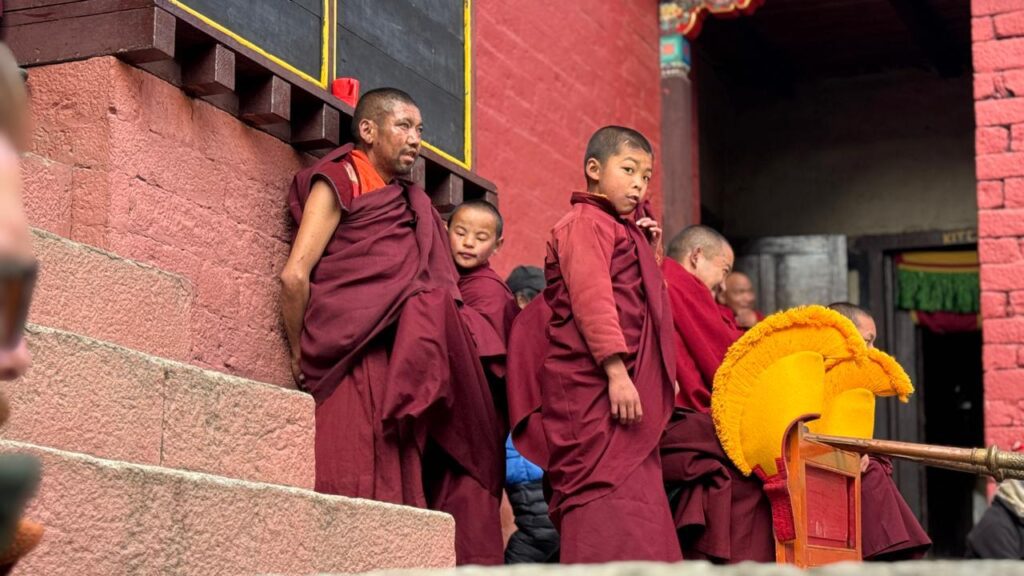
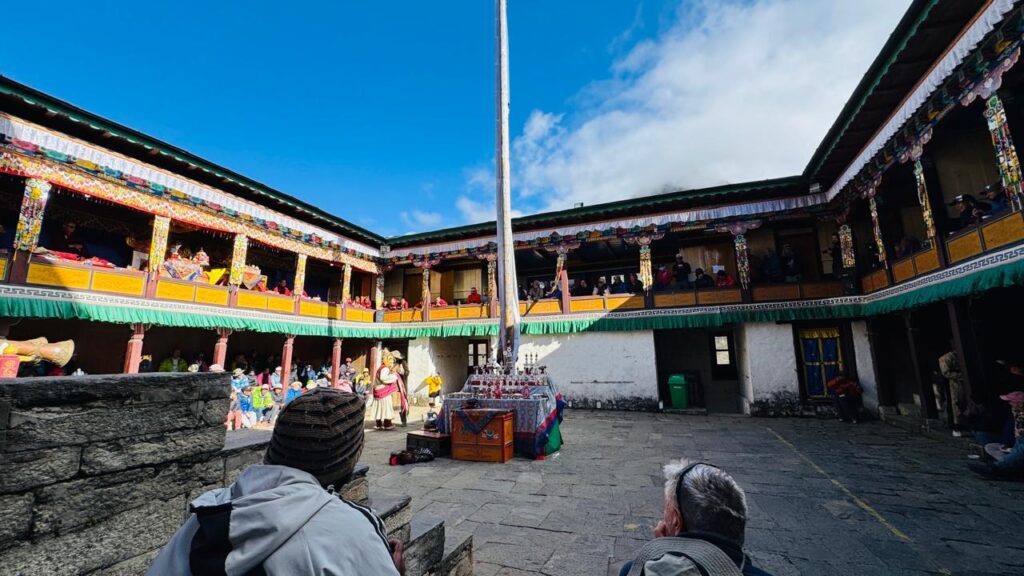
Monks during the Buddhist festival
What stories do these ancient stupas and monasteries hold?
Buddhist Pilgrimage Sites in Nepal are mostly the ancient stupas and the monasteries. They are not the silent ruins, moreover the libraries written in stone. They hold the spiritual, artistic and deep human feelings along with their beliefs. These sites recite the stories of devotion and memory. Walking clockwise around a stupa echoes the spiritual journey toward awakening, repeated by pilgrims for centuries.
Ancient stupas and monasteries record lives of learning and discipline. Monasteries are similar to the universities for the Buddhist monks. Within the courtyards, monks study medicine, astronomy and logic along with the philosophy and manuscripts. These sites reflect the power, spiritual strength and patronage.
Monastery on Swayambhunath Buddhist Pilgrimage Sites
What does it feel like to walk around a stupa with prayer wheels spinning?
It is always the clockwise rotation and walk around a stupa with prayer wheels spinning. This is believed to be the auspicious task and you can vibe with the spiritual strength of the surrounding. The prayer wheels contain sacred words (mantras) inside them. Thus, when you rotate them then they spread the positive vibes around the surrounding. This depicts that you are seeking for clarity, forgiveness and peace.
Sacred monastry
How does visiting these sites differ from simply reading about Buddhism?
Reading about Buddhism reflects to the intellect, somehow visiting Buddhist Pilgrimage sites reflects to the senses and the body. Mindfulness and compassion are the concepts to be understood. The visit to these sacred sites offers you the understanding through the experience despite from the explanation.
At a sacred site, the ideas and the words that we read come into existence and we can feel the true essence of the particular place. The circling of a stupa, the sound of the prayer wheels turning and the overall surrounding keeps you in movement, space, silence and peace.
Inside one of the oldest monastery Tengboche
What makes Buddhist Pilgrimage sites in Nepal unique?
Buddhist pilgrimage sites in Nepal are unique because they are deeply enrooted to the very core of Buddhism. Most notably, Lumbini, the southern plain of Nepal is the birthplace of Siddhartha Gautam (the Buddha). Pilgrims can visit the exact region where the Buddha was born, walked and took the first steps. Along with this, you can explore the Tilaurakot Palace where Siddhartha Gautam, the prince of Shakya kingdom spent his 29 years of age. It is proven by the radar excavation done by the collaboration of various organization including the UNESCO and has been enlisted in UNESCO tentative world heritage site submitted in 1996.
Additionally, Nepal’s pilgrimage sites depict the rare blend of cultural, historical and geographical diversity. Monks and local communities especially the Himalayan people such as Sherpa and Tamang practice Buddhist cultures and traditions. Buddhist pilgrimage sites in Nepal have set the dramatic landscapes ranging from the Terai plains to the Himalayan foothills. These Buddhist Pilgrimage sites in Nepal not only reflect the spiritual meaning but also a powerful sense of geography where natural beauty and religious beliefs and heritages are inseparably blended.
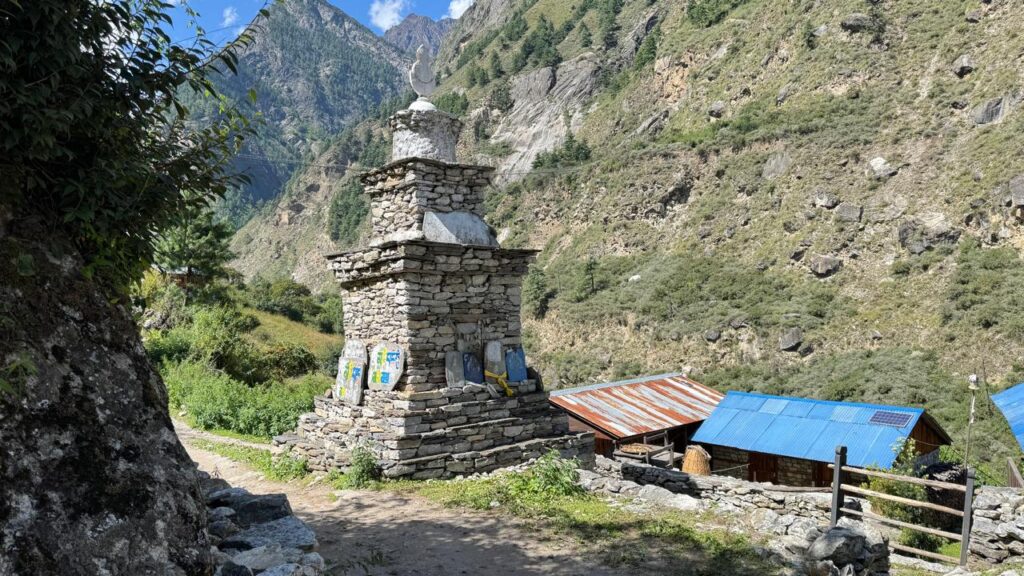
Chotens on the way
Unity in Diversity and Religious Harmony Among Buddhist Schools in Nepal
There are mainly three forms of Buddhism that is practiced in Nepal. Each school has its own teaching, practices and followers contributing to the Nepal’s religious diversity. The three forms of Buddhism are Theravada, Mahayana and Vajrayana. In the monastic area of Lumbini as per the Lumbini Development master plan, you can find the various monasteries built as per the forms of Buddhism showcasing the harmony among the Buddhist Schools in Nepal. This area is the key place for exploring the majestic Buddhist Pilgrimage sites in Nepal.
Theravada Buddhism focuses on the original teachings of the Buddha where the solo practitioners practice the strict monastic discipline. Although, it declined for some period of time, somehow, it was revived in Nepal in the 20th century and continues to grow today.
Mahayana Buddhism is mainly practiced by the Newar community of the Kathmandu Valley. Basically, this form of Buddhism emphasizes compassion and Bodhisattva ideal encouraging followers to collaborate together for the enlightenment of all beings.
Vajrayana Buddhism also known as the Tantric Buddhism is widely practiced in the Himalayan regions of Nepal. This particular form of Buddhism uses the rituals, mantras/sacred words, mandalas and mediation techniques. This particular form of Buddhism is related to Tibetan Buddhism.
Newar Buddhism in Kathmandu Valley is also a unique form of Vajrayana and found all over Nepal. Unlike other monks, the priests are householders rather than the celibate monks. These priests perform the complex rituals using the Sanskrit texts and you can find various Buddhist pilgrimage sites in Nepal regarding this form of Buddhism.
Nepal is home to many important Buddhist pilgrimage sites such as Lumbini, Swayambhunath, Boudhanath, and Namo Buddha. These sacred places, Buddhist pilgrimage sites in Nepal serve as centers of worship, pilgrimage, and cultural heritage. Along with this, it has always remained the harmonious center for following the Buddhism practices and traditions.
In modern Nepal, Buddhism remains the second-largest religion and continues to influence art, culture, and daily life. Meanwhile, many people take Buddhism as the philosophy of life where they practice the teachings of Buddha and maintain their peaceful living. With Nepal’s rich history, diverse traditions, and global spiritual significance, Buddhism remains an integral part of Nepalese identity.
View of mountain from Buddhist Monastery in Himalayas
Exploring Nepal Through Buddhist Festivals
You can explore the Cultural and Spiritual Buddhist Festivals Tour in Nepal. You can be the part of the Living Traditions and participate to gain Buddhist Festivals Experience in Nepal. Exploring Nepal through the Buddhist Festivals is one of the most enriching ways to experience the living culture, spiritual heritage, ancient traditions and Himalayan beauty at the same time.
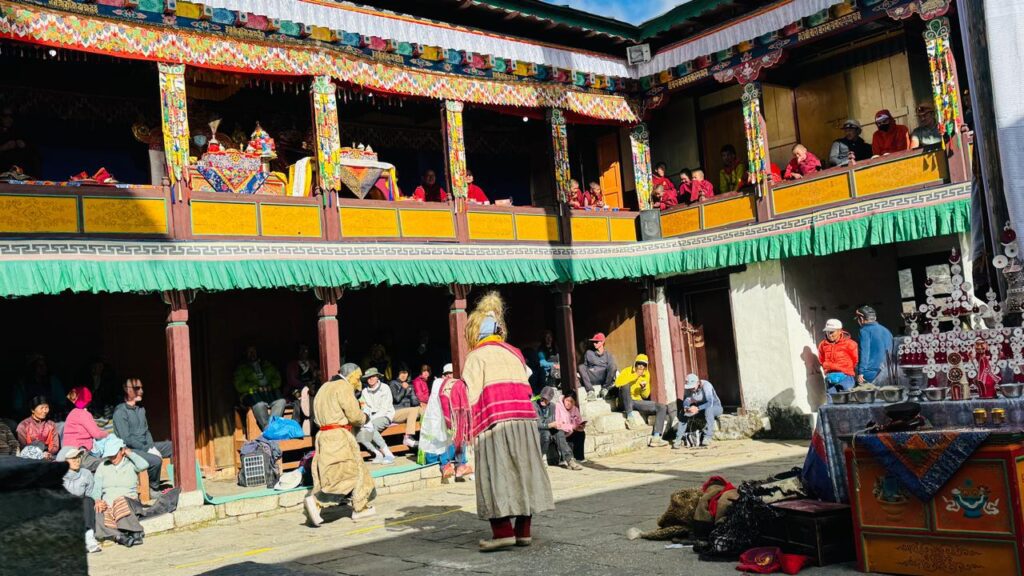
Meanwhile, Buddhist Pilgrimage sites in Nepal have their own ways of worshipping and preserving the traditions. Among them, Nepal hosts the vibrant Buddhist festivals such as Buddha Jayanti (April-May) in Kathmandu and Lumbini, Losar (February-March) in the Himalayan regions, Mani Rimdu (October to November) in Everest and Khumbu regions, Tiji festival (May) in the Upper Mustang and Gunla (August) in Kathmandu Valley. The perfect time to visit Nepal for the Buddhist festivals tours or treks is during the Spring season (March to May) and Autumn (September to November) when you can find the clear weather, frequent festivals and ideal trekking condition.
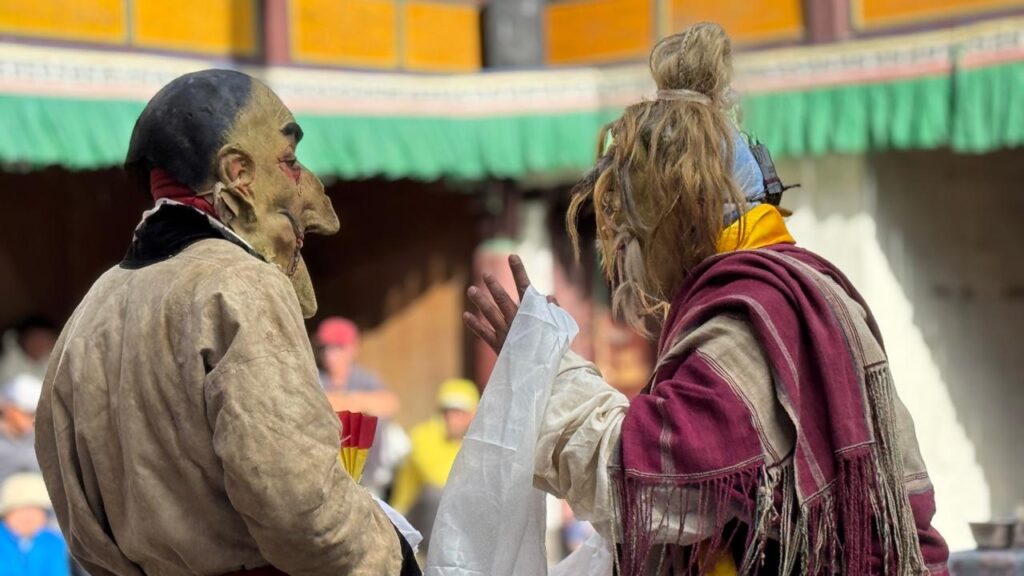
Masked Performance during Buddhist festival
Spiritual and Cultural Significance of Buddhist Festivals
Buddhist festivals in Nepal hold the deep spiritual and cultural significance. This festival enhances the important events in the life of Buddha and flourishes the Buddhist teachings such as compassion, mindfulness and non-violence. These festivals basically indicate the significance of sacred rituals, masked dances, monastery prayers, butter lamps, and colorful processions, offering travelers an authentic insight into living Buddhist traditions. These festivals are mostly practiced in the Buddhist Pilgrimage Sites in Nepal.
Festivals like Buddha Jayanti, Losar, Mani Rimdu, and Tiji provide opportunities for devotees to engage in prayers, meditation, ritual offerings, and acts of merit. These celebrations are not merely the ceremony kind of things, somehow the moments of spiritual renewal, refection and strengthening of the faith. By participating in Buddhist festivals, you can connect your living form into Dharma and cultivate inner peace and ethical living in a peaceful manner.
Culturally, Buddhist festivals in Nepal play the vital role in preserving the ancient traditions, cultures, arts, cultural and communal harmony. In the context of Nepal, Buddhist festivals also play the vital role in strengthening the social bonds with the collaborative practice from the monks, local communities and pilgrims from all over the world following different religion and sects. In this particular wider world, the blending of spirituality and cultural beliefs transform festivals into the living heritage. This practice specially focuses in reinforcing identity, continuity and mutual respect sharing the timeless Buddhist values and peaceful living all over the world.
One of the oldest festival Mani Rimdu in Tengboche
For the travelers who are interested to explore the spiritual and cultural journey, then the most recommended tours are Lumbini Buddhist Pilgrimage sites Tour, Nepal Buddhist Circuit Tour and the Kathmandu Valley Buddhist Heritage Tour. These tours highlight the Buddhist Pilgrimage sites in Nepal which are enlisted in the UNESCO world heritage sites. Some of them are Boudhanath Stupa, Swayambhunath Stupa, Namo Buddha and Lumbini.
These tours and treks typically range from 5 to 18 days. You also have the option to customize this trip as per your requirement. The treks require moderate fitness and for the tour it’s an easy activity for you. It is advised that you are best booked in advance due to high seasonal demand. Combining Buddhist festivals with trekking in Nepal creates a unique travel experience that blends spirituality, culture, and breathtaking Himalayan landscapes making it one of the best cultural tour experiences in the land of paradise. The Buddhist pilgrimage sites in Nepal offer the most iconic and historic experiences combining your physical body to the spiritual journey of peace and harmony.
Standing at the foot of the world’s highest mountain in the world is a “Bucket List” dream for many travelers around the world, but in 2026, the road to Everest Base Camp looks a little different than it did a few years ago. Between new mandatory guide regulations, shifting flights logistics, and the impact of climate change on the Khumbu Glacier, planning the perfect trek requires up to date expert knowledge.
If you are looking for the highest success rate, our 14-Day Everest Base Camp Trek Package remains the gold standard for travelers seeking safety and adventure.
Why 14 Days is the “Magic Number” for Success
In the world of high-altitude trekking, time is your best medicine. While “Rapid Treks” are gaining popularity, they often come out with high failure rate due to Acute Mountain Sickness (AMS).
According to the Himalayan Rescue Association, proper acclimatization is the only way to ensure a safe ascent. Our 14-Day itinerary is strategically designed with two mandatory acclimatization days:
Namche Bazaar (3,440m/11,286ft): This place is a vital stop to allow your red blood cells to adjust before crossing the 4,000m mark.
Dingboche (4,410m/14,468ft): The critical threshold. Skipping the rest day in Dingboche is number 1 reason trekker fail to reach Everest Base Camp.
Rest day at Digboche
Navigating the 2026 “Mandatory Guide” Rule
As of 2026, the Nepal Tourism Board has strictly enforced that solo trekking is no longer permitted in Everest region. All trekkers must be accompanied by a licensed guide registered with authorized agency.
Why this helps you?
Safety: Your guide will monitor your health condition and check your oxygen level daily with an oximeter.
Logistics: We handle the complex Sagarmatha Pasang Lhamu Rural Municipality Permit and Sagarmatha National Entry Permit (UNESCO World Heritage site), so you don’t have to wait in line.
Understand Culture: You gain deeper knowledge of culture of the Sherpa people that you simply won’t find in guidebook.
View of Lhotse early morning
The “Ramechhap vs. Kathmandu” Flight Reality
One of the biggest surprises for 2026 traveler going to Everest Base Camp is that the Lukla flight. During the peak seasons Spring (March to May) and Autumn (September to November), almost all the flights to Lukla depart from Manthali Airport in Ramechhap, not Kathmandu.
The Challenge: Ramechhap is about 4-5 hours drive from Kathmandu. So you must wake up at 2:00 Am drive there to get a flight.
Our Solution: Unlike “budget” operator who leave you to find your own way, out Everest Base Camp 14-Days Trek includes private transportation to Ramechhap and pre-booked flights slots to ensure you aren’t stranded.
14-Day Itinerary | Everest Base Camp Trek
Day
Destination
Elevation
Highlights
01
Arrival in Kathmandu
1,400m
Briefing & Welcome Dinner
02
Fly to Lukla, Trek to Phakding
2,610m
Scenic flight to Tenzing-Hillary Airport
03
Trek to Namche Bazaar
3,440m
First glimpse of Everest
04
Acclimatization Day
3,440m
Hike to Everest View Hotel
05
Trek to Tengboche
3,860m
Visit the famous Tengboche Monastery
06
Trek to Dingboche
4,410m
Unmatched views of Ama Dablam
07
Acclimatization Day
4,410m
Nangkartshang Peak hike
08
Trek to Lobuche
4,940m
Khumbu Glacier views
09
Everest Base Camp
5,364m
The Dream Realized
10
Hike Kala Patthar & Pheriche
5,545m
Best sunrise over the Everest Massif
11
Trek back to Namche
3,440m
Celebrating in the “Sherpa Capital”
12
Trek back to Lukla
2,846m
Final night in the mountains
13
Fly to Kathmandu
1,400m
Shopping and Farewell Dinner
14
Final Departure
–
Safe travels home!
Khumbu Glacier
2026 Trekking Trends: What’s New?
Sustainable Trekking: Single-use plastics are strictly banned within the Sagarmatha National Park boundaries. We provide all our trekkers with reusable water purification solution.
Connectivity: High-speed internet is now more accessible than ever, but we recommend disconnecting to truly experience the “Access the Asia Treks” spirit.
The “Heli Return” Upgrade: Many of our 14-Day clients now choose fly back to Lukla via Helicopter from Gorakshep to save time, so ask us about adding this to you package!
Gorakshep last stop of ebc
Ready to Trek with Access the Asia Treks?
Don’t leave your Everest dream to chance or outdated information. At Access the Asia Treks, we specialize in high safety, high success treks that handles every permits, flights, and oxygen check for you.
Access the Asia Treks provides you the best offer for the winter trek in Nepal. You can join our trek offer and get the exciting experience in the land of paradise. However, during the winter season, you have to be precautious and plan the trek accordingly. Our experts can guide you from the beginning to the completion of the trek.
Winter trek in Nepal is fun when you are prepared accordingly. During winter season in Nepal, the weather becomes cold and, in the Himalayas, it can be extremely cold. However, if you pre-plan and Himalayan trekking preparation is done wisely then you can accomplish this wonderful experience and gain once in a lifetime experience in every journey you begin here.
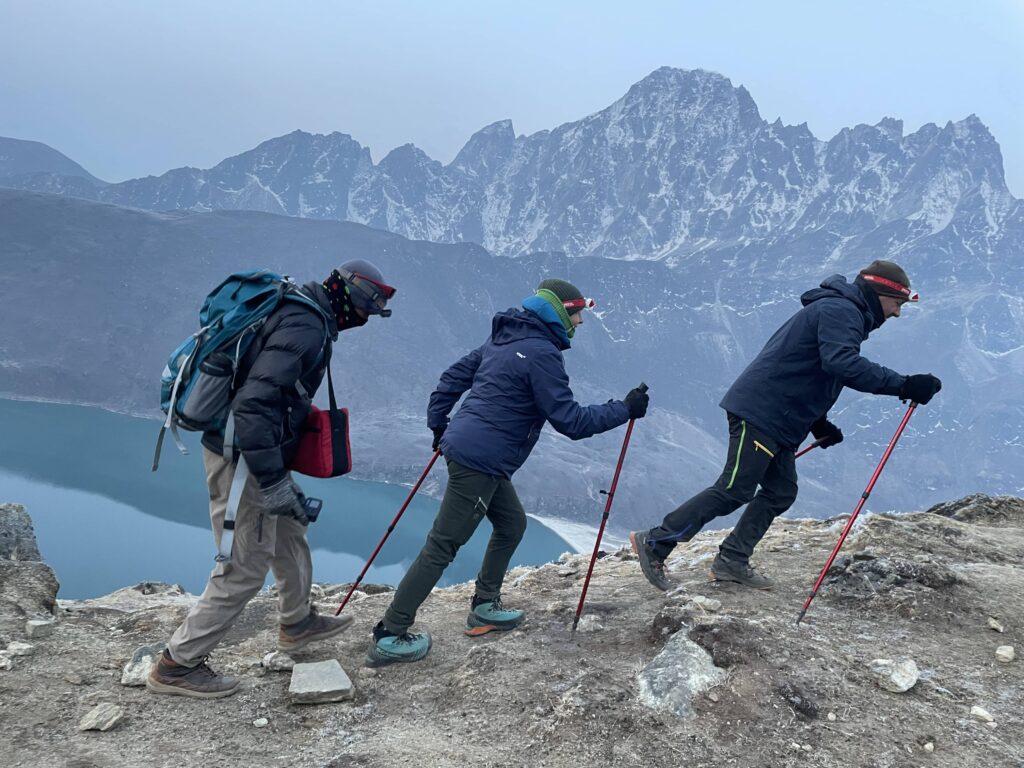
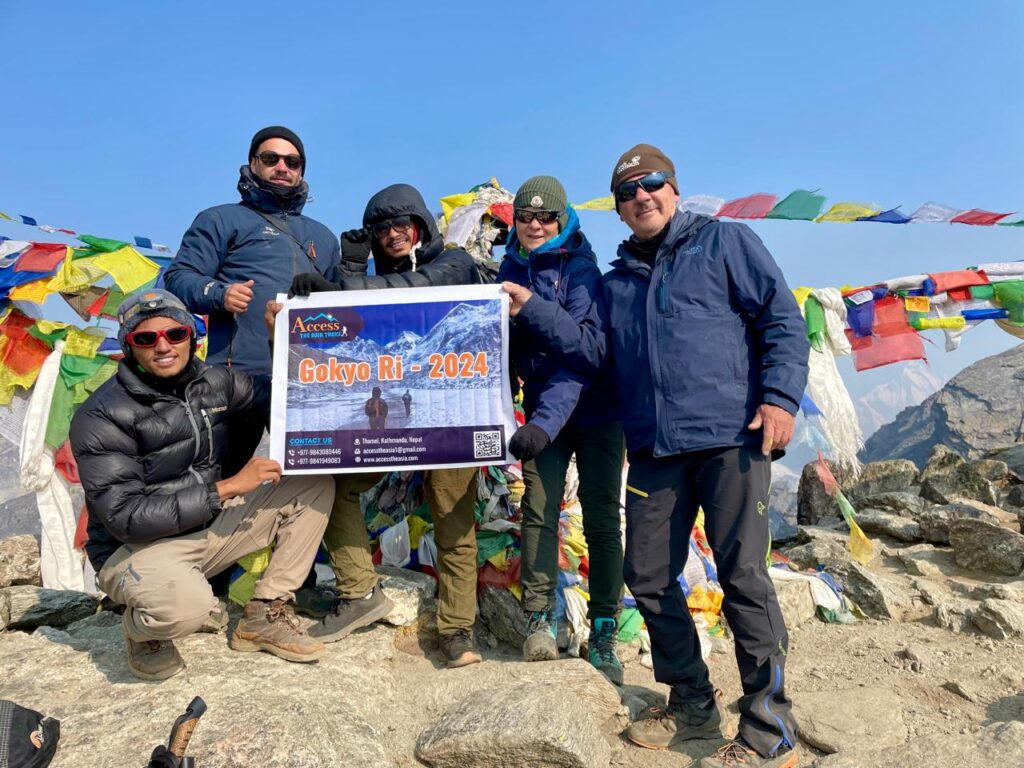
Group at Gokyo Lake
Is Winter Trek in Nepal Possible?
Yes, Winter trek in Nepal is possible in winter (Dec–Feb), and many popular routes remain open year-round. Somehow, you have to choose the reliable travel agency and an experienced licensed trekking guide to lead you to wonder of Nepal with safety. Even technically demanding routes like Everest 3 Pass Trek can be done in winter with proper skill and support. However, conditions are harsher and more demanding than in peak seasons.
What are the major challenges and risks in Winter trek in Nepal?
Extreme low temperature in the higher altitude. At high altitudes (>4,000 m), nighttime temperature may drop to –10°C to −20°C or lower, and daytime can still remain below freezing and wind chill factor can make it feel even colder.
Frostbite, hypothermia, and difficulty sleeping and warming up can be the main issue. This can be prevented with proper preparation and adequate gears.
Snowfall and ice can make trails slippery and make the route difficult to explore. Flights to mountain airports (e.g., Lukla, Jomsom) are frequently delayed or cancelled due to snow and winds. Therefore, you should always include buffer days in the itinerary.
short break after long hike
What are the preventive measures to apply during Winter trek in Nepal?
Keep warm layers and high-quality sleeping bags designed for sub-zero conditions. Along with this, you have to attend the pre-briefing of the trek organized by the travel agency in order to get the full information regarding your gears and trekking equipment.
Thermal base layers, fleece and insulated mid-layers, down jacket and waterproof shell, warm gloves, hats, neck buffs, insulated and waterproof boots, dress in layers to adapt from deep cold mornings to sunny afternoons are necessary to keep yourself warm.
Trekking poles, Headlamp (short daylight hours), crampons/micro spikes, First-aid kit + altitude medicine, Oximeter to monitor oxygen saturation and experienced guide support are highly recommended. You have to manage cold-weather sleeping setup and other necessary elements during the Winter trek in Nepal.
Gradual ascent, acclimatization rest days, hydration, monitoring symptoms, and descent if needed. Along with this, you should always take the weather forecast into consideration and plan your trek accordingly. If you manage to have to the experienced leader then you won’t have any problem during the trek in case of any difficulty.
Travel insurance is also very important that includes the high-altitude trekking and evacuation process along with the emergency medical expenses.
Medical gears/Medical-Kit
Altitude Sickness (AMS, HAPE, HACE)
Winter doesn’t reduce altitude sickness risk; in fact, cold and strenuous conditions can worsen it, and symptoms of high-altitude sickness shouldn’t be neglected at any cost.
For more information of the Altitude Sickness and its preventive measures, you can click here.
Hydration during the winter trek in Nepal
What is the Trip Planning & Logistics needed?
Guides & Porters
Nepal has regulations requiring licensed guides for solo trekkers. During the Winter trek in Nepal, you require them the most. This enhances safety and you can be stress-free during the trek and enjoy in a hassle-free way.
Guides help with route decisions, weather updates, emergency response, and acclimatization pacing. These requirements are the most essential factors in the Winter Trek in Nepal.
Permits & Insurance
Trekking permits are issued year-round.
Travel insurance that includes high-altitude evacuation and helicopter rescue is strongly recommended along with the emergency medical expenses.
Health & Nutrition
Cold weather hides thirst but dehydration still occurs. You have to drink 3–4 L/every day of warm water. You have to intake carbohydrate-rich, high-energy foods. You have to have the warm meals that fuel your body and help maintain core temperature. Meanwhile, if you hire the licensed guide from the reliable trekking agency then, you are monitored and supervised with everything regarding your sleep, food, hydration level, ascent and proper accommodation.
Acute Illness Prevention
Cold increases risk of coughs, colds, dry skin, and respiratory issues. You have to carry medicines for minor and practice good hygiene (warm water and sanitizer).
Daylight & Trek Timing
Winter days are shorter often ~6–8 hours of usable daylight. You have to start early, finish trekking before sunset, and schedule shorter daily distances.
Sunny afternoon in winter trek in Nepal
Final Precautions & Tips (Summary)
✔ Book with a reliable trekking operator
✔ Pack winter-specific gear and avoid cotton
✔ Monitor weather forecasts daily
✔ Have insurance that covers high-altitude rescue and emergency medical expenses
✔ Pre-book accommodations where possible (Done by the company)
✔ Prioritize gradual ascent and acclimatization
✔ Always follow guide instructions and be ready to descend early if conditions worsen
Winter trek in Nepal offers a peaceful and magical Himalayan experience, with snow-covered trails, crystal-clear mountain views, and fewer crowds. The cold season brings stunning scenery, quiet paths, and unforgettable sunrises over the peaks, making it perfect for nature lovers and photographers.
With proper preparation, you’ll enjoy safe, well-guided winter adventures, cozy teahouses, and personalized service from experienced local guides. Discover Nepal beyond the busy season and experience the Himalayas in their purest winter beauty.
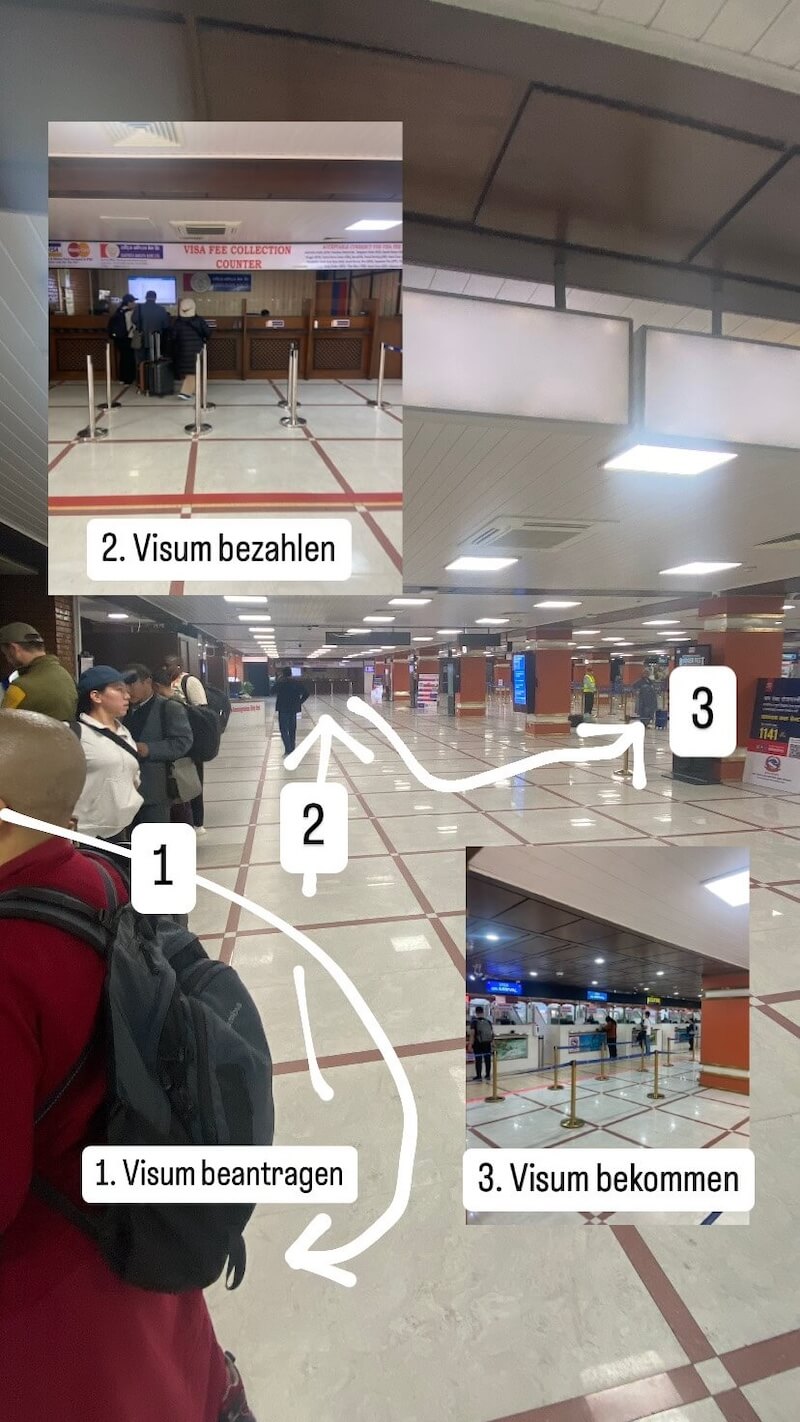
However, we still need a visa to enter Nepal. Well informed, however, we know that we can easily pay for it here. So we go directly to the immigration counter with the inscription Visa-on-Arrival. There, however, the border official looks at us quite aghast, as we have not yet paid for our visa and sends us back to the visa payment office. So we queue a few meters further back at the said place, but here it says we have to fill out a form first. So a little further back to the vending machine where this is possible. Here we finally fill out the entry form. Then we go back to the counter, where we are now allowed to pay for the visa-on-arrival. Finally, we go back to the border official, who now stamps our visa and lets Pati enter without further ado.
With Jenny, the whole procedure takes a little longer, as usual. The border official tries to pronounce Jenny’s last name three times. But Jenny can hardly understand him through the thick protective screen. But he doesn’t mind – he just laughs and asks again louder how to pronounce her name. Then he tries again. When he fails again, he laughs and only says: “Jennifer, where are you from”. From the neighboring immigration counter, the head of another officer briefly appears. He shouts loudly: “Jennifer Lopez”. Then the head disappears again. Everyone laughs. Jenny answers the question that she is from Austria. The conversation continues:
Official: “First time in Nepal?” Jenny: “Yes” Officer: “Are you excited?” Jenny: “Yes” Official (completely over the moon): “It is very exciting!”
Then the border official still loudly counts the number of letters of Jenny’s last name. Laughing and with a “seventeen letters!? (17 letters?!)” Jenny will also be allowed to enter.
Kathmandu
From the airport we take the taxi to our hostel. There we meet Dennis, who accompanies us on our trekking plans. We met Dennis last year in Sri Lanka. After that, we stayed in touch and when he found out that we wanted to go hiking in Nepal, he decided to join us without further ado.
The next day we meet our guide Arjun, who has called a team meeting for the multi-day trek in the Himalayas at the Annapurna Circuit Trek. We clarify what we should pay attention to and what equipment we are still missing. Immediately after the meeting, we go together with Arjun to a shop he knows, where we can buy gloves, hat and headlamp as well as rent a sleeping bag and a thick down jacket. In the afternoon we buy mountain pants for Jenny. Since there is nothing at the original North Face shop, we find a not quite so original, but still logo-embroidered The North Face pants from a gloomy back room. Fits no worse than the original pants and costs a measly 6€.
In the evening, Arjun comes back to the hostel. He brings three duffel bags to carry our porters. However, the three of us only need one. Dennis carries everything himself and we can only no longer stow our sleeping bags and thick jackets in our backpacks. However, we would have had room in the bag as a whole. We can’t imagine how much some people pack for their treks to fill these bags.
Start of the Annapurna Circuit Trek
Even before breakfast, we start the next morning. We are picked up by a jeep right in front of the hostel of Arjun. Originally, we would have taken the bus, but Arjun apparently changed his mind spontaneously. At the jeep we get to know the rest of our companions. Arjun’s brother, Rabin, is there as the second guide and would have carried one of the bags, but we couldn’t fill it. And Krali accompanies us as porter. We immediately notice that the three of them are a well-rehearsed team and immediately feel in the best hands.
Then we set off towards the Himalayas. We drive by jeep for seven hours to the Kathmandu Valley. We immediately realize why Arjun preferred to go by jeep rather than by bus. The roads are still extremely battered by the floods of almost two weeks ago and in some cases simply non-existent. Accordingly, the ride is bumpy. We keep overtaking buses that try to drive slowly through the giant potholes. Then there is a short breakfast break. There is chapati and curry. After a few more hours, we eat the infamous Nepalese Dal Bhat (rice with various curries) for the first time at lunchtime. It tastes excellent to us and reminds us a bit of an Indian thali.
In the afternoon we reach the limit of our jeep. It’s time to change, now it’s getting really bumpy. With a real off-road jeep we drive another four hours into a side valley of the Kathmandu Valley. There are four of us sitting in the back seat while Arjun and Krali share the passenger seat. The windows remain open, otherwise we would only bump our heads against them. Everyone, including the driver, is shaken wildly. We drive through riverbeds and over hill and dale. At home, no one would talk about a road or even think about driving for a long time. Our motto: “Is it possible?” – “Somehow it is”. We have the feeling that this could also be the motto of the next few days. The last hour we drive in the dark. Then finally we reach Dharapani. Instead of the specified seven to nine hours, it was eleven. We are happy to get out of the car. Tomorrow our hike will start from here. We are incredibly excited to see what awaits us.
Trek Day 1: Dharapani to Chame
16km, 6 hours, from 1860m to 2670m
On the first day we start early in the morning after a gigantic breakfast. We can’t eat our huge portions at all. Then we start. From the day before, we feel how limp our arms are from holding on to the jeep. Our backs also hurt from the pothole exertions of the day before. Arjun, however, gives us hope for the day when he tells us that today it is only Nepalis flat – a forest road. So we walk all day through various Nepalese mountain villages. Unfortunately, Jenny’s right knee starts to hurt after the first few hours. However, as long as it doesn’t go downhill too much, it’s bearable. So on.
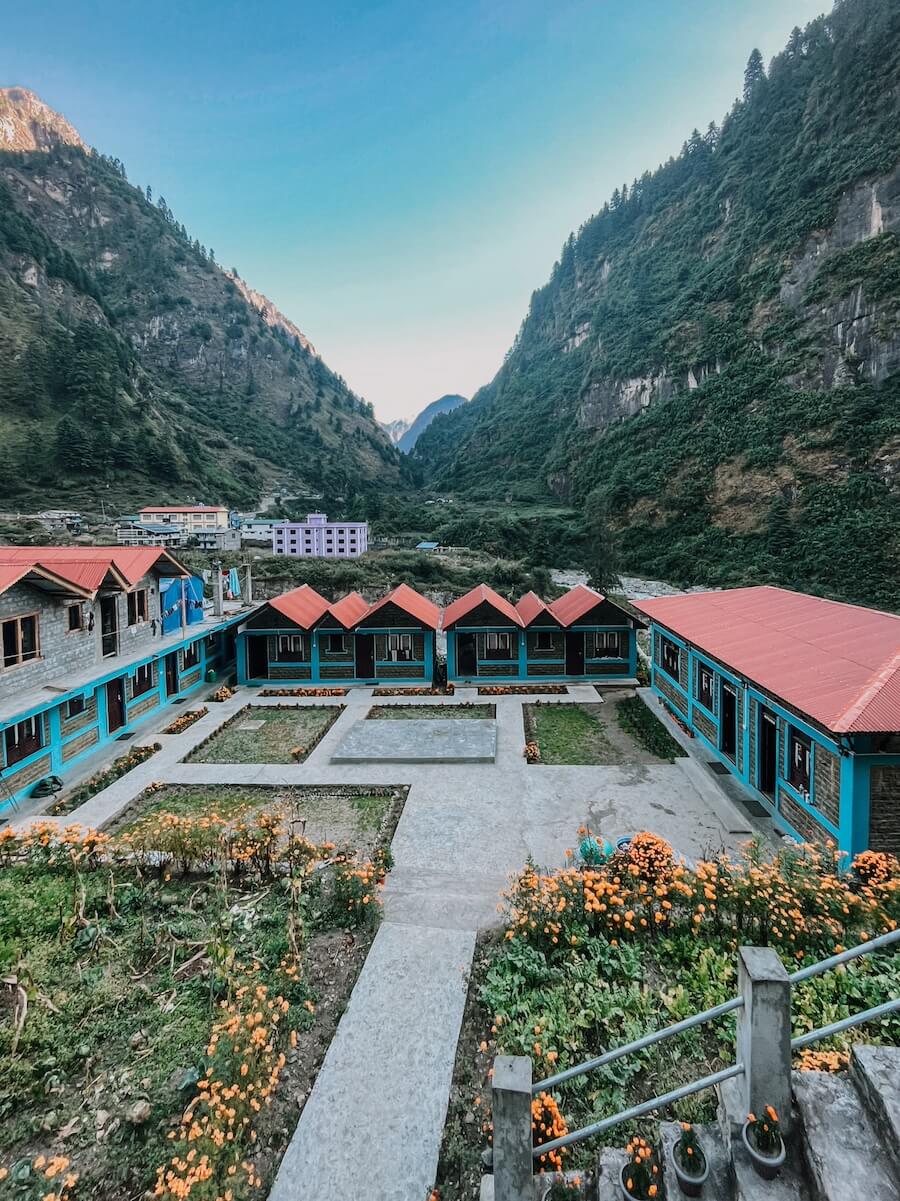
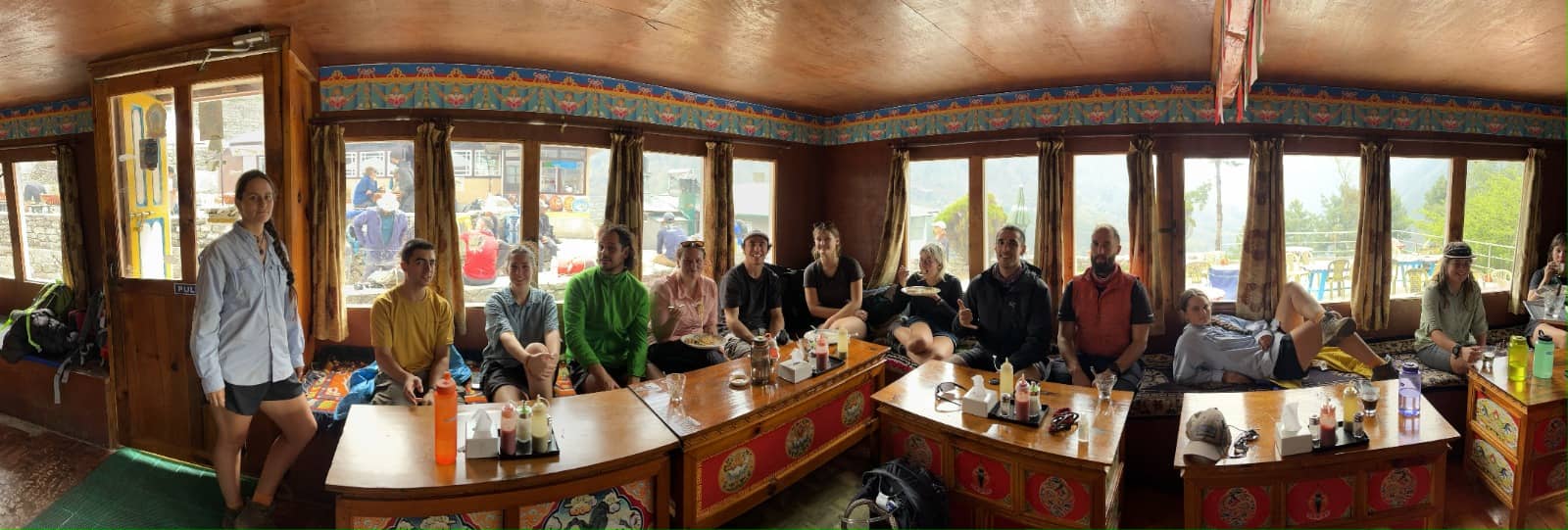
At lunchtime, of course, there is Dal Bhat. Afterwards we walk on until we finally arrive in Chame, the destination of the day. Here we enjoy the last rays of sunshine before the surrounding mountain ranges cast a cold shadow over the valley. Then we sit down in the teahouse. During our trek, we will mainly eat and sleep in such so-called teahouses. The accommodations are simple, but mostly very good – a bed for everyone and, surprisingly, most of them even a private bathroom. We have everything we need. In a large lounge there is always a wood-burning stove where everyone warms up after sunset. Here we always get our food, which, contrary to our expectations (Arjun warned us that the food in the mountains will be rather sparse), almost always tastes excellent.
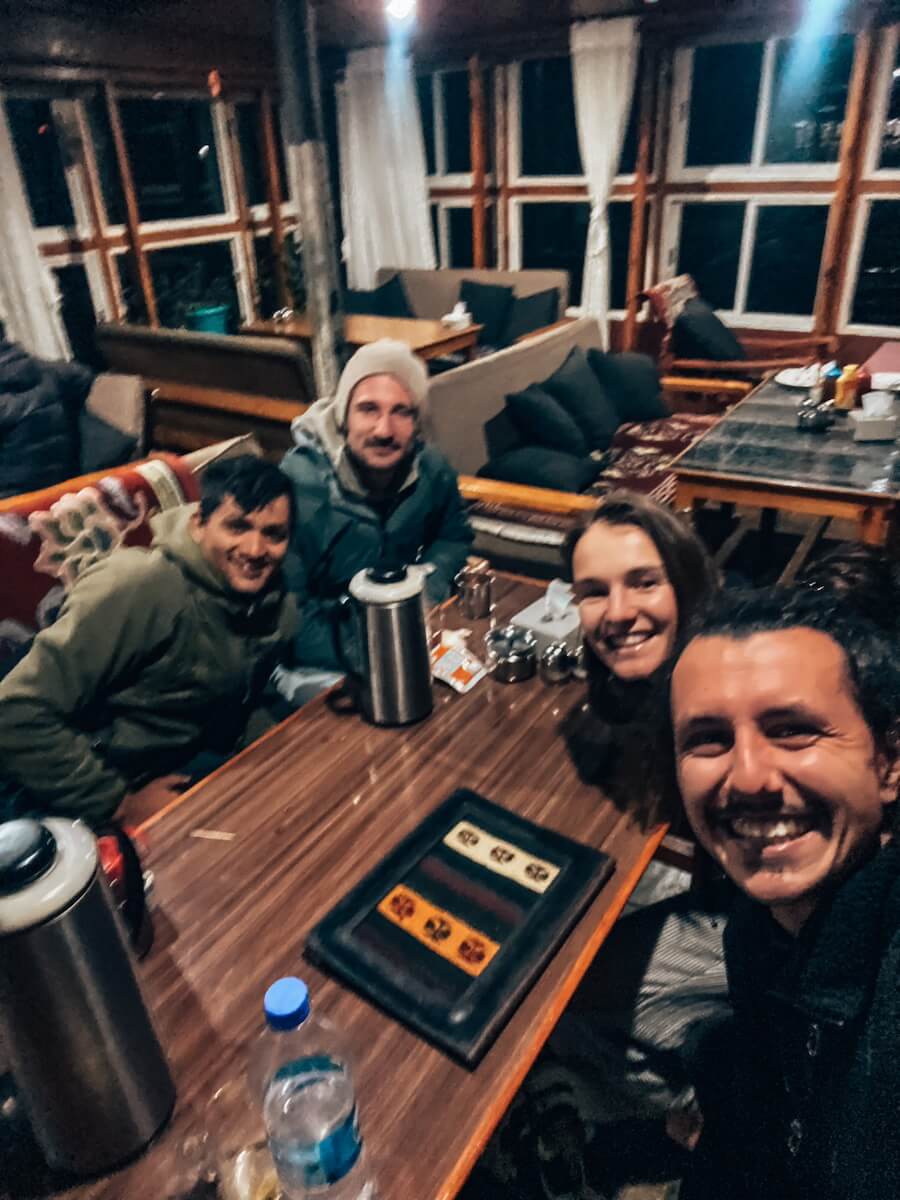
In the evening we play cards when Krali and Rabin join us. Without further ado, we also teach the two of them our game. Rabin understood it immediately, but the language barrier to Krali makes it a little more complicated for him. Nevertheless, Krali certainly has the most fun in the game. We immediately notice that he is passionate about any game, because when we are done, he immediately continues playing solitaire on his mobile phone. Dinner is eaten punctually at 6:00 p.m. and then we all fall into bed dog-tired from the long day.
Trek Day 2: Chame to Pisang
15km, 5 hours, from 2670m to 3200m
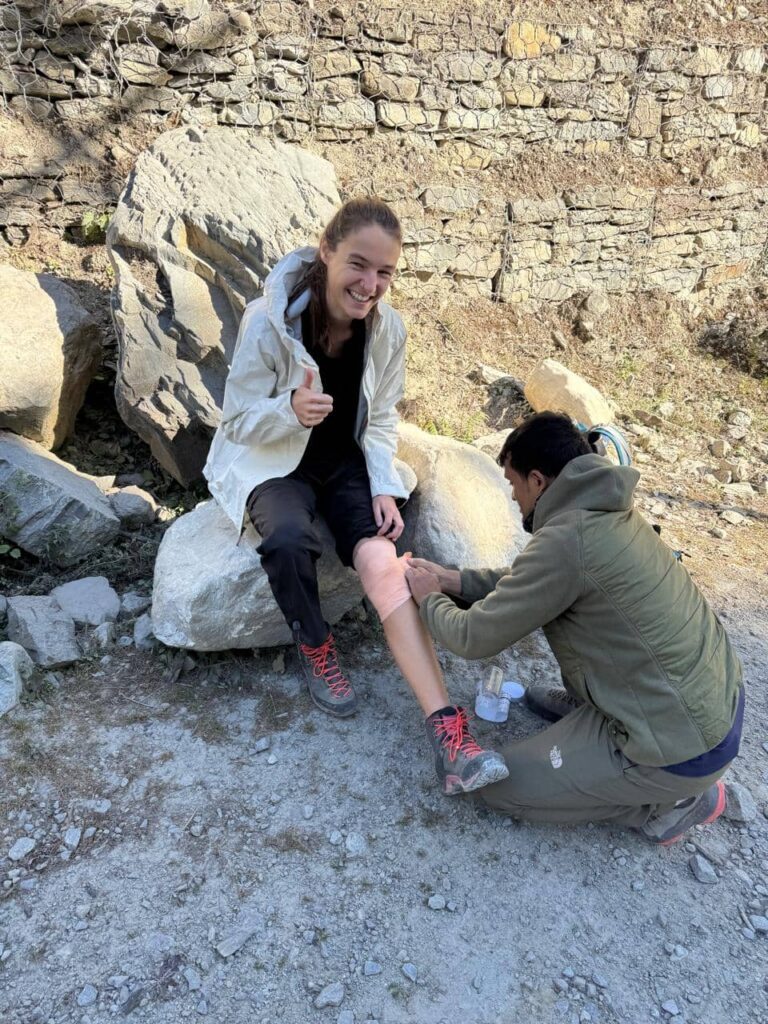
In the early morning we sit back at the breakfast table. The breakfast is gigantic again, but so is the appetite. Today we eat everything. So at 8:30 a.m. we start hiking again – after a selfie together. Unfortunately, both of Jenny’s knees hurt this morning. According to Arjun, however, we are again only hiking Nepali flat. Nevertheless, it goes down short distances from time to time. Therefore, Jenny is equipped with a bandage by Arjun in the morning. Then it goes on. At lunchtime, how could it be otherwise, we eat Dal Bhat, of course. Then we hike on for almost two hours to Pisang.
Arriving at the teahouse, we are immediately assigned our rooms. We are accommodated on the first floor in the corner room and are amazed at the view. We see directly opposite us the snow-white summit of Annapurna II and spread out in front of us the whole way of today. Now we are in the middle of the Himalayas. In addition, the sun shines into our room, so we spend the whole afternoon on our beds and only when Rabin picks us up for dinner can we tear ourselves away from our room. For dinner we have Dal Baht again today – Arjun recommends that we only be willing to experiment again in two days, when we are a little deeper down again. After dinner, we all retire to gather new strength for tomorrow.
Trek Day 3: Pisang to Ngawal
12km, 5 hours, from 3200m to 3650m
On our third day, we already have our morning routine. We pack our things, then off to breakfast and then we start again. Today it goes beyond the critical altitude of 3500m for the first time. Unfortunately, Jenny’s knee still hurts on the way there. Therefore, Rabin and Krali disappear briefly into the forest and immediately return with a wooden stick. The slightly too short stick is a huge help for Jenny for today. We make quite good progress and reach our destination around noon. We spend the afternoon playing cards together again in the common room of today’s teahouse. Unfortunately, Pati doesn’t feel so well in the evening and goes to bed early. The night here gets really cold, so for the first time we are happy to have good sleeping bags with us.
Trek Day 4: Ngawal to Manang
10km, 4 hours, from 3650m to 3540m
In the morning we wake up to sub-zero temperatures and pack our things as quickly as possible. Pati has a very slight fever, a cold and no appetite for breakfast – all indications of an incipient altitude sickness. Denis doesn’t feel very good either. Therefore, the oxygen saturation of both is measured first. Everything in the frame, so we continue. Pati and Denis take a paracetamol and make the four hours to Manang without any problems. Jenny gets a second carved stick from Krali before she leaves. He says then it will be easier – today it goes downhill again. However, the knees are already doing much better.
At regular intervals we pass Buddhist stupas and prayer wheels, each with a mantra. According to our guides, the prayer wheels are turned clockwise to carry the good mantra out into the world with the help of movement and wind. That’s why we turn hundreds of prayer wheels every day. In addition, every now and then there are also large mills that you hold on to and then walk around them three times in a circle – accompanied by a mantra that Krali sings.
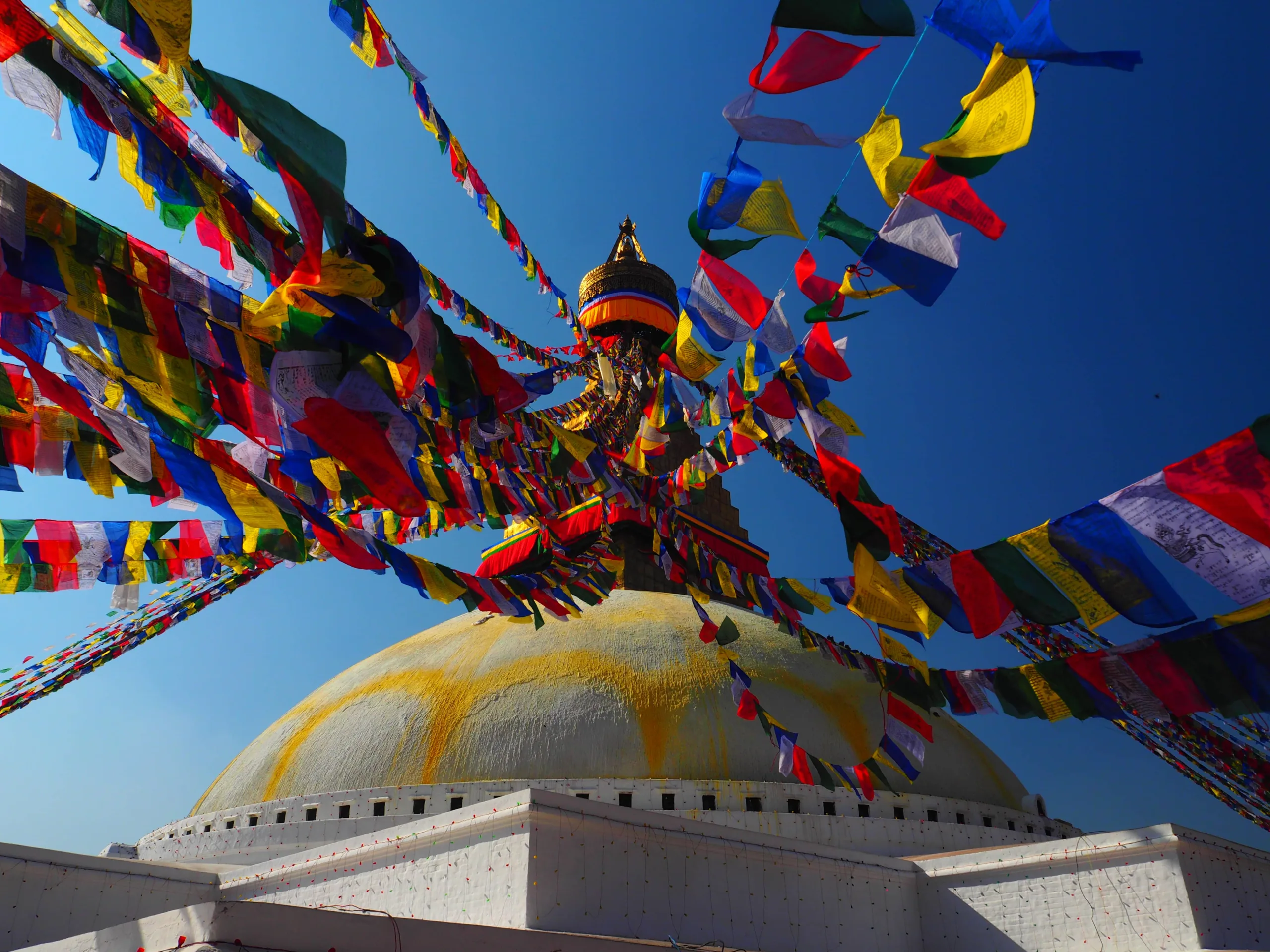
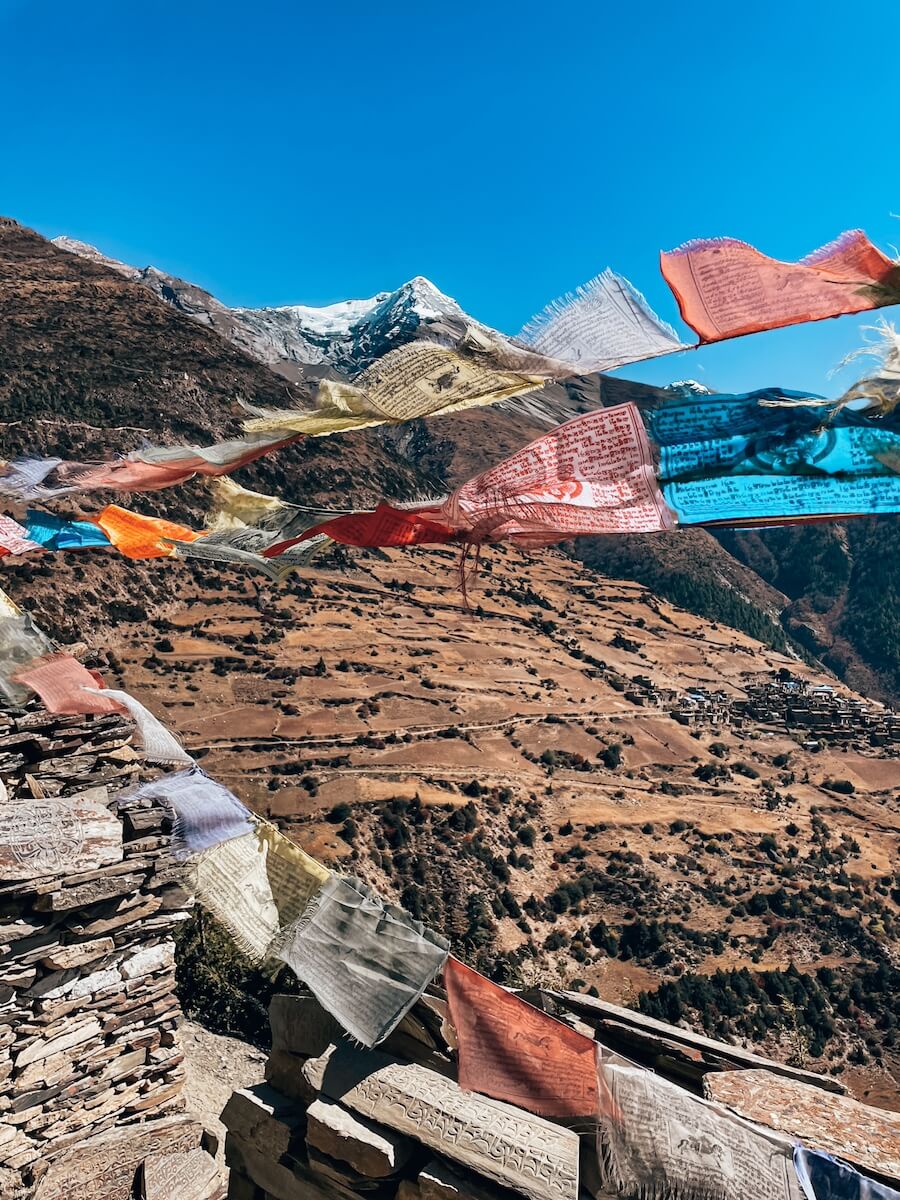
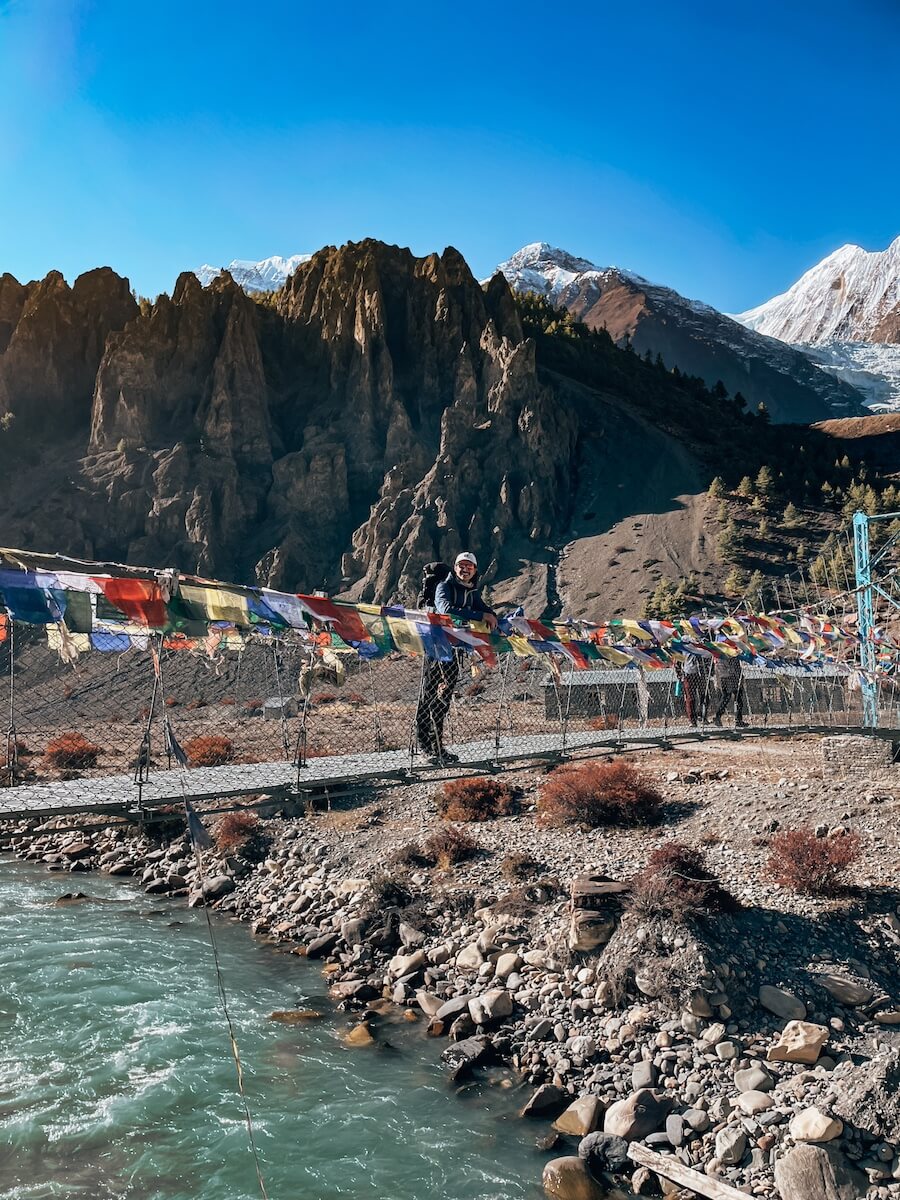
In addition, we constantly see the colorful flags typical of Nepal on our way, which you know from the pictures. These are Buddhist prayer flags, which are also inscribed with different mantras. They are attached to windy places so that the wind spreads the positive mantra.
After quite a short time we reach our destination for the next two days, Manang. We stay here for two days because acclimatization is the order of the day at 3500m. From an altitude of 3500m you are more at risk of getting altitude sickness. Fortunately, Pati is doing well again in the afternoon. Unfortunately, Denis doesn’t feel well at all and he fears that he will get sick. But first we hope that the rest day and some rest will fix everything.
In the afternoon, the game will be played again. This time, Rabin and Krali teach us a Nepalese card game. Krali is of course back in the game with heart and soul, so we spend a really fun afternoon. At the same time, we drink liters of tea, as Arjun makes sure that we are properly hydrated. In the evening we don’t eat Dal Baht for once. Arjun says the cuisine here is great and so we try our hand at lasagna and spring rolls. All excellent. Then we fall into bed at 9:00 p.m., already tired.
Trek Day 5: Acclimatize in Manang
4km, 2 hours, from 3540m to 3790m and back
On our acclimatization day, we start comfortably in the morning towards Gangapurna Lake. Yesterday evening we bought hiking poles to relieve the knees a bit. We want to test them today and practice walking with poles. Denis sits out today for the time being, as his cold has gotten worse and Arjun stays with him. So we set off together with Rabin and Krali. Rabin and Krali lead the way and we still clatter a bit awkwardly with our new hiking poles.
Rabin and Krali teach us a few words of Nepali:
Jam Jam! – Let’s go!
Bistari, bistari. – Slow, slow.
Chana chana byō? – Did you eat the rice?
Kai. – Yes.
No. – No.
Timilai kasto chha? -How’s it going?
Dherai Rāmro. -Very good.
Dhanyavaad. -Thank you.
Svagatam. -You’re welcome.
The path is quite steep, but we make good progress and Jenny even has enough air to chat something with Rabin. After the talks in India, we are very interested in whether people here in Nepal pay taxes. Rabin answers Jenny’s question only with: “Jenny. This is Nepal.” So we think the rest. However, he adds that the economic situation is generally very difficult and that there is also a great deal of dissatisfaction among the population.
Just in time for lunch we are back in our teahouse. Unfortunately, Denis is even sicker than before. Pati also has a slight fever again in the afternoon, but feels quite well. Somehow everything seems uncertain. In the evening, the decision is made: Denis will break off the trek. And Arjun will accompany him back to the valley.
After Denis and Arjun leave us, Rabin takes over the leadership of our trek. Krali, who partly carries our luggage, also stays with us. We are emphatically admonished to make our backpacks as light as possible. We should pack everything we don’t need in Krali’s bag to make the way, which is not difficult, but continues high, as easy as possible. In addition, from today on, the saturation will be checked every day and we will of course be under observation. All this sounds like an incredible amount of experience to us and we immediately feel in good hands with Rabin and Krali. Then we are almost sent to bed. So for us it goes on tomorrow. Unfortunately, Denis has to turn back.
Trek Day 6: Manang to Yak Kharka
10km, 4 hours, from 3540m to 4110m
So on the morning of our sixth day of trekking, we only start hiking with four of us. Pati’s cold is slowly getting better, but it is becoming more and more strenuous to breathe due to the altitude. At an altitude of over 4000 meters, everything suddenly changes: Krali smears his face with sunscreen for the first time. Rabin puts on his sunglasses for the first time and smears himself as well. The landscape is so unique and beautiful and we stop again and again to take photos. Suddenly Rabin asks: Jenny, is this a dream?. Immediately afterwards he gives himself the answer: No, it’s Nepal! and walks on elatedly.
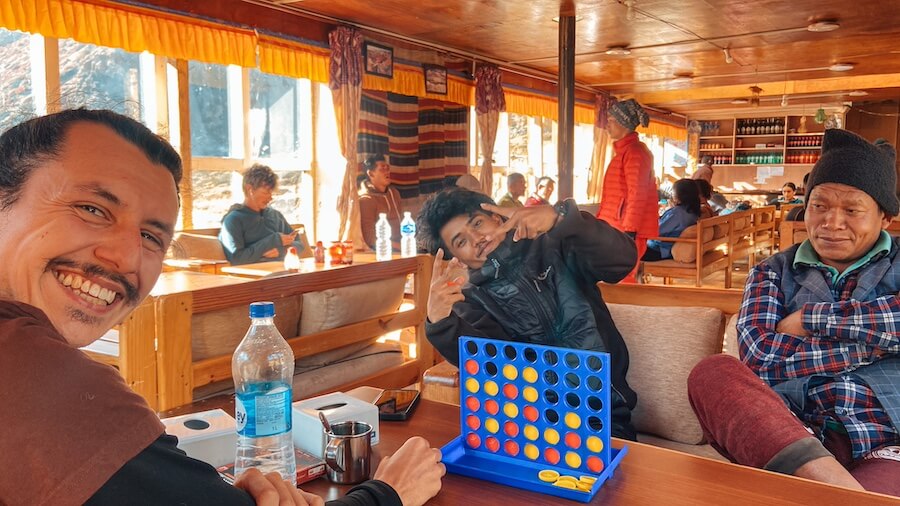
Already for lunch we arrive at our destination of the day, Yak Kharka, at 4110m. Here at an altitude of over 4000m it is already quite cold at noon. We therefore spend the afternoon in the dining hall of the tea house. We play all afternoon, take turns drinking coffee and tea and challenging each other in a match 4. Neither Krali nor Rabin knew the game before and both become really fanatical. We can hardly have dinner later because the two are so focused on the game. In the evening we also have Dal Bhat again, before we – equipped with hat and down jacket – brush our teeth and get ready for bed. The night will be icy cold.
Trek Day 7: Yak Karka to High Camp
7km, 5 hours, from 4110m to 4800m
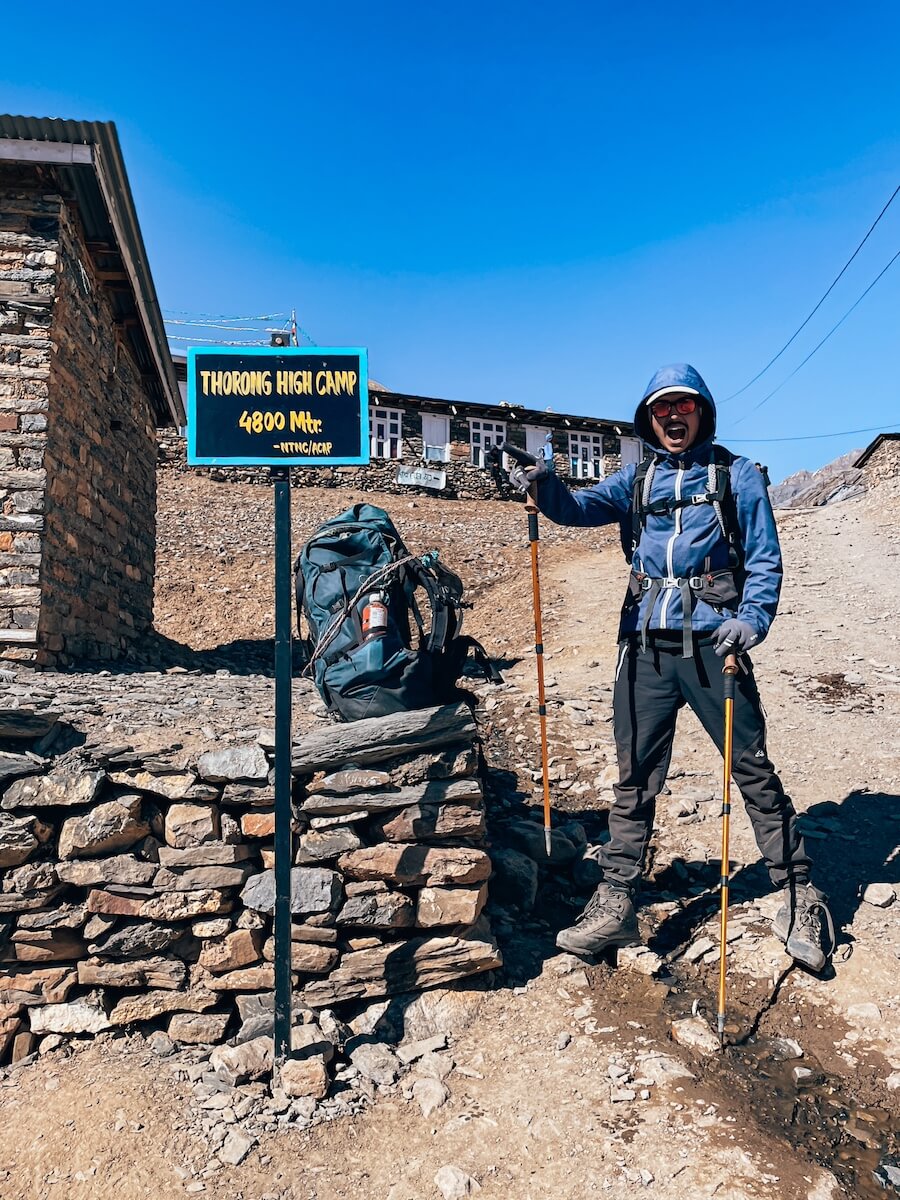
Today is Rabin’s birthday. He will be 22 years old. Today’s plan would be to get to the Low Camp in front of the Thorong La Pass, the highest point of our trek. Unfortunately, Pati is not doing so well today, he had a fever during the night and is now struggling quite a bit with the effort. When we arrive at Low Camp after a few hours of hiking, Rabin thinks that we should definitely walk the 300 more meters of altitude to High Camp in order to save at least an hour for tomorrow morning. After a refreshment with lunch, Dal Bhat as usual, we go up another 300m. Krali, our porter, goes ahead with our luggage to reserve a room for us in the High Camp. There is only one hotel up there and the rooms are booked up very quickly. Once at the top, Krali has actually gotten a room for us. Unfortunately, he couldn’t get a room for himself and Rabin and the two of them later sleep in the dining hall, together with many other guides and porters.
Pati has to rest first. Rabin and Jenny want to walk to a viewpoint 100m further up (she has already arrived in Nepalese “walking”). Jenny is out and about with hiking boots and poles, Rabin walks with his slippers. The view from the viewpoint is incredible. On the way back to the teahouse, however, Rabin admits that proper shoes would not have been a mistake, while he keeps slipping his toes out of his slippers.
In the afternoon, back in the hut, we all celebrate Rabin’s birthday together. Only with tea, because toasting with alcohol is strictly forbidden at this altitude. We spend the afternoon in the tea house, because outside the sun sets at 3:00 p.m. and it is bitterly cold. It is not particularly warm inside either, because the tea house is no longer heated here. Since Yak Kharka we have been a bit above the tree line and there is hardly any wood left. Therefore, from this height onwards, only dried yak flatbreads are used for heating. But even these are rare at almost 5000m.
Already at 17:00 there is Dal Bhat. To go to bed, at about 7:00 p.m., we get an electrolyte solution to drink so that we are prepared for tomorrow. The oxygen saturation is also still being checked: The air is already quite thin, but is expected to become even thinner.
Then we brush our teeth outside before we crawl into our sleeping bag. We are allowed to sleep until 3:15 a.m., then we have breakfast. Everyone hopes that Pati will be fit tomorrow.
Trek Day 8: High Camp via Thorong La Pass to Muktinath
24km, 10 hours, from 4800m to 5416m to 3710m
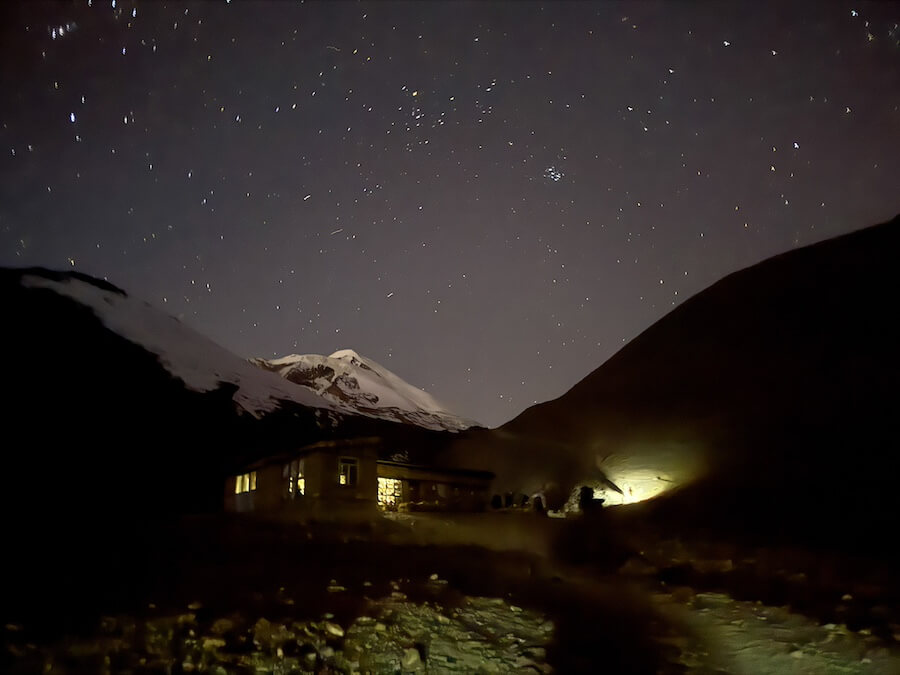
Let’s go! At 3:15 a.m. the alarm clock rings. Out of the sleeping bags, into the hiking pants and mountain boots. caps and headlamps. Quickly roll up your sleeping bags and pack them up. Brushing your teeth. Seeing a shooting star. Prepare gloves. At 3:45 a.m. there is breakfast.
We try to choke down a muesli and way too salty French toast. After about half we have to give up. Rabin, worried as always, therefore buys a pack of biscuits for each of them to be on the safe side. During breakfast we see out of the window how queues of people with headlamps come up from the low camp. We are glad that we covered this path yesterday. Pati has a headache, but luckily no fever and Rabin is optimistic that we can do it. At 4:15 a.m. we start. Jam Jam!
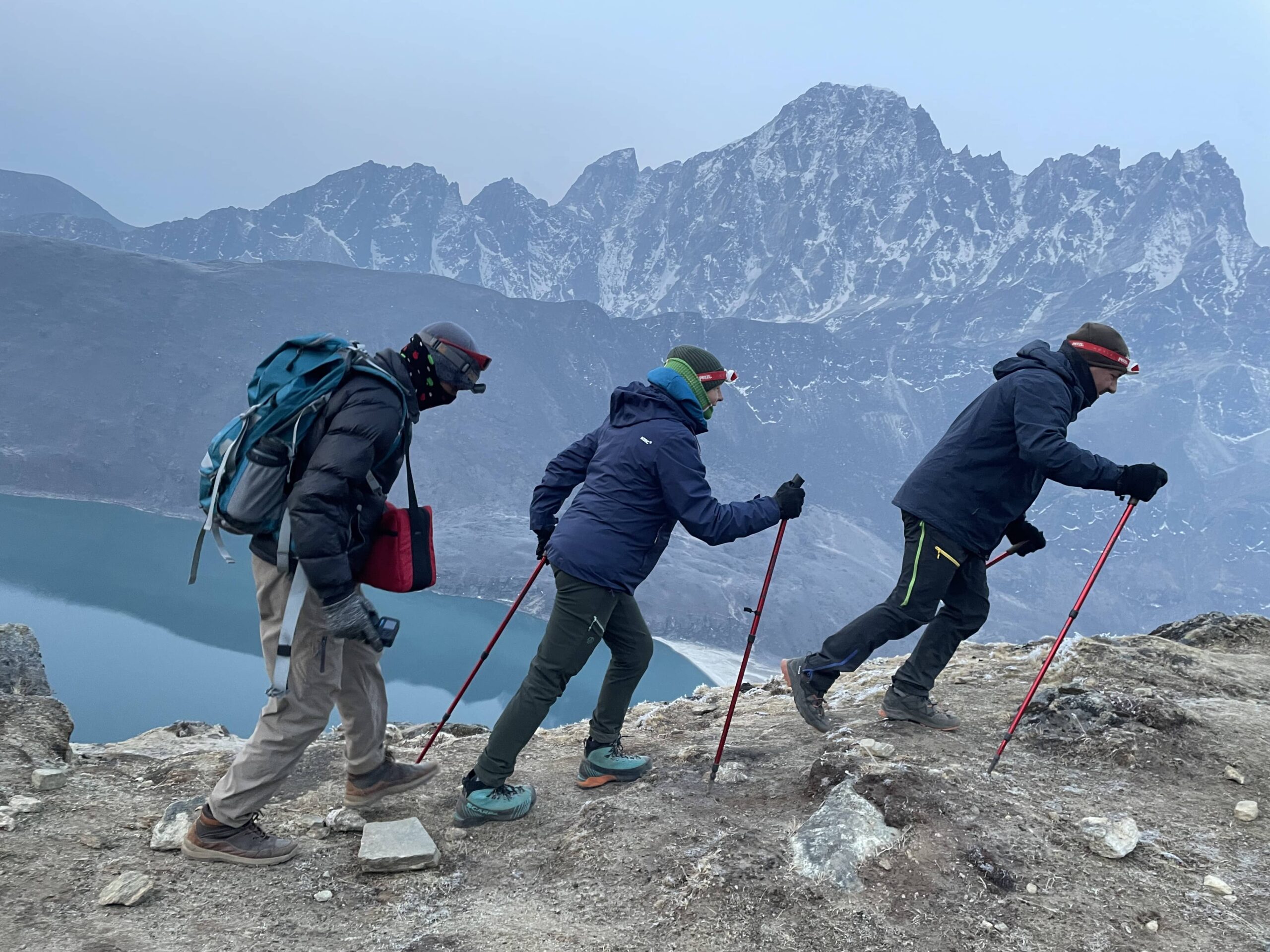
It’s pitch dark outside, the starry sky is incredible. The path is steep and we make only slow progress. Bistari, bistari is the motto. However, in the first hour we constantly overtake other groups who are already completely exhausted from the ascent of the low camp. Jenny’s headlamp is not the best and that’s probably a good thing. Again and again, Rabin stops and shines his headlamp around. Right next to us, the slope is steep. It’s freezing cold and we’ve pulled the scarf deep over our faces. The further up we get, the windier it gets. The water we had with us is now frozen.
The last few meters to the top will be quite a torture for Pati. Again and again Rabin emphasizes that it is only a hill over which we have to cross, but of course that is never true. After a chocolate break at sunrise, we continue strengthened over the many hills of the pass.
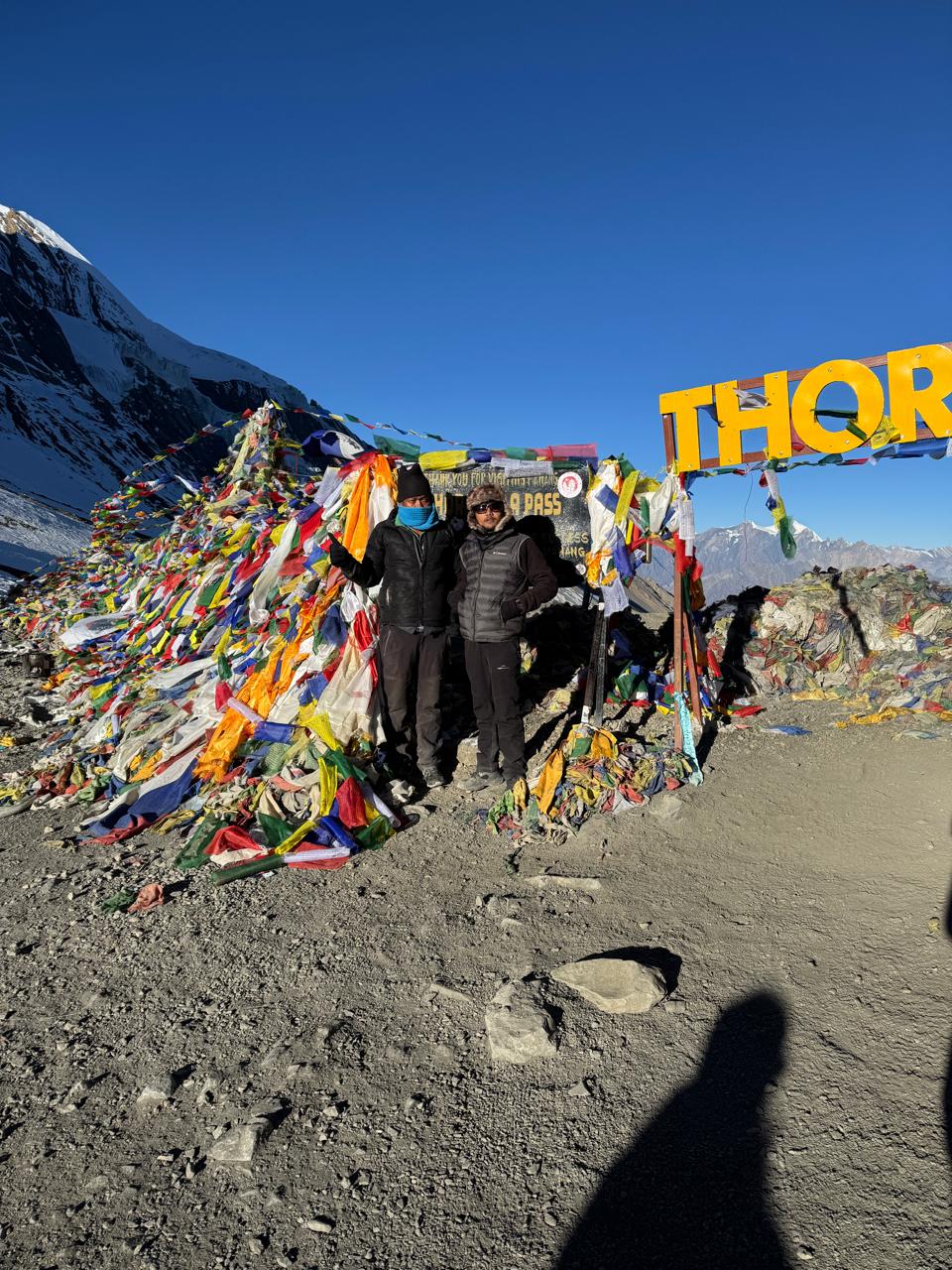
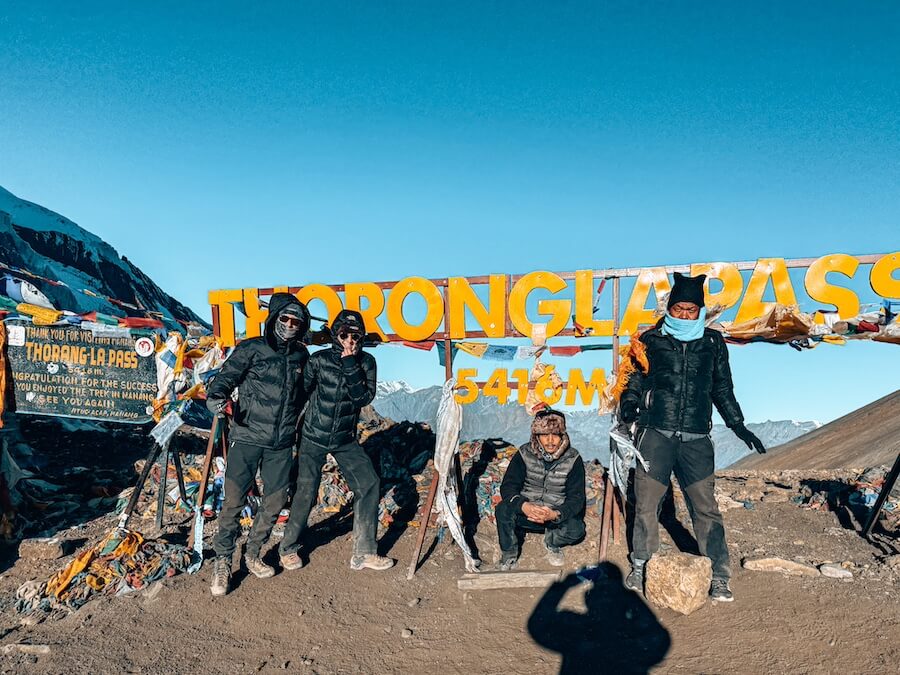
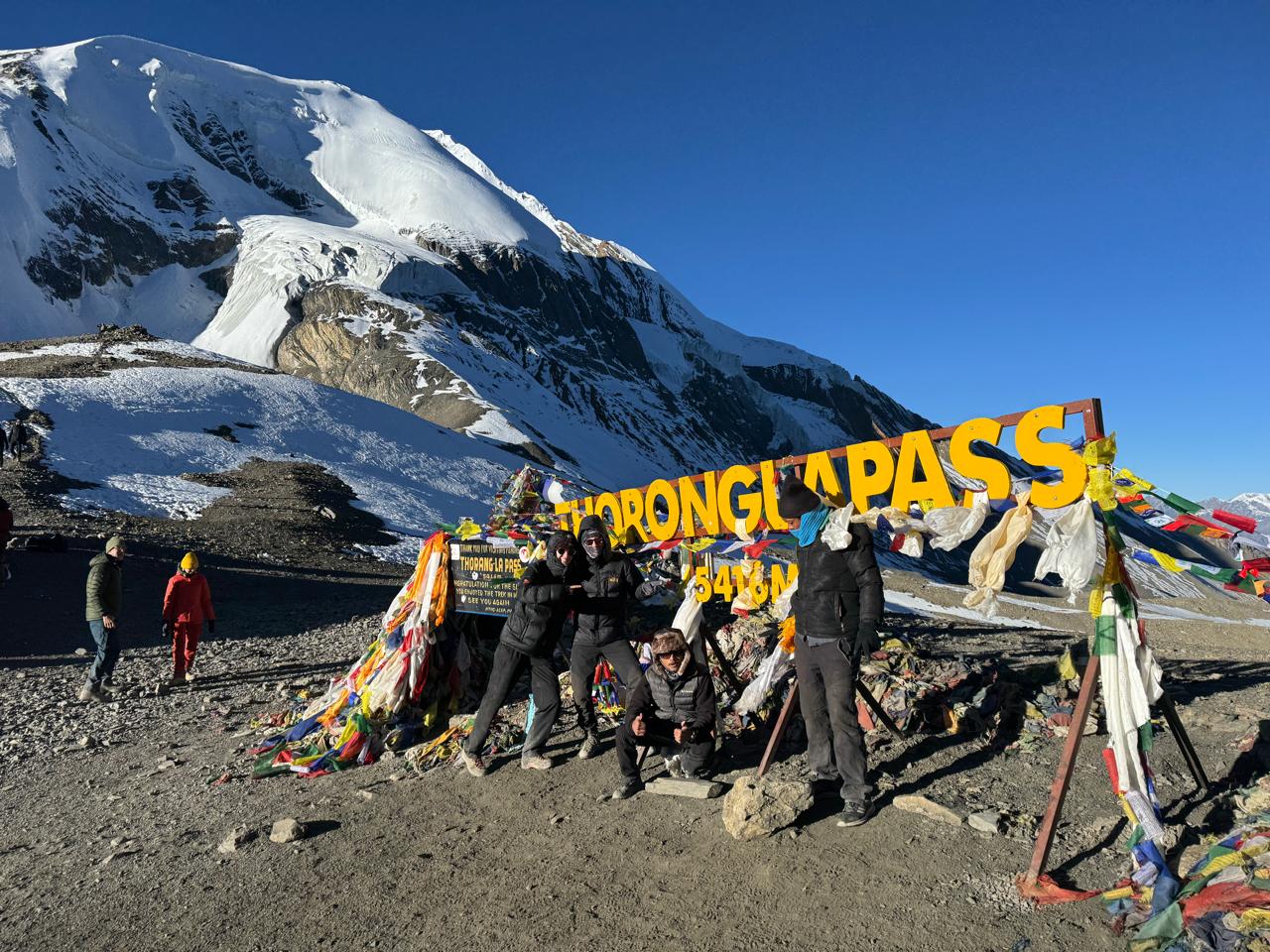
At 7:20 a.m. we reach the highest point. We are actually standing at the Thorong La Pass at 5416m. We can hardly believe it and are completely overwhelmed by the moment. 🥲 Is this a dream? No, its Nepal!
When we signed up for this trek, the only thing in the foreground was that we wanted to go hiking in Nepal. We didn’t want to climb a summit directly, because we had never been so high up before. We therefore thought that the Annapurna Circuit Trek was definitely the right thing for us, but never informed ourselves further about it. We had a guide. But as we stand up here now, we learn that the Thorong La Pass is even the highest pass in the world. We are shocked. And also a little proud.
We take a few photos before it is really too cold. Now we still have a descent of over 1700 meters of altitude ahead of us. When we arrive in Muktinath hours later, of course with Dal Bhat for lunch, we are very tired, but also very happy.
Everyone treats themselves to a hot shower first. Then there is a beer to toast the day’s success and Rabin’s birthday yesterday. In the evening, there is finally no more dal bhat, but pizza and burgers. Once again we fall into bed relatively early.
Nepal is the #1 trekking country: from relaxed day hikes to high-altitude treks lasting several weeks, everything is possible here. We did the legendary Annapurna Circuit Trek with Access the Asia Treks. Here you can get a compact overview of our 15-day trekking experience. In this blog post, we share practical tips on planning, equipment and the highlights that will make trekking in Nepal unforgettable.
All details, personal experiences and the complete daily program can be found in our detailed travel diary.
For trekking in Nepal, spring (March to May) and autumn (September to November) are the ideal months. During these times, the weather is stable, the mountains are clearly visible and the temperatures are pleasant – perfect for multi-day hikes.
The monsoon season from June to August brings a lot of rain, slippery paths and limited visibility in the mountains, while winter (December–February) is cold and snowy, especially in higher regions. Trekking is therefore only recommended in lower valleys during this time.
Important before your Nepal trip
A trekking adventure in Nepal – for example on the Annapurna Circuit – is unforgettable, but good preparation makes the difference between stressful endurance and relaxed travel. Here are the key points to keep in mind:
1. Physical preparation for the trek
Trekking in Nepal is challenging, especially at higher altitudes, where the air is thinner and each route requires more energy. A solid basic level of fitness makes the adventure much more enjoyable. Start being active regularly a few months before the trip: running, climbing stairs, short hikes – ideally also with a backpack to get used to the weight.
2. Visa for Nepal
To enter Nepal, you will need a valid visa, which you can apply for either in advance online or upon arrival at the airport in Kathmandu. We did this on site without any problems during our trip – but it is worth checking the current rules beforehand, as the regulations can change.
3. Insurance for the trek
Trekking or travel insurance is mandatory. Make sure it covers high-altitude mountaineering and any emergencies in remote regions. In the Himalayas, unexpected weather changes, illness or accidents can occur quickly – good insurance gives you security and protects you from high costs. We recommend Young Travellers who also insure high-risk sports. You can find more detailed information and prices directly on the website.
Please note that we do not offer insurance advice or brokerage – we only share our personal experiences and opinions. For individual advice, contact Young Travellers directly.
4. Trekking permits
Many regions in Nepal, including the Annapurna Circuit, require special permits such as the TIMS map or the Annapurna Conservation Area Permit (ACAP). If you are traveling with an organization like Access the Asia Treks, the guides will take care of all the formalities.
5. Hiking equipment
Pack weather-appropriate clothing and trekking gear. Access the Asia Treks also offers rental options for certain pieces of equipment. For example, we borrowed a sleeping bag and a thick down jacket on site. Be sure to test shoes, clothing and backpack at home beforehand.
Annapurna Circuit Trek – 15 Days Hiking Adventure
The Annapurna Circuit is a classic among the trekking routes in Nepal – and our 15-day tour was intense, varied and unforgettable. The route took us from Besisahar through green valleys, rice terraces and traditional villages, past breathtaking views of Annapurna, Dhaulagiri and Machapuchare. On the way we stayed in cozy lodges, got to know the warm hospitality of the locals and immersed ourselves in the Nepalese culture away from the cities.
After our arrival in Kathmandu, we met Arjun from Access the Asia to make final preparations and rent equipment such as a sleeping bag and down jacket. The next day we started together with guide Rabin and Porter Krali into the Annapurna Circuit – organized and accompanied by Access the Asia, which made the start particularly uncomplicated.
Our stages led through places like Dharapani, Chame, Pisang, Ngawal and Manang. In Manang we took an extra day to acclimatize. Altitude, cold and minor aches and pains were part of the routine, but the good food, the warmth of the people and the spectacular views made up for everything.
The food on the way was a real highlight. We ate dal bhat almost every day – which sounds monotonous at first, but was actually much more varied than expected. In the morning we tried the traditional Nepalese breakfast, which was not at all comparable to a typical European breakfast, but really tasted incredibly delicious. We can only recommend everyone to try the local cuisine – it makes the trekking experience even more authentic and special.
The highlight of our tour was crossing the Thorong La Pass at 5,416 m – a breathtaking moment that was physically challenging and incredibly emotional at the same time. The view over the peaks and the endless Himalayan panorama will remain in our memories for a long time. Then followed the descent to Muktinath, where we enjoyed a hot shower and pizza for the first time again.
On the south side, we continued via Tatopani with its hot springs, through tropical rainfall to Ghorepani, Tadapani and Ghandruk. On the last day of hiking we could even see the majestic Annapurna I (8,091 m). Finally, we drove to Pokhara, enjoyed the lake and a small boat ride before heading back to Kathmandu.
The return to the capital was the worthy conclusion of our trek – 15 days full of adventure, culture and unforgettable moments in the Himalayas.
For our personal impressions and daily reports you can read in our travel diary:
Our trekking adventure on the Annapurna Circuit with Access the Asia Treks was simply unforgettable. In total, we were on the road for 15 days and climbed the Thorong La Pass at an impressive 5,416 m altitude.
You can find all the details about our trek on the website.
Our team of guides – Arjun, Rabin and Krali – were not only experienced and knowledgeable, but also incredibly friendly and attentive. We were particularly impressed by how much Access the Asia pays attention to authentic experiences: they maintain genuine contact with the villagers whose villages we wandered through and ensure that local traditions are respected and supported. The topic of sustainability is also very close to their hearts – from the responsible use of resources to the support of local initiatives.
If you also want to hike with Access the Asia, you can reach Arjun & his team directly via their contact page. In addition to the Annapurna Circuit, they offer many other trekking adventures, for example Everest Base Camp, Langtang or Gokyo Valley – all information can be found on accesstheasia.com.
Extra tips for your trek in Nepal
If you want to make your trekking experience in Nepal even more relaxed and enjoyable, we have a few practical tips for you:
Individual tours: For more trekking routes or tailor-made tours, it’s worth taking a look at Access the Asia. They offer not only the Annapurna Circuit but also many other trekking adventures and can customize routes depending on how much time you have or what highlights you want to see.
Rent equipment on site: You can easily rent large, heavy things such as sleeping bags or down jackets on site. This way you save weight in your backpack and don’t have to carry everything from home.
Take cash with you: ATMs are rare in remote regions. Therefore, take enough Nepalese rupees with you for personal expenses, food if necessary and tips for porters and guides. Even though larger places like Pokhara have ATMs, many teahouses and shops only accept cash – so plan well beforehand so you can pay for everything on the go.
Conclusion: Trekking in Nepal – an extraordinary experience
Our trek on the Annapurna Circuit with Access the Asia Treks was an unforgettable adventure: 15 days full of impressive landscapes, cultural encounters and unique moments in the mountains of Nepal. From the start in Besisahar to Pokhara through green valleys, traditional villages and the Thorong La Pass, we experienced a journey that was physically and emotionally demanding and at the same time incredibly enriching.
We were particularly impressed by the warmth of the people we met along the way and the authentic Nepalese culture that you can experience up close in the lodges and small mountain villages. The food, from the traditional Nepalese breakfast to Dal Bhat, also made the trekking experience even more authentic and varied.
With the right preparation, the right equipment, good trekking or travel insurance and an experienced team of guides like Access the Asia, nothing stands in the way of a safe and unforgettable adventure. If you want to delve deeper into our experiences, you can find all the details, personal experiences and daily reports in our detailed travel diary.
Nepal is a country that is suitable for hikers and adventurers like no other – a place to return to again and again to discover new trails, see the Himalayan peaks and collect unforgettable moments.
Do you have any questions about our trek? Feel free to write to us on Instagram! 😊
Trekking in Nepal is a dream for many trekkers as it is one of the world’s most iconic destination. Nepal trekking cost varies from the trek and service you choose. Adventure experience, travelers’ attraction and cultural immersion with gigantic Himalaya ranges are some of the profound points of attraction for the trekkers in Nepal. The varieties of treks from the basic to elite with immense natural beauty is found in Nepal that makes it the tourist hub especially for the nature lovers. Nepal offers exceptional value and price worthy destinations that make you fall in love with the nature and iconic trekking trials.
Trekking in Nepal typically costs between USD 7,00 and USD 3,500 per person, depending on the trekking route, duration, season, level of comfort, and services included. Nepal has the wide range of trekking trials from the popular Everest region trek to the off the beaten path of Manaslu and Dolpo region. Therefore, Nepal trekking cost depends on various factors where you can have the varieties of option to choose to make it as per your preference.
Short and Easy Treks of duration around 5 to 7 days average cost is around USD $700–1,400
Classic Himalayan Treks of duration around 10-14 days average cost is around USD $1,200–2,400
Remote and Restricted Treks of duration around 14 to 20 days average cost is around USD $2,200–3,500
Note: In this cost, the international flight prices to Nepal are not included.
Trekking in Nepal
Trekking Permits & Government Fees in Nepal
All trekkers must pay mandatory government fees according to the trekking destinations they have chosen:
TIMS Card: USD 20 (Mandatory)
Sagarmatha National Park Permit (Everest): USD 30
Annapurna Conservation Area Permit (ACAP): USD 30
Langtang National Park Permit: USD 30
Restricted Area Permits: USD 100–500+
Note: Permit costs are the same for all nationalities except for all the nationalities. For the peak climbing, you have to pay additional.
local village
Trekking Guide & Porter Costs
Hiring a licensed trekking guide improves safety, navigation, and cultural understanding. Along with this, if you hire the guide from the authorized trekking company then the guide’s insurance is also covered during the process.
Licensed trekking guide: USD 25–35 per day
Porter: USD 18–25 per day
Porter-guide: USD 20–30 per day
Access the Asia Treks follows ethical trekking standards and employs experienced local staff.
porter near annapurna base camp
Accommodation Costs During the Trek
Most trekking routes in Nepal use teahouse accommodation.
Standard teahouse rooms: USD 10–20 per night
Luxury lodges (Depends on region): USD 150–400 per night
Note: Accommodation prices increase with altitude due to transportation challenges.
Hotel and Tea houses
Food & Drinking Water Costs
Food costs rise as you trek higher into the mountains.
Daily meals: USD 30–40 (Breakfast, Lunch and Dinner)
Hot drinks (tea, coffee): USD 2–5
Drinking water: USD 1–4 per liter
Note: Reusable bottles and purification tablets reduce both cost and environmental impact.
Transportation Costs in Nepal
Transportation expenses depend on trekking region and road condition:
Domestic flights (e.g., Kathmandu–Lukla): USD 180–220 one way
Domestic flights (e.g., Kathmandu–Pokhara): USD 100–120 one way
Tourist bus: USD 10–30
Private jeep: USD 250–350 per day
Note: Remote trekking routes generally have higher transportation costs.
Ready for the flight
Trekking Gear & Equipment Costs
Gear can be purchased or rented in Kathmandu.
Gear rental: USD 2 per item/day
Sleeping bag rental: USD 3/day
Full gear purchase: Depends on your trekking equipment. For Peak Climbing, you need to hire more gears
Note: Renting is a cost-effective option for international trekkers.
Note: The trekking season directly affects the cost of trekking in Nepal.
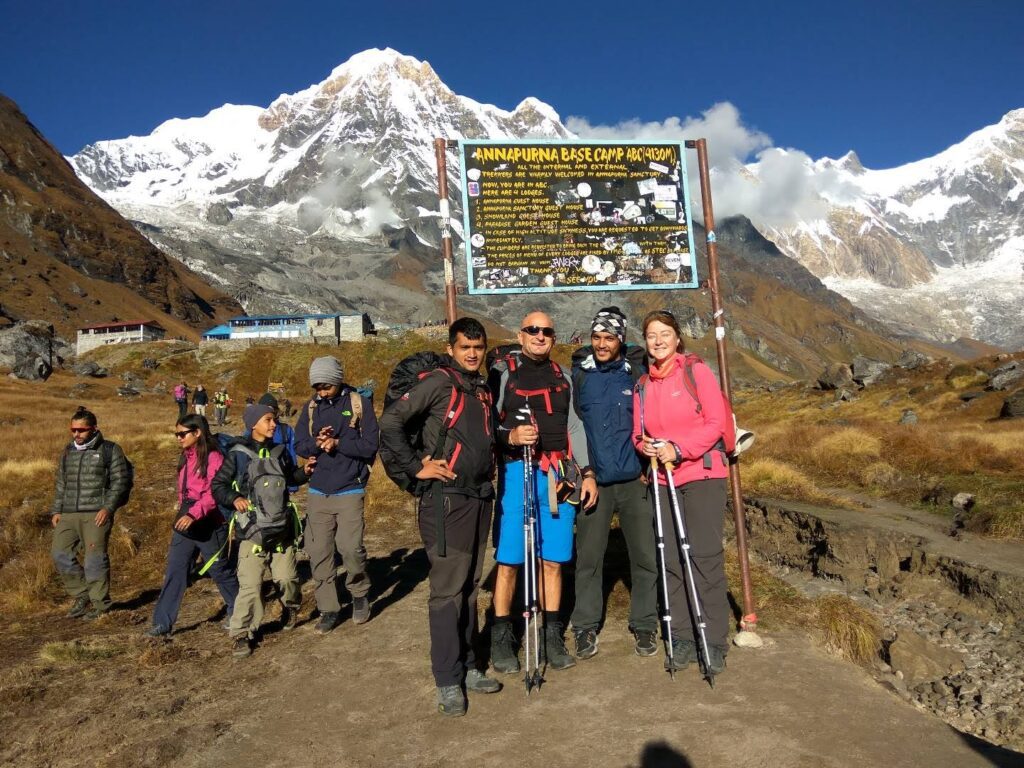
our team on ABC
How to Reduce Trekking Costs in Nepal?
Travel in small groups
Book with a local trekking company
Avoid unnecessary luxury upgrades
Use refillable water bottles
Why Choose Access the Asia Treks?
Access the Asia Treks is a professional trekking company in Nepal, serving travelers worldwide with ethical practices and transparent pricing.
Experienced local guides
Fair porter welfare
Competitive trekking costs
Custom trekking packages
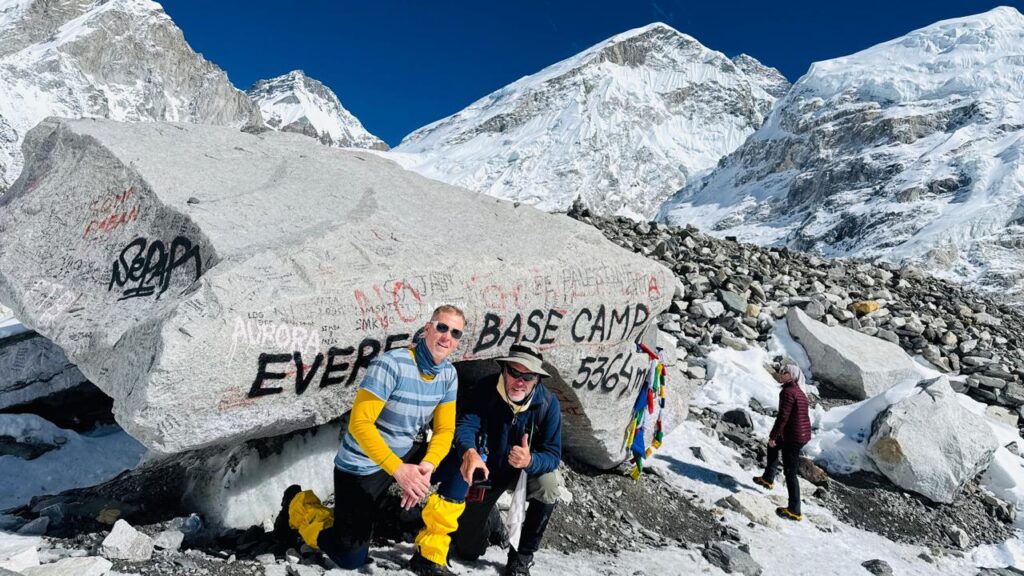
Everest Base Camp summitted
Is Trekking in Nepal Worth the Cost?
Absolutely. Nepal delivers world-class trekking, panoramic Himalayan scenery, and rich cultural experiences at a reasonable cost. The Nepal Trekking cost can be varied as per your preference and you can choose the best alternative for you while trekking in Nepal.
📩 Contact Access the Asia Treks today for a personalized trekking cost estimate and expert guidance.
Are you planning to conquer the “Spirit Mountain” in 2026 or 2027? The Manaslu Circuit Trek has officially become the number 1 alternative to the crowded Annapurna Circuit Trek. But with its “Restricted Area” status, the cost are more complex than your average trek.
In this guide, we break down every dollar you will spend during the trek. From mandatory permit fees to teahouse snacks, so you can plan your adventure without financial surprises.
Quick Summary: How Much Does it Cost?
For a standard 16- Days Manaslu Circuit Trek in 2026, expect to budget:
Budget (Economic package via agency): $900-$1,050
Standard All-Inclusive (Most Popular): $1,200- $1,450
Luxury/Private Trek: $1,800+ USD
Expert Insight: Unlike Everest and Annapurna, you cannot trek Manaslu Circuit Trek solo. Nepalese law requires a minimum of two trekkers and one licensed guide.
However, the Chumnubri Rural Municipality now charges a local entry fee of NPR 1,000 (approx. $8-$10) per person.
Permit Type
Peak Season (Sept–Nov)
Off-Peak (Dec–Aug)
Manaslu Restricted Permit (RAP)
$100 (First 7 days)
$75 (First 7 days)
Additional Days (after day 7)
$15 / day
$10 / day
MCAP (Conservation Area)
$30 (Approx. NPR 3,000)
$30
ACAP (Annapurna Area)
$30 (Approx. NPR 3,000)
$30
Note: If you add Tsum Valley Trek, you will have to add extra $40 (Peak season) or $30 (Off-Peak season) for permit fees.
Professional Guide and Porter Fees
Since a guide is mandatory in Manaslu Region, this is fixed cost.
Licensed Guide: $30 to $40 per day (Include their food, salary, and insurance)
Porters: $25 to $30 per day (Porter typically carries 20 to 25 kg of bag, shared between two trekkers.
Group with local guide
Why hire a local expert?
In 2026, trails are challenging due to new road constructions. A local guide from Access the Asia Treks knows the old trail to keep you away from the dusty jeep road.
Accommodation & Food: Teahouse Budget
As you go to higher altitude, the price of foods and rooms keeps on getting high. The prices rise because everything is carried by mules and porters.
Accommodation: Normally costs $5 to $15 per night for twin sharing room.
Meals: $25 to $40 per day
Breakfast normally cost from $5 to 8$.
Lunch/Dinner normally cost from $7 to $12 (A plate of Dal Bhat)
Extra (Hidden Cost)
Hot Shower: $3 to $5
Charging Electronics: $2 to $5 per device
Wi-Fi: $3 to $5 per day and per device
Transportation
The trek normally starts from Machha Khola and ends in Dharapani/Besisahar. To reach the trailhead and return to Kathmandu, there are two options, Local bus and private transportation.
Local Bus: $15 to $25 (Bumpy and long but authentic)
Private 4WD Jeep: $200 to $250 per Jeep (Highly recommended for comfort and safety on the rugged mountain road)
If you want local authentic style transportation, you can use local transportation. But if you want comfort and safety we recommend private transportation.
Total Cost Comparison Table
Expense Item
Estimated Cost (16 Days)
Total Permits
$160 – $200
Guide (Shared)
$250 – $300
Food & Lodging
$450 – $600
Transportation
$100 – $500
Estimated Total
$910 – $1,300 USD
Local Dal Bhat
How to Save Money on Your Manaslu Trek
Trek with group: Split the cost of guide, Jeep and Porter
Bring your own power bank: Focus on avoiding daily charging fees in teahouses.
Water Purification: Bring a LifeStraw or purification tablets to save $3 to $5 for mineral water per bottle.
Book All-Inclusive: Agencies like Access the Asia Treks lock in 2025 prices for 2026 booking, protecting you from inflation.
Photo of Larke La pass
Final Verdict: Is it worth the cost?
Absolutely, the Manaslu Circuit Trek offers a raw, medieval Tibetan culture that you simply wont find in the Everest or Annapurna region anymore. By 2027, more roads will be built, so 2026 is the perfect year to explore Manaslu authentic trail.
Ready to Trek?
Don’t get bogged down in the logistics permits and paperwork. Let our expert handle the details while you focus on the views.
After crossing the Thorong La Pass at 5416m, our hike continues on the other side of the mountain. We descend directly 1700 meters in altitude to Muktinath, where we continue the next day.
Trek Day 9: Muktinath to Tatopani
20km drive, from 3710m to 1200m
Unfortunately, Pati gets a fever again during the night. Probably the exhaustion. At seven in the morning I go to the famous temple complex of Muktinath together with Rabin and Krali. Buddhist and Hindu pilgrims from all over the world travel to this place to pray in the special temple. So with sore muscles from the day before, we go up hundreds of steps to the entrance. Professionally, Krali estimates that there must be 😆 about 40 steps – that’s only almost right.
On the way up, we pass ancient traditional Nepalese earth houses, which are built right next to the steps down into the ground, like a cave. In fact, people still live there and we can even watch a woman cooking on stones and with wood.
We also pass a rest area. When I ask what the huge rest area with at least 20 benches is for, Rabin explains that many people who hike up here get altitude sickness. After all, we are still at an altitude of almost 4000 m. Soon, a clinic is even to be built here at the rest area. Practical to achieve if you “only” have to 😆 overcome several hundred steps. Further up at the temple complex we see another sign that explains the risks of altitude sickness. Somehow absurd.
Rabin tells all kinds of things about the temple complex and its history. He himself belongs to Hinduism and knows a lot about it. The Hindu temple is the only temple in Nepal with 108 water fountains and two huge, ice-cold pools that serve to purify the soul. That’s why many people come here and walk through all 108 fountains on the wall in their clothes and then touch the bottom of the deep pools. In this way, the believers believe that they are freed from all sins. Just watching is spectacular – after all, it’s no more than 8 degrees outside.
After the Hindu temple we look at the Buddhist part of the complex, now it’s Krali’s turn with his stories and explanations – he is a Buddhist. Apparently, there are only 14 of the huge Buddha statue like here in Muktinath in the whole world. I don’t quite understand why and unfortunately Krali can’t explain it that exactly. When I google later, the Internet explains the following to me:
“The Buddha statue in Muktinath, which is considered particularly famous in the region, is not unique in the sense that it exists only 14 times in the world. However, there seems to be a special legend or myth that says that there are only 14 specific Buddha statues in the world that have a special meaning or spiritual status. This number could be symbolic or refer to a particular group of statues that meet certain historical or religious criteria.”
So what exactly is behind it remains a little secret. In any case, many people make a pilgrimage here because of the statue. As with the Buddhist stupas, we walk three laps clockwise around the Buddha while Krali chants a mantra. Then we look at the rest of the temple complex and I hear some more exciting stories before we go back to the hotel to Pati and have breakfast. We were on our way to the temple very early and sober, because it is considered unclean if you have already eaten something before.
I thank Krali and Rabin for taking me along and explaining so much to me. On the way back, Rabin gives me a bracelet with stones from Muktinath, which, according to Krali, bring special luck – a unique gift.
By the way, today we have not had excellent weather for the first time. It is cloudy. So far we have had sunshine and bright blue skies every day. The conditions were perfect to conquer the Thorong La Pass.
For breakfast we have masala tea and Tibetan bread (similar to our Kiachl) with curry. It tastes fantastic! Then a jeep is already waiting for us in front of the front door. The next 20km we only descend through riverbeds into the valley. The paths were washed away during the heavy rainfall a few weeks ago, so we are allowed to drive this part (mostly) off-road instead of walking. We share the jeep with a French couple and their guide and porter. There are nine of us in a jeep for seven people. So it’s going to be cuddly again.
Let’s go to Tatopani. The road is really only partly a road and the ride is bumpy again. Many bridges are simply no longer there. When we have to go over one, we see how our driver quickly worships the little Buddha on his dashboard. Fortunately, everything goes well.
After about an hour we stop him Jomsom. There is a Buddhist monastery to see there. At first it seems as if the monastery is closed, but the policeman on site asks our guide to simply open the door. Shortly afterwards we are standing in the monastery garden. The door to the actual monastery also seems to be locked, but our guide can no longer be stopped. He shakes the door, which is opened immediately afterwards. Then we’re already in. The main part of the monastery consists of only a single room with three huge Buddha statues at the very front. The reason why all the doors seemed to be locked is quickly obvious: the young monks who are being taught here are currently writing an exam. But we are in Nepal, so no problem. One of the examinees (the one who speaks English best) even has to stand up and give us a short tour of the monastery room. Again, it’s all kind of absurd – but nice. After a 20-minute visit, we leave the monastery again and our bumpy ride continues.
During the journey, the porter of the French group, who is in the passenger seat, falls asleep. The guide of the other group, who is sitting at the very back of the car, sees this and asks the French woman in the middle row to fasten his seatbelt. Apparently, you can drive awake without a seatbelt, but sleeping it is too dangerous😅 even for Nepal.
At a waterfall we take another break. Rabin comes up to us and offers us a piece of “hard something”: yak cheese, as it turns out. More precisely, probably the bark of it. This is chewed like chewing gum, except that it is much harder than chewing gum and really doesn’t taste that good. But definitely a good pastime.
For the 20km to Tatopani we need a little more than three hours. Then we have a Dal Bhat for lunch in Tatopani. Tatopani is known for its hot springs, which we check out in the afternoon. The hot springs are indeed really hot. After 5 minutes we almost can’t stand it anymore and after 10 minutes we have to get out of the water again. Krali, who came with us but of course didn’t go into the water, is surprised that we are out again so quickly. He claims to have been water for about 1 hour last time (but according to his estimation it was only 40 steps up to the temple, so who knows 😄).
Trek Day 10: Tatopani to Ghorepani
17km, 6 hours, from 1200m to 2850m
The next day we have a long hike ahead of us. 1600 meters in altitude and 17 km from us is the next village, Ghorepani. The first half of the day we are really lucky with the weather. We pass countless rice plantations, walk through local villages in the mountains and take a tea break in the sun. Rabin buys a kind of banana on the way that we have never seen before. It weighs at least one kilo and is incredibly huge. Fortunately, it is not yet ripe in the middle, so at least we don’t have to eat it completely. Guava, lemons and oranges also grow along the way. It’s really tropical here.
For lunch we have Dal Bhat in a tea house on the way. As always, we wait quite a long time for our food. This time, however, we can watch the weather get worse by the minute. Even before the food is on the table, it rains.
While eating, Krali hits the window next to him and catches his target: a fly. When she still moves, he hits it with the flat of his hand, takes it and carries it out – of course while he is singing a mantra… these Buddhists.
After the meal it rains even more. We unpack our rain jackets and pull the rain cover over our backpacks. Then we march off in the rain. When it rains here in Asia, you can’t imagine it the same way as at home: a few drops, a few more, half an hour a lot of water falls from the sky, but then the thing comes back and it drips away for a while at most. Real rainy days are rather rare.
Here, however, it rains first, and then it pours. And tomorrow it may stop again. We stop again not too far from our lunch stop and Rabin and Krali get a garbage bag there, which they pull over their equipment. They still ask us if we want one too. We say no (but should have known better).
800 meters of altitude still lie ahead of us and we are already soaking wet. We are really fast, but the mood in the group is slowly sinking into the basement. When we are still about half an hour away from our destination – we are already back at over 2600m, wet from head to toe and everyone is freezing cold – it starts to hail. We are somewhere in the middle of nowhere and can’t let it get us down. We hike as fast as we can further up. The last 15 minutes we can also hear a thunderstorm from afar. But before it gets closer, we finally reach our accommodation for the evening.
Fortunately, the stove in the dining hall is already heated and we can spread out all our equipment in front of it. Then there is a gas-powered hot shower and all the wet contents from the backpack (the rain cover could no longer keep everything out) are spread out on the room floor.
The thunderstorm is getting closer and closer. Suddenly we hear a loud crash. In the next second, the power fails. So that’s it for the electricity until tomorrow. Luckily, there are a few battery-operated lights in the teahouse and one of our cell phones can also act as a flashlight.
After dinner we are quite exhausted and want to go to bed. However, our things that are in front of the stove are not yet dry. I ask Rabin if we can let the things dry here overnight. Rabin’s answer is, as with the tax question: “Jenny, this is Nepal”. So for us, this means that we pack all the clothes that are still damp and spread them out in our small room overnight.
In addition to some words of the national language, we learn Rabin’s very own language for time and route indications
It’s close. – 30 minutes.
Not far. – 1 hour.
Not so far. – 2 hours.
Not too far. – 3 hours.
Just a little. – 3 hours.
Little far. – 5 hours.
A bit far. – 8 hours.
It depends… – He really has no idea.
Trek Day 11: Ghorepani to Tadapani
14km, 3 hours, from 2850m to 2610m
The very next morning, when the alarm clock rings, we bring the things, which of course have not dried in the ice-cold night at 2850m, back down in front of the stove. Today we go to Tadapani. The weather is much better than yesterday and only a little further up on the higher mountains we can see snow. Immediately after breakfast it starts. We use the morning and reach our next destination on time when the first raindrops patter down again. We spend the afternoon in the hut warming up, drying, reading, playing and drinking beer.
Trek Day 12: Tadapani to Ghandruk
7km, 2 hours, from 2610m to 1940m
The last hiking day of the trek has begun. The weather is good again this morning and so we leave early. This morning, still in Tadapani, we even catch a glimpse of Annapurna I (8091m) for the first and only time right at breakfast.
View of Annapurna I (8091m).
Instead of the usual 12-17 km of the last few days, the way today is much shorter and only 7 km long. So we are already in Ghandruk before lunch. Here we spend the rest of the day with good food and sunny weather. Of course, a deck of cards is not to be missed. After dinner, there is rum Nepali style (with hot water and honey) for everyone to celebrate the day. The mood is exuberant. We play, dance, laugh and talk about all kinds of things. We are a little bit sad that the trek is already over. Time has passed incredibly fast.
Trek Day 13: Ghandruk to Pokhara
28km drive, from 1940m to 822m
At 6:15 a.m. the last day of our trek starts. Today we just have to have breakfast and then walk to the jeep parking lot. Our driver is already waiting there. Once again, we are in for a bumpy ride. It takes about three hours until we arrive in Pokhara. Our Porter Krali leaves us there. He is already taking the bus back to Kathmandu today. Rabin, on the other hand, stays with us in Pokhara for another day.
Together we explore the city, which is located on a large lake. The lake is considered the Nepalese sea, so to speak. Many people come here for holidays because of the lake. Accordingly, many people are there and rent boats (you don’t swim in Nepal, as elsewhere in Asia). Rabin persuades us to borrow a small nutshell. We think that we will paddle across the lake with the boat ourselves, but Rabin even rents a driver for a whole hour for 100 rupees (about 60 cents). So we are paddled across the lake.
Rabin tells us beforehand that he can stay afloat in a swimming pool, but he can’t really swim. He therefore prefers to put on a life jacket, which we find reasonable, but also very funny. When we get in, Rabin sends us both ahead with the words: “I don’t know how to swim if it sinks”. Quite nervous at first, Rabin holds on to both sides of the boat.
Of course, he is always up for a cool pose. We walk around a temple that is located in the lake and are on the water for about an hour. Afterwards there is masala tea for all of us. In the evening we meet Rabin again for a beer and let the – this time really – last day together come to a leisurely end. Early the next morning Rabin drives back to Kathmandu, we stay another day in Pokhara.
Pokhara
The next day in Pokhara we do what we do best: we walk from one café to another and have a good time. In the late afternoon, Denis joins us, who is now feeling better again. We meet him for dinner and have a lot to tell about the trek. The next morning we go back to Kathmandu and Denis stays in Pokhara for two more days. But we meet him again in Kathmandu.
The bus ride from Pokhara to Kathmandu is anything but pleasant. You could also call the trip the worst bus ride ever. The bus, which is even called a tourist bus, is very comfortable inside and has couch-like seats, but unfortunately that doesn’t help if the roads are not available. 11 (!!) For hours we are thrown out of our seats and pushed back in; Everything hurts. Maybe it would be better to have regular bus seats instead of this ultra-soft couch. In 11 hours we cover only 200km – amazing.
When we finally arrive in Kathmandu after a long 11 hours, we are very happy and really exhausted. This bus ride was certainly the most strenuous part of the entire trek. We check into our hostel, return our borrowed sleeping bags and down jackets, eat something else and then fall into bed. The next morning we have sore muscles all over our bodies. Life here is really crazy.
Back in Kathmandu
Our last five days in Nepal we stay in Kathmandu. We don’t want to go anywhere by bus anymore and Kathmandu is really beautiful. Denis also comes back and we are even invited home by Arjun and Rabin for dinner.
Arjun calls in the morning to tell us that Rabin will pick us up – after all, we don’t know where Arjun’s house is. At 3.30 p.m. the time has come. Rabin does not have a driver’s license and therefore comes by taxi. Together with us, he then takes a taxi back to his home.
The family lives in a large house just outside. In the living room we sit together on the floor, we are served tea and we are allowed to taste delicious Nepalese specialties. Even before dinner, we are all more than full. To top it all off, there is, how could it be otherwise, Dal Bhat. Everything tastes really excellent and we almost burst.
After dinner we say goodbye. Arjun will be working in Austria again next summer and we have already agreed to visit him there in the Zillertal.
We spend the last few days in Kathmandu looking at and sorting out photos from the trek (thousands of photos we can tell you), writing down our travel diary and meeting Denis for coffee or dinner in between.
All in all, we really liked Nepal incredibly much and we are sure that we will come back here again. For now, however, we are ready for a change of country.
The Manaslu Circuit Trek is one of Nepal’s most iconic and less crowded trekking route. This trek offers dramatic Himalaya scenery, authentic Tibetan village, and a thrill to cross Larke La Pass (5,106m/16,752ft). This trek is also often considered as the best alternative to the Annapurna Circuit. This trek circles the Mt. Manaslu (8,163m), the world’s eighth highest mountain in the world.
Here, you can visit our 16 days Manaslu Circuit Trek itinerary carefully designed by Access the Asia Treks, focusing on proper rest/acclimatization, safety comfort, and cultural immersion, making this trek ideal for those who are seeking to get remote and raw Himalayan experience.
Maximum Elevation: Larke La Pass (5,106m/16,752ft)
Starting point of the trek: Machha Khola
Ending point of the trek: Dharapani
Trek difficulty: Moderate
Best seasons: Spring and Autumn
Permit required: MCAP, ACAP, RAP
Mount Manaslu from Lho
Why Choose Manaslu Circuit Trek?
Manaslu Circuit Trek is less crowded than Everest Base Camp Trek or Annapurna Circuit Trek. While doing this trek you can encounter stunning views of Mt. Manaslu, Himchuli, Ganesh Himal and many more beautiful mountains. You can have experience of local Tibetan influenced village culture. This region is rich in Buddhist culture and ancient monasteries. Here, you can experience dramatic landscape change from subtropical valleys to alpine terrain. This trek is challenging but achievable high mountain pass.
Fresh river on lower region
Manaslu Circuit Trek 16 Days: Detailed Itinerary
Day 1: Arrival in Kathmandu (1,400m/4,593ft)
After arriving in Tribhuvan International Airport, Kathmandu, our representative will warmly welcome you and transfer you to hotel.
Overnight at Kathmandu
Day 2: Sightseeing at Kathmandu Valley (1,400m/4,593ft)
On this day, you can explore UNESCO World Heritage Site with an experienced licensed city guide:
Pashupatinath Temple
Swoyambhunath (Monkey Temple)
Boudhanath Stupa
Kathmandu Durbar Square
Overnight at Kathmandu
Day 3: Drive from Kathmandu to Machha Khola (900m)
On this day, you can have scenic drive through lush forest, waterfall, rivers and many more to Machha khola, the starting point of the trek.
Drive duration: 8-9 hours
Overnight at Machha Khola
Day 4: Trek from Machha Khola to Jagat (1,410m)
On this day, you have to cross suspension bridge, pass waterfall, and walk through narrow gorges. Jagat is marked as entry point of Manaslu Restricted Area.
Trek duration: 6-7 hours
Overnight at Jagat
Day 5: Trek from Jagat to Deng (1,804m)
The trail to Deng starts to ascend gradually through forest and small villages with increasing Tibetan influenced culture.
Trek duration: 6 hours
Overnight at Deng
Day 6: Trek from Deng to Namrung (2,630m)
Walk through bamboo forest, monasteries and Mani stones on the way. Amazing mountains views starts to see from this point.
Trek duration: 6-7 hours
Overnight at Namrung
Day 7: Trek from Namrung to Shyala (2,460m)
On this day, you can enjoy the breathtaking view of Mt. Manaslu Himchuli and Ngadi Chuli while trekking through alpine villages.
Trek duration: 4-5 hours
Overinght at Shyala
Day 8: Trek from Shyala to Samagaun (3,530m)
On this day you can hike to Pungen Gompa and hike down to Samagaun. While hiking to Pungen Gompa you can have best view of Mt. Manaslu.
Trek duration: 5-6 hours
Overnight at Samagaun
Day 9: Acclimatization day at Samagaun (3,530m)
On this day, you will have optional hike;
Manaslu Base Camp (4,800m)
Birendra Lake
This day is very important for altitude adjustment.
Overnight at Samagaun
Day 10: Trek from Samagaun to Samdo (3,860m)
A gentle ascent through yak pastures and barren landscape near the Tibet border.
Trek duration: 3-4 hours
Overnight at Samdo
Day 11: Acclimatization in Samdo (3,860m)
There is a optional hike to Tibet boarder on this day. This hike will help you a lot to cross Larke La Pass.
Overnight at Samdo
Day 12: Trek from Samdo to Dharmasala (4,460m)
The trail is more rugged and alpine as you are preparing for the highest pass of the trek.
Trek duration: 4-5 hours
Overnight at Dharmasala
Day 13: Trek from Dharmasala to Bhimthang (3,700m) via Larke La Pass (5,106m)
This is the most challenging and most rewarding day in the whole trek. Cross Larke La Pass with beautiful Mountain View from the top and back down to Bhimthang.
Trek duration: 7-8 hours
Overnight at Bhimthang
Day 14: Trek from Bhimthang to Dharapani (1,960m)
On this day, you will descend through forest, river, and village, and also reconnecting with the Annapurna Circuit Trail.
Trek duration: 6-7 hours
Overnight at Dharapani
Day 15: Drive from Dharapani to Kathmandu (1,400m)
Enjoy the scenic mountain road back to Kathmandu.
Drive duration: 8-9 hours
Overnight at Kathmandu
Day 16: Departure
Our team will transfer you to Tribhuvan International Airport, Kathmandu for your onward journey, marking the end of memorable trek to the Himalayas.
Green forest on lower region
Best Time to Trek Manaslu Circuit
Spring (March to May): Blooming Rhododendron, stable weather
Autumn (September to November): Clear skies, best mountain views, best season to trek
Winter: Very cold but possible for experienced trekker
Monsoon: Not recommended due to landslide
Local village Lho
Cost for Manaslu Circuit Trek
The Manaslu Circuit Trek cost normally starts from USD 1100 to USD 2200, here with Access the Asia Treks. But it does depend upon you group size also. If you’re in a bigger group the cost comes out low but if you’re solo it may get higher. And the cost varies on what service you have taken.
Permits Required for Manaslu Circuit Trek
Manaslu Restricted Area Permit (MRAP/RAP)
Manaslu Conservation Area Permit (MCAP)
Annapurna Conservation Area Permit (ACAP)
Access the Asia Treks will arrange all this permits for you.
Walk to Jagat
Why Trek with Access the Asia Treks?
Experienced government license holder local guide
Well planned itinerary
Carefully planned acclimatization days
Ethical trekking and local community support
Competitive pricing
24/7 support during trek
Book your Manaslu Circuit Trek with Access the Asia Treks for your authentic trekking in Nepal.
A Complete Guide for High-Altitude Trekking making your trip Safe, Successful, and Enjoyable Himalayan Adventures
Trekking above 3000m in the Himalayas is a rewarding yet demanding adventure. Mountains in Nepal are usually at the higher altitude, as the mountain range starts from 3,000m in Nepal. Our geography reflects the midlands usually the rolling hills with valleys like Kathmandu and Pokhara (600m to 3,500m) and High Mountains usually the Greater Himalayas, the main range begins from 3,000m. Treks of these type expose trekkers to high elevation for extended periods, where proper preparation is essential for safety and enjoyment. High-Altitude Trekking requires Himalayan trekking preparation.
High-Altitude Trekking affects each person differently and it depends on the person’s personal strength to cope up with the surrounding. While some trekkers feel only mild breathlessness and fatigue, others may experience symptoms of altitude sickness, including headaches, nausea, sleep disturbances, and loss of appetite. Sometimes, headache and fatigue might not surely be the reason for the altitude sickness. It might be due to other factors during the trek. Therefore, proper supervision and analysis is necessary to maintain your body in the higher altitude.
High-Altitude trekking in the Himalayas is one of the exciting and jaw dropping adventure experience in Nepal. Somehow, along with this, it also demands the proper preparation and adequate information. Meanwhile, trekking above 3000m exposes your body to the reduced oxygen levels, colder temperatures and increased physical stress. Whether, you prepare for the soft and easy trek ranging to the elite and challenging trek, you have to have the proper Himalayan trekking preparation. This makes your trip stress free and ensures safety, comfort and success.
Without the right knowledge and acclimatization strategy, the symptoms of altitude sickness can escalate into serious conditions such as AMS (Acute Mountain Sickness), HAPE (High-Altitude Pulmonary Edema), or HACE (High-Altitude Cerebral Edema). It is always wise to go for the precautions rather than cure. Therefore, understanding these risks before stepping onto the High-Altitude Trekking is the first step toward a successful Himalayan trek. For more details, you can check on here.
You can even prepare for the Winter Trek in Nepal where you are provided with every necessary details for your assurance and safety.
You have to choose the trek as per your feasibility. Some of the exciting trek packages for High-Altitude trekking in Nepal are:
Elite/Challenging:
Elite referring to High-Altitude trekking in the Himalayas needs proper Himalayan trekking preparation.If you get the proper preparation, then, these treks can be accomplished by the beginners or the novice trekkers.
Moderate referring to High-Altitude trekking in the Himalayas also needs proper Himalayan trekking preparation. If you get the proper preparation, then, these treks can also be accomplished by the beginners or the novice trekkers.
Easy referring to High-Altitude trekking in the Himalayas also needs proper Himalayan trekking preparation.These treks might be easy, somehow, there are instances where the trekkers have felt the problems of altitude sickness. Therefore, preparation is the most in every trek in Nepal with proper guidance and assurance.
What is the best way to prepare for altitude sickness before traveling to high altitude?
Traveling to high-altitude destinations can be an unforgettable experience. Somehow, for this experience to be achieved in a successful way you need proper preparation. Altitude sickness can quickly turn a dream trip into a difficult one. Meanwhile, proper Himalayan trekking preparation can make your trip fully assured and stress free. Whether you’re planning a mountain trek, going for a high-altitude trek, or heading on an adventure vacation, knowing how to prepare your body for altitude is essential.
The good news is that altitude sickness is often preventable with the right planning, gradual acclimatization, and smart health choices. Everyday supervision is also very vital to know about the altitude sickness. The amount of food, water and sleep you’ve taken, gradual ascend, hike high and sleep low mechanism and other precautions are very significant for Himalayan Trekking Preparation.
Summitted mardi
The foremost preparation factors needed are highlighted below:
Pre-workout and training: You can do the high-altitude trekking fitness workouts, trek training plan and your physical along with mental health is very vital. You can have 8–12-week training plan, Cardio, strength and hiking practice. It also depends upon the Beginner vs experienced trekkers. If you are beginner, then you have to work out on the regular basis before the trek for the well preparation. If you normally go for a hike and you have prior experience, then it’s not a problem for you.
Medical Consultation: If you have any long-term issue with your health or you’ve been through some difficulties, then it is advisable to consult with the trek guide related to your problems after consulting with your physician.
Attend theTrek Briefing: You are provided with the trek briefings before the trek. During this briefing, you are provided with the trek details, route details, difficulties you face during the trek, gears check, team introduction and overall scenario of the trek. You are also provided with the complete packing list for High-Altitude Trekking in the Himalayas.
Medical Kit: If you need any personal medication, then you have to consult with your physician and the leader about it. Along with this, Diamox (Acetazolamide – consult doctor), Pain relievers, Blister treatment, Rehydration salts and your personal medication kit.
Proper Trekking Gears: To make your trip successful, proper trekking gears are essential. The trekking gears include the Layering system (Clothing, Footwear, Sleeping Gear and Trekking Equipment), cold-weather gear, medical kit and other essential and optional items.
camping before climbing yala peak
Evacuation, Medical and Travel Insurance: It is very importantfor the travelers tohave the proper medical and travel insurance that includes the High-altitude trekking (up to 6,000m), Helicopter evacuation and Emergency medical coverage. This helps the travelers during the emergency situation.
Warning Signs You Should Never Ignore
🚨 Immediately inform your guide if you experience:
Severe headache not relieved by medication
Persistent vomiting
Confusion or disorientation
Shortness of breath at rest
Chest tightness
Early action saves lives in High-Altitude Trekking. With the right approach and expert guidance, your Himalayan journey will be one of the most meaningful experiences of your life.
Choosing the right trek and right trekking company is very important for your safety and assurance. With the proper preparation, you can enjoy holidays with your loved ones and create the unforgettable memories in the land of paradise.