Nepal is considered to be one of the most Sacred Host of the World’s Significant Buddhist Pilgrimage Sites. Buddhism in Nepal expands the exceptional significance as it is the birthplace of Siddhartha Gautam, who later enlightened to become the Buddha. There are historic and most significant Buddhist Pilgrimage Sites in Nepal. And, it is considered to be the Homeland of the Buddha spreading peace all over the world attracting pilgrims from all over the world.
Buddha gained enlightenment and spread teachings before 2500 years and they are still prevailing in our society with the same importance and practices. This is possible as they address the timeless human problems such as suffering, desire, anger and ignorance. There are various Buddhist Pilgrimage Sites in Nepal that enhances the teachings of Buddha. Buddhism in Nepal has its own characteristics as we practice mindfulness, compassion, non-violence, and right living. This helps to guide people toward inner peace and ethical behavior.
In today’s fast-paced and stressful world, Buddhist practices such as meditation plays the vital role for the mental balance and the emotional well-being. Even the modern psychology and education system adopt the ideas rooted in Buddhism depicting the practical value beyond the religion. Alongside, Nepal has significant Buddhist Pilgrimage Sites where you can transparently understand the history of Buddhism. Meanwhile, you can experience the different vibes regarding the practices of Buddhism in Nepal.
Buddhist pilgrimage sites in Nepal holds the major religious, historical and archaeological aspects especially after Emperor Ashoka of India visited Lumbini and erected pillars and stupas in the 3rd century. His efforts helped establish Buddhism as a major religious tradition in the region. Over time, Buddhism in Nepal developed alongside Hinduism. It supported as the evidence in creating a unique religious environment. Many traditions, temples, and festivals are shared by both Buddhists and Hindus, showing strong religious harmony and a peaceful secular nation.
Why is Nepal considered sacred in the Buddhist world?
Nepal is profoundly the sacred Buddhist destination primarily as the birthplace of Siddhartha Gautama (Around 6th century BCE), who later became the Buddha. Lumbini, a UNESCO World Heritage site and one of the most important Buddhist Pilgrimage Sites in Nepal. Lumbini is considered as the sacred place where Queen Maya Devi gave birth to the Buddha. It was been proven by the erected Ashoka Pillar by Emperor Ashoka in the 3rd Century BCE. You can also the find the birth stone inside the Maya Devi temple to mark the sacred birth spot. These Buddhist Pilgrimage sites in Nepal are the jewelries that decorates your soul to find the ultimate peace in the land of paradise.
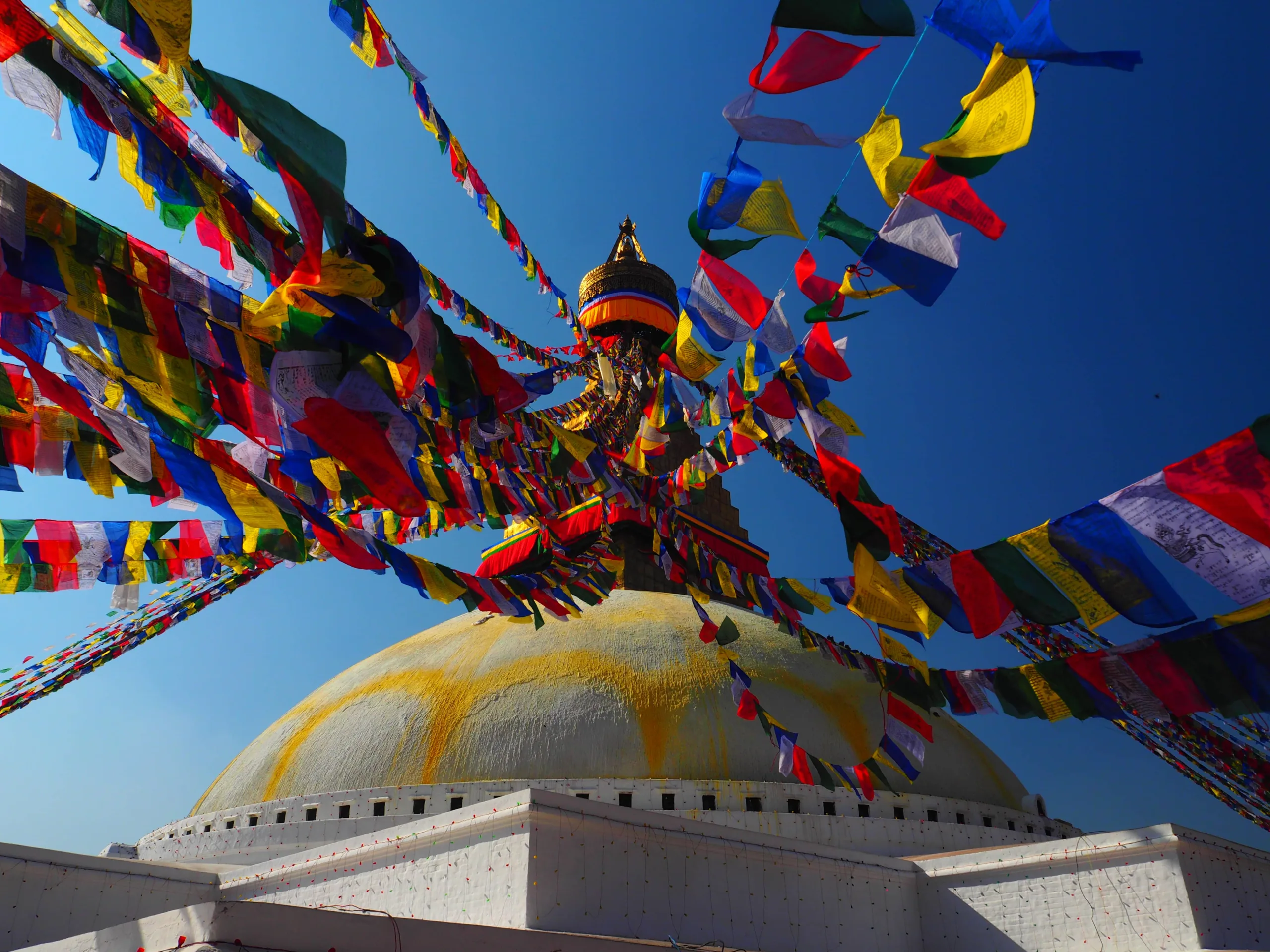
Alongside, Nepal has the ancient Buddhist Pilgrimage sites in Kathmandu Valley like Boudhanath and Swayambhunath Stupas which are the centers of pilgrimage, meditation and scholarship. Furthermore, Nepal’s Himalayan landscapes are linked with the mystic realm of Buddhist monasteries and Tibetan Buddhist traditions and practices.
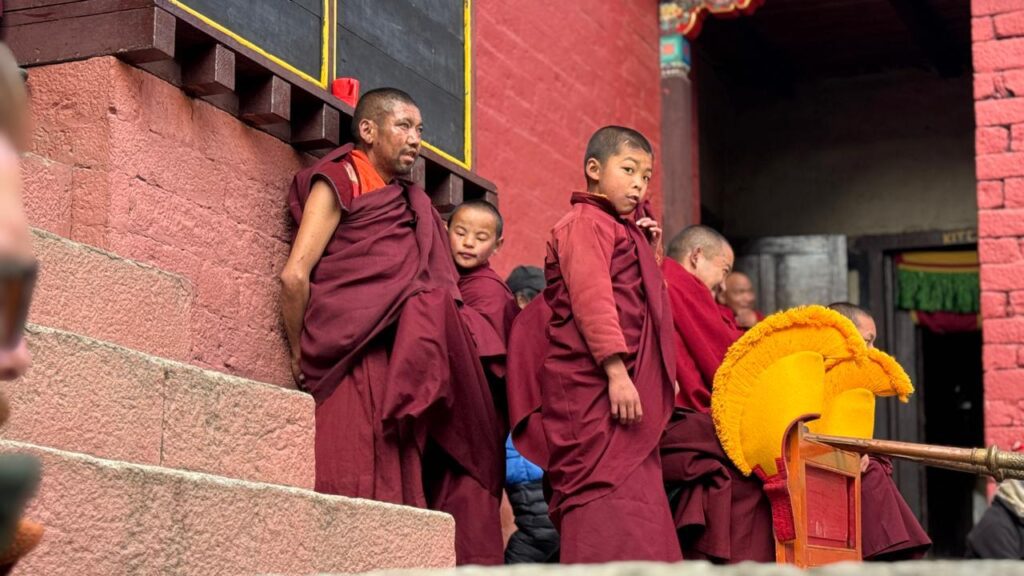
Monks during the Buddhist festival
What stories do these ancient stupas and monasteries hold?
Buddhist Pilgrimage Sites in Nepal are mostly the ancient stupas and the monasteries. They are not the silent ruins, moreover the libraries written in stone. They hold the spiritual, artistic and deep human feelings along with their beliefs. These sites recite the stories of devotion and memory. Walking clockwise around a stupa echoes the spiritual journey toward awakening, repeated by pilgrims for centuries.
Ancient stupas and monasteries record lives of learning and discipline. Monasteries are similar to the universities for the Buddhist monks. Within the courtyards, monks study medicine, astronomy and logic along with the philosophy and manuscripts. These sites reflect the power, spiritual strength and patronage.
Monastery on Swayambhunath Buddhist Pilgrimage Sites
What does it feel like to walk around a stupa with prayer wheels spinning?
It is always the clockwise rotation and walk around a stupa with prayer wheels spinning. This is believed to be the auspicious task and you can vibe with the spiritual strength of the surrounding. The prayer wheels contain sacred words (mantras) inside them. Thus, when you rotate them then they spread the positive vibes around the surrounding. This depicts that you are seeking for clarity, forgiveness and peace.
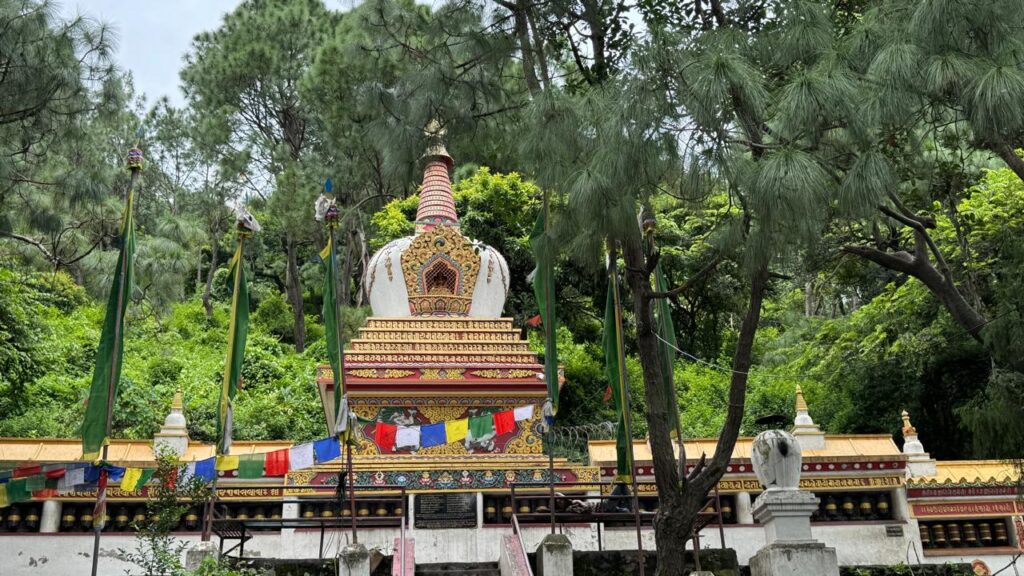
Sacred monastry
How does visiting these sites differ from simply reading about Buddhism?
Reading about Buddhism reflects to the intellect, somehow visiting Buddhist Pilgrimage sites reflects to the senses and the body. Mindfulness and compassion are the concepts to be understood. The visit to these sacred sites offers you the understanding through the experience despite from the explanation.
At a sacred site, the ideas and the words that we read come into existence and we can feel the true essence of the particular place. The circling of a stupa, the sound of the prayer wheels turning and the overall surrounding keeps you in movement, space, silence and peace.
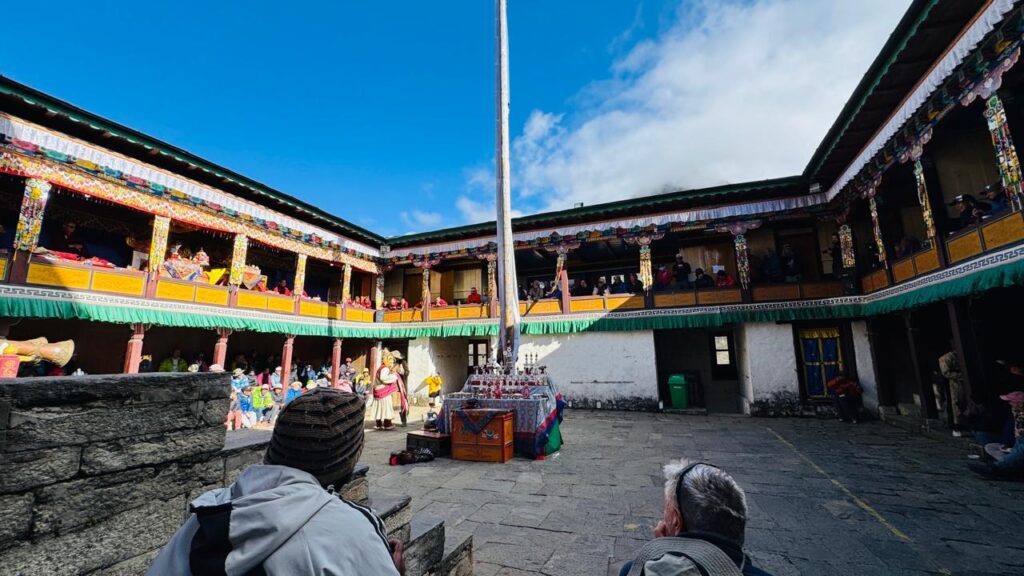
Inside one of the oldest monastery Tengboche
What makes Buddhist Pilgrimage sites in Nepal unique?
Buddhist pilgrimage sites in Nepal are unique because they are deeply enrooted to the very core of Buddhism. Most notably, Lumbini, the southern plain of Nepal is the birthplace of Siddhartha Gautam (the Buddha). Pilgrims can visit the exact region where the Buddha was born, walked and took the first steps. Along with this, you can explore the Tilaurakot Palace where Siddhartha Gautam, the prince of Shakya kingdom spent his 29 years of age. It is proven by the radar excavation done by the collaboration of various organization including the UNESCO and has been enlisted in UNESCO tentative world heritage site submitted in 1996.
Additionally, Nepal’s pilgrimage sites depict the rare blend of cultural, historical and geographical diversity. Monks and local communities especially the Himalayan people such as Sherpa and Tamang practice Buddhist cultures and traditions. Buddhist pilgrimage sites in Nepal have set the dramatic landscapes ranging from the Terai plains to the Himalayan foothills. These Buddhist Pilgrimage sites in Nepal not only reflect the spiritual meaning but also a powerful sense of geography where natural beauty and religious beliefs and heritages are inseparably blended.
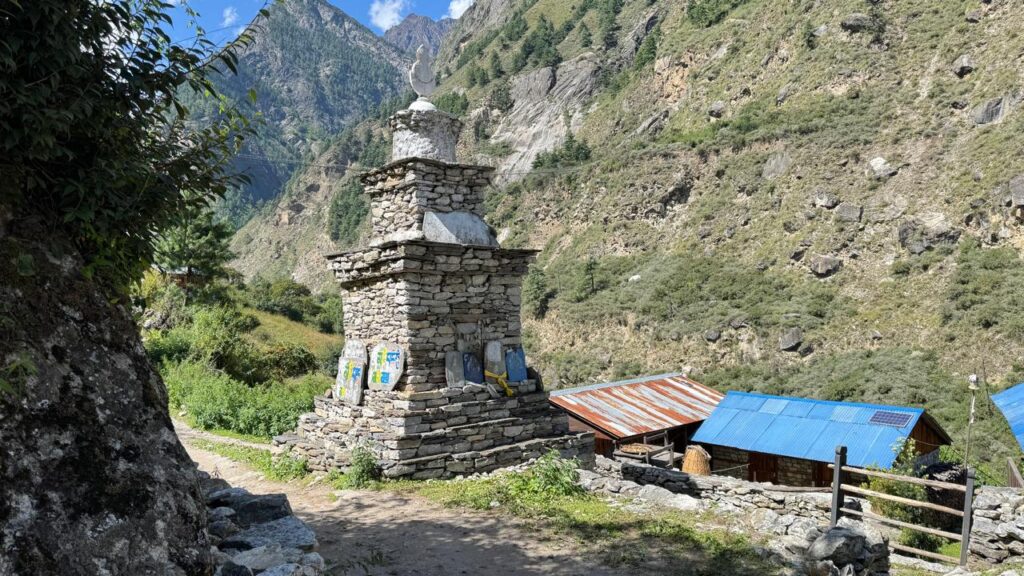
Chotens on the way
Unity in Diversity and Religious Harmony Among Buddhist Schools in Nepal
There are mainly three forms of Buddhism that is practiced in Nepal. Each school has its own teaching, practices and followers contributing to the Nepal’s religious diversity. The three forms of Buddhism are Theravada, Mahayana and Vajrayana. In the monastic area of Lumbini as per the Lumbini Development master plan, you can find the various monasteries built as per the forms of Buddhism showcasing the harmony among the Buddhist Schools in Nepal. This area is the key place for exploring the majestic Buddhist Pilgrimage sites in Nepal.
Theravada Buddhism focuses on the original teachings of the Buddha where the solo practitioners practice the strict monastic discipline. Although, it declined for some period of time, somehow, it was revived in Nepal in the 20th century and continues to grow today.
Mahayana Buddhism is mainly practiced by the Newar community of the Kathmandu Valley. Basically, this form of Buddhism emphasizes compassion and Bodhisattva ideal encouraging followers to collaborate together for the enlightenment of all beings.
Vajrayana Buddhism also known as the Tantric Buddhism is widely practiced in the Himalayan regions of Nepal. This particular form of Buddhism uses the rituals, mantras/sacred words, mandalas and mediation techniques. This particular form of Buddhism is related to Tibetan Buddhism.
Newar Buddhism in Kathmandu Valley is also a unique form of Vajrayana and found all over Nepal. Unlike other monks, the priests are householders rather than the celibate monks. These priests perform the complex rituals using the Sanskrit texts and you can find various Buddhist pilgrimage sites in Nepal regarding this form of Buddhism.
Nepal is home to many important Buddhist pilgrimage sites such as Lumbini, Swayambhunath, Boudhanath, and Namo Buddha. These sacred places, Buddhist pilgrimage sites in Nepal serve as centers of worship, pilgrimage, and cultural heritage. Along with this, it has always remained the harmonious center for following the Buddhism practices and traditions.
In modern Nepal, Buddhism remains the second-largest religion and continues to influence art, culture, and daily life. Meanwhile, many people take Buddhism as the philosophy of life where they practice the teachings of Buddha and maintain their peaceful living. With Nepal’s rich history, diverse traditions, and global spiritual significance, Buddhism remains an integral part of Nepalese identity.
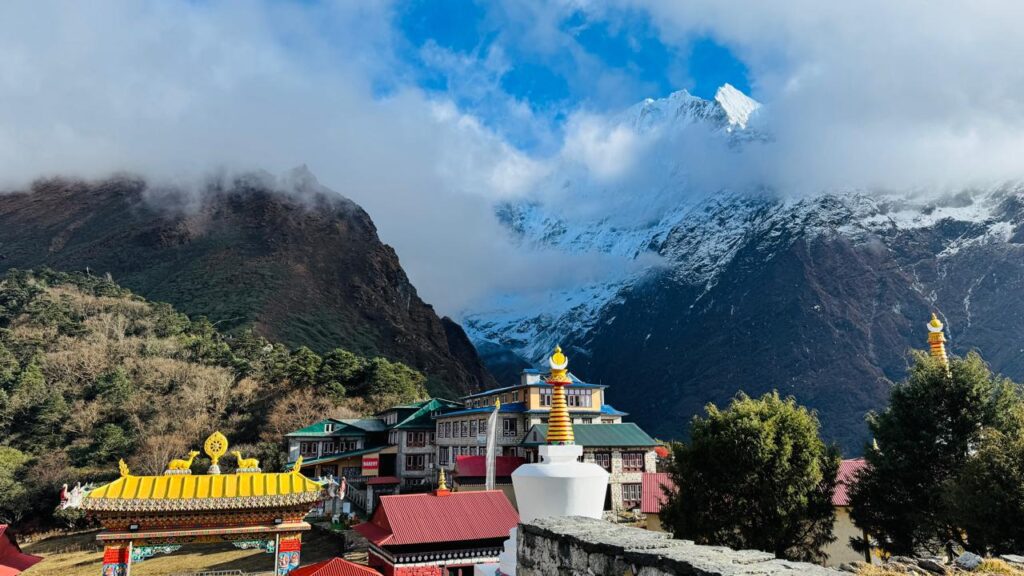
View of mountain from Buddhist Monastery in Himalayas
Exploring Nepal Through Buddhist Festivals
You can explore the Cultural and Spiritual Buddhist Festivals Tour in Nepal. You can be the part of the Living Traditions and participate to gain Buddhist Festivals Experience in Nepal. Exploring Nepal through the Buddhist Festivals is one of the most enriching ways to experience the living culture, spiritual heritage, ancient traditions and Himalayan beauty at the same time.
Meanwhile, Buddhist Pilgrimage sites in Nepal have their own ways of worshipping and preserving the traditions. Among them, Nepal hosts the vibrant Buddhist festivals such as Buddha Jayanti (April-May) in Kathmandu and Lumbini, Losar (February-March) in the Himalayan regions, Mani Rimdu (October to November) in Everest and Khumbu regions, Tiji festival (May) in the Upper Mustang and Gunla (August) in Kathmandu Valley. The perfect time to visit Nepal for the Buddhist festivals tours or treks is during the Spring season (March to May) and Autumn (September to November) when you can find the clear weather, frequent festivals and ideal trekking condition.
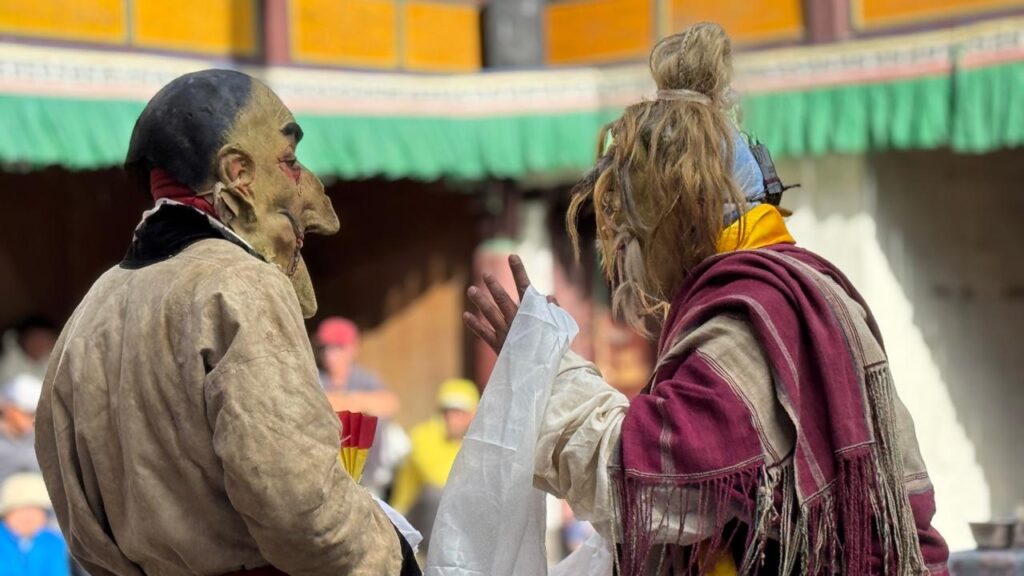
Masked Performance during Buddhist festival
Spiritual and Cultural Significance of Buddhist Festivals
Buddhist festivals in Nepal hold the deep spiritual and cultural significance. This festival enhances the important events in the life of Buddha and flourishes the Buddhist teachings such as compassion, mindfulness and non-violence. These festivals basically indicate the significance of sacred rituals, masked dances, monastery prayers, butter lamps, and colorful processions, offering travelers an authentic insight into living Buddhist traditions. These festivals are mostly practiced in the Buddhist Pilgrimage Sites in Nepal.
Festivals like Buddha Jayanti, Losar, Mani Rimdu, and Tiji provide opportunities for devotees to engage in prayers, meditation, ritual offerings, and acts of merit. These celebrations are not merely the ceremony kind of things, somehow the moments of spiritual renewal, refection and strengthening of the faith. By participating in Buddhist festivals, you can connect your living form into Dharma and cultivate inner peace and ethical living in a peaceful manner.
Culturally, Buddhist festivals in Nepal play the vital role in preserving the ancient traditions, cultures, arts, cultural and communal harmony. In the context of Nepal, Buddhist festivals also play the vital role in strengthening the social bonds with the collaborative practice from the monks, local communities and pilgrims from all over the world following different religion and sects. In this particular wider world, the blending of spirituality and cultural beliefs transform festivals into the living heritage. This practice specially focuses in reinforcing identity, continuity and mutual respect sharing the timeless Buddhist values and peaceful living all over the world.
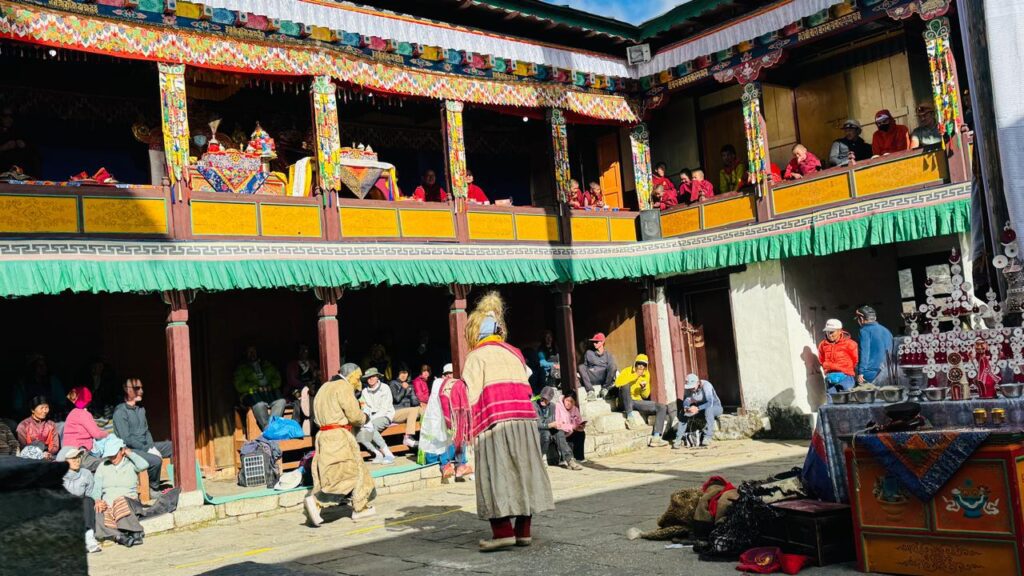
One of the oldest festival Mani Rimdu in Tengboche
For the travelers who are interested to explore the spiritual and cultural journey, then the most recommended tours are Lumbini Buddhist Pilgrimage sites Tour, Nepal Buddhist Circuit Tour and the Kathmandu Valley Buddhist Heritage Tour. These tours highlight the Buddhist Pilgrimage sites in Nepal which are enlisted in the UNESCO world heritage sites. Some of them are Boudhanath Stupa, Swayambhunath Stupa, Namo Buddha and Lumbini.
These tours and treks typically range from 5 to 18 days. You also have the option to customize this trip as per your requirement. The treks require moderate fitness and for the tour it’s an easy activity for you. It is advised that you are best booked in advance due to high seasonal demand. Combining Buddhist festivals with trekking in Nepal creates a unique travel experience that blends spirituality, culture, and breathtaking Himalayan landscapes making it one of the best cultural tour experiences in the land of paradise. The Buddhist pilgrimage sites in Nepal offer the most iconic and historic experiences combining your physical body to the spiritual journey of peace and harmony.